To direct the Secretary of Education to award grants to State educational agencies to develop comprehensive plans to strengthen elementary and secondary computer science education, and for other purposes.
USA115th CongressHR-2305| House
| Updated: 5/22/2018
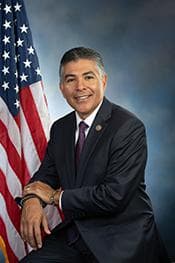
Tony Cárdenas
Democratic Representative
California
Science, Space, and Technology Committee, Education and Workforce Committee, Research and Technology Subcommittee
- Introduced
- In Committee
- On Floor
- Passed Chamber
- Enacted
Computer Science in STEM Act of 2017 This bill requires the Department of Education (ED) to award to states: (1) two-year formula grants to develop comprehensive plans to strengthen elementary and secondary computer-science education, and (2) competitive five-year matching grants to implement the improvements proposed in their comprehensive plans. Proposed improvements must include: (1) challenging and grade-appropriate academic-content standards for computer science, (2) grade-appropriate assessments of computer-science learning, (3) programs to increase disadvantaged students' access to computer-science courses, (4) computer-science teacher-training programs, (5) improved teacher certification or licensure requirements and processes, (6) programs to ensure that computer-science courses are considered an integral part of the standard secondary school curriculum, (7) effective computer-science curricula, and (8) computer-science distance-learning programs. States must partner with institutions of higher education (IHEs) and local educational agencies in implementing these improvements. The bill amends the Elementary and Secondary Education Act of 1965 to authorize ED to award five-year grants to IHEs to: (1) develop courses that prepare undergraduate students to teach elementary and secondary school computer science, and (2) develop and fund teacher mentoring programs to support new computer-science teachers. The bill amends the National Science Foundation Authorization Act of 2002 to include informatics and computer-science majors and professionals in the Robert Noyce Teacher Scholarship Program, which recruits and prepares science, technology, engineering, and mathematics majors and professionals to become mathematics and science teachers.
View Full TextSuggested Questions
Get AI-generated questions to help you understand this bill better
Timeline
Introduced in House
Referred to the Committee on Education and the Workforce, and in addition to the Committee on Science, Space, and Technology, for a period to be subsequently determined by the Speaker, in each case for consideration of such provisions as fall within the jurisdiction of the committee concerned.
Referred to the Subcommittee on Research and Technology.
Education
Academic performance and assessmentsComputers and information technologyEducational technology and distance educationEducation of the disadvantagedEducation programs fundingElementary and secondary educationHigher educationLicensing and registrationsPerformance measurementScience and engineering educationTeaching, teachers, curricula
To direct the Secretary of Education to award grants to State educational agencies to develop comprehensive plans to strengthen elementary and secondary computer science education, and for other purposes.
USA115th CongressHR-2305| House
| Updated: 5/22/2018
Computer Science in STEM Act of 2017 This bill requires the Department of Education (ED) to award to states: (1) two-year formula grants to develop comprehensive plans to strengthen elementary and secondary computer-science education, and (2) competitive five-year matching grants to implement the improvements proposed in their comprehensive plans. Proposed improvements must include: (1) challenging and grade-appropriate academic-content standards for computer science, (2) grade-appropriate assessments of computer-science learning, (3) programs to increase disadvantaged students' access to computer-science courses, (4) computer-science teacher-training programs, (5) improved teacher certification or licensure requirements and processes, (6) programs to ensure that computer-science courses are considered an integral part of the standard secondary school curriculum, (7) effective computer-science curricula, and (8) computer-science distance-learning programs. States must partner with institutions of higher education (IHEs) and local educational agencies in implementing these improvements. The bill amends the Elementary and Secondary Education Act of 1965 to authorize ED to award five-year grants to IHEs to: (1) develop courses that prepare undergraduate students to teach elementary and secondary school computer science, and (2) develop and fund teacher mentoring programs to support new computer-science teachers. The bill amends the National Science Foundation Authorization Act of 2002 to include informatics and computer-science majors and professionals in the Robert Noyce Teacher Scholarship Program, which recruits and prepares science, technology, engineering, and mathematics majors and professionals to become mathematics and science teachers.
View Full TextSuggested Questions
Get AI-generated questions to help you understand this bill better
Timeline
Introduced in House
Referred to the Committee on Education and the Workforce, and in addition to the Committee on Science, Space, and Technology, for a period to be subsequently determined by the Speaker, in each case for consideration of such provisions as fall within the jurisdiction of the committee concerned.
Referred to the Subcommittee on Research and Technology.
Tony Cárdenas
Democratic Representative
California
Science, Space, and Technology Committee, Education and Workforce Committee, Research and Technology Subcommittee
Education
- Introduced
- In Committee
- On Floor
- Passed Chamber
- Enacted
Academic performance and assessmentsComputers and information technologyEducational technology and distance educationEducation of the disadvantagedEducation programs fundingElementary and secondary educationHigher educationLicensing and registrationsPerformance measurementScience and engineering educationTeaching, teachers, curricula