To establish a task force to review policies and measures to promote, and to develop best practices for, reduction of short-lived climate pollutants, and for other purposes.
USA115th CongressHR-2858| House
| Updated: 6/9/2017
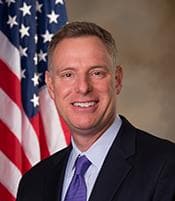
Scott H. Peters
Democratic Representative
California
Cosponsors (13)
James R. Langevin (Democratic)Steve Cohen (Democratic)Carlos Curbelo (Republican)Alan S. Lowenthal (Democratic)Matt Cartwright (Democratic)Daniel Lipinski (Democratic)Salud O. Carbajal (Democratic)Donald S. Beyer (Democratic)Jared Polis (Democratic)Brian K. Fitzpatrick (Republican)Zoe Lofgren (Democratic)Mike Coffman (Republican)John K. Delaney (Democratic)
Environment Subcommittee, Energy and Commerce Committee
- Introduced
- In Committee
- On Floor
- Passed Chamber
- Enacted
SUper Pollutant Emissions Reduction Act of 2017 or the SUPER Act of 2017 This bill requires the President to establish the Task Force on Super Pollutants to: review existing and potential policies and measures that promote the reduction of short-lived climate pollutants, in part by identifying and evaluating programs and activities of the federal government that contribute to a reduction; identify and recommend specific federal programs and activities that are duplicative and that can be consolidated to achieve greater efficiency and effectiveness; identify gaps where programs do not exist and recommend programs and activities to fill these gaps to reduce short-lived climate pollutants, with an emphasis on industry standards and public-private partnerships; identify activities where reductions in those pollutants can continue to spur innovation and job creation and increase U.S. competitiveness in the global market for new technologies to replace those using short-lived climate pollutants; identify, compile, evaluate, and develop best practices for reducing those pollutants; and report to Congress on its findings and recommendations. A "short-lived climate pollutant" is black carbon, methane, hydrofluorocarbons, tropospheric ozone and its precursors, or emissions from banks of ozone-depleting substances.
View Full TextSuggested Questions
Get AI-generated questions to help you understand this bill better
Timeline
Introduced in House
Referred to the House Committee on Energy and Commerce.
Referred to the Subcommittee on Environment.
Environmental Protection
Advisory bodiesAir qualityClimate change and greenhouse gasesCompetitiveness, trade promotion, trade deficitsEnvironmental technologyGovernment studies and investigationsPublic-private cooperation
To establish a task force to review policies and measures to promote, and to develop best practices for, reduction of short-lived climate pollutants, and for other purposes.
USA115th CongressHR-2858| House
| Updated: 6/9/2017
SUper Pollutant Emissions Reduction Act of 2017 or the SUPER Act of 2017 This bill requires the President to establish the Task Force on Super Pollutants to: review existing and potential policies and measures that promote the reduction of short-lived climate pollutants, in part by identifying and evaluating programs and activities of the federal government that contribute to a reduction; identify and recommend specific federal programs and activities that are duplicative and that can be consolidated to achieve greater efficiency and effectiveness; identify gaps where programs do not exist and recommend programs and activities to fill these gaps to reduce short-lived climate pollutants, with an emphasis on industry standards and public-private partnerships; identify activities where reductions in those pollutants can continue to spur innovation and job creation and increase U.S. competitiveness in the global market for new technologies to replace those using short-lived climate pollutants; identify, compile, evaluate, and develop best practices for reducing those pollutants; and report to Congress on its findings and recommendations. A "short-lived climate pollutant" is black carbon, methane, hydrofluorocarbons, tropospheric ozone and its precursors, or emissions from banks of ozone-depleting substances.
View Full TextSuggested Questions
Get AI-generated questions to help you understand this bill better
Timeline
Introduced in House
Referred to the House Committee on Energy and Commerce.
Referred to the Subcommittee on Environment.
Scott H. Peters
Democratic Representative
California
Cosponsors (13)
James R. Langevin (Democratic)Steve Cohen (Democratic)Carlos Curbelo (Republican)Alan S. Lowenthal (Democratic)Matt Cartwright (Democratic)Daniel Lipinski (Democratic)Salud O. Carbajal (Democratic)Donald S. Beyer (Democratic)Jared Polis (Democratic)Brian K. Fitzpatrick (Republican)Zoe Lofgren (Democratic)Mike Coffman (Republican)John K. Delaney (Democratic)
Environment Subcommittee, Energy and Commerce Committee
Environmental Protection
- Introduced
- In Committee
- On Floor
- Passed Chamber
- Enacted
Advisory bodiesAir qualityClimate change and greenhouse gasesCompetitiveness, trade promotion, trade deficitsEnvironmental technologyGovernment studies and investigationsPublic-private cooperation