A bill to decrease the cost of hiring, and increase the take-home pay of, Puerto Rican workers.
USA115th CongressS-38| Senate
| Updated: 1/5/2017
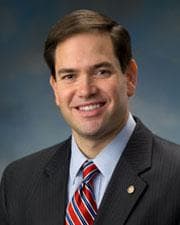
Marco Rubio
Republican Senator
Florida
Finance Committee
- Introduced
- In Committee
- On Floor
- Passed Chamber
- Enacted
Economic Mobility for Productive Livelihoods and Expanding Opportunity Act of 2017 or the EMPLEO Act This bill amends the Fair Labor Standards Act of 1938 to require every employer to pay to each of his or her eligible Puerto Rican employees who in any workweek are engaged in commerce and who receive qualified wage subsidy payments minimum wages of $5.00 an hour, determined without regard to those wage subsidy payments. The bill amends the Internal Revenue Code to treat certain employers who make qualified wage subsidy payments to eligible Puerto Rico employees as having paid payroll taxes in an amount equal to the wage subsidy payment. An “eligible Puerto Rico employee” is any individual who: (1) is a U.S. citizen, (2) has a Social Security number, and (3) certifies to the employer that he or she is a resident of Puerto Rico and intends to remain a resident for at least the next six months. A “qualified wage subsidy payment” is a payment equal to 50% of the excess (if any) of: (1) the median hourly wage for Puerto Rico ($10 for 2018 and 2019), over (2) the hourly wage paid to the eligible Puerto Rico employee. The bill sets forth reporting requirements for participating employers and requirements for determining the median hourly wage for Puerto Rico after 2019.
View Full TextSuggested Questions
Get AI-generated questions to help you understand this bill better
Timeline
Introduced in Senate
Read twice and referred to the Committee on Finance.
Labor and Employment
Caribbean areaEmployment taxesLabor standardsPuerto RicoTax administration and collection, taxpayersU.S. territories and protectoratesWages and earnings
A bill to decrease the cost of hiring, and increase the take-home pay of, Puerto Rican workers.
USA115th CongressS-38| Senate
| Updated: 1/5/2017
Economic Mobility for Productive Livelihoods and Expanding Opportunity Act of 2017 or the EMPLEO Act This bill amends the Fair Labor Standards Act of 1938 to require every employer to pay to each of his or her eligible Puerto Rican employees who in any workweek are engaged in commerce and who receive qualified wage subsidy payments minimum wages of $5.00 an hour, determined without regard to those wage subsidy payments. The bill amends the Internal Revenue Code to treat certain employers who make qualified wage subsidy payments to eligible Puerto Rico employees as having paid payroll taxes in an amount equal to the wage subsidy payment. An “eligible Puerto Rico employee” is any individual who: (1) is a U.S. citizen, (2) has a Social Security number, and (3) certifies to the employer that he or she is a resident of Puerto Rico and intends to remain a resident for at least the next six months. A “qualified wage subsidy payment” is a payment equal to 50% of the excess (if any) of: (1) the median hourly wage for Puerto Rico ($10 for 2018 and 2019), over (2) the hourly wage paid to the eligible Puerto Rico employee. The bill sets forth reporting requirements for participating employers and requirements for determining the median hourly wage for Puerto Rico after 2019.
View Full TextSuggested Questions
Get AI-generated questions to help you understand this bill better
Timeline
Introduced in Senate
Read twice and referred to the Committee on Finance.
Marco Rubio
Republican Senator
Florida
Finance Committee
Labor and Employment
- Introduced
- In Committee
- On Floor
- Passed Chamber
- Enacted
Caribbean areaEmployment taxesLabor standardsPuerto RicoTax administration and collection, taxpayersU.S. territories and protectoratesWages and earnings