A bill to amend the FAA Modernization and Reform Act of 2012 to provide guidance and limitations regarding the integration of unmanned aircraft systems into United States airspace, and for other purposes.
USA115th CongressS-631| Senate
| Updated: 3/15/2017
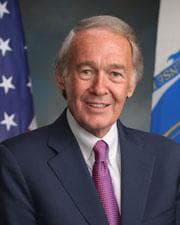
Edward J. Markey
Democratic Senator
Massachusetts
Commerce, Science, and Transportation Committee
- Introduced
- In Committee
- On Floor
- Passed Chamber
- Enacted
Drone Aircraft Privacy and Transparency Act of 2017 This bill amends the FAA Modernization and Reform Act of 2012 to direct the Department of Transportation (DOT) to establish procedures to ensure that the integration of unmanned aircraft (drone) systems into the national airspace system is done in compliance with privacy principles. Such procedures shall not apply to a drone system operated for news-gathering activities protected by the First Amendment to the Constitution. DOT may not approve, issue, or award any certificate, license, or other grant of authority to operate a drone system in the national airspace system unless the pertinent application includes a data collection statement that provides reasonable assurance that the applicant will operate the drone in accordance with privacy principles. The same requirement shall apply to any drone system to be operated by a law enforcement agency, except that the application shall include a data minimization statement, instead of a data collection statement, that provides the same assurance. The Federal Aviation Administration (FAA) shall make any approved grant of authority, each such statement, and information about the drone's owner, operator, and technical capability available in a searchable format on the public FAA website. A governmental entity may not use a drone system, or request information collected by another entity through a drone system, for protective activities or for law enforcement or intelligence purposes except pursuant to a warrant or as permitted under the Foreign Intelligence Surveillance Act of 1978, except when: (1) a law enforcement entity reasonably believes there is an imminent danger of death or serious physical injury, or (2) the Department of Homeland Security determines that credible intelligence indicates there is a high risk of an imminent terrorist attack by a specific individual or organization. It shall be unlawful to operate a drone system in a manner that is not in accordance with the terms of a data collection statement or that violates the rule implementing the procedures required by this bill. Any such violation shall be treated as an unfair or deceptive act or practice under the Federal Trade Commission Act. This bill provides for enforcement by the Federal Trade Commission, by a civil action brought by a state, or by a private action. The FAA shall revoke the certificate, license, or other grant of authority of a drone system operated in a violation of this bill.
View Full TextSuggested Questions
Get AI-generated questions to help you understand this bill better
Timeline
Introduced in Senate
Read twice and referred to the Committee on Commerce, Science, and Transportation.
Latest Companion Bill Action
HR 115-1526Referred to the Subcommittee on Digital Commerce and Consumer Protection.
Transportation and Public Works
Administrative law and regulatory proceduresAviation and airportsCivil actions and liabilityCriminal investigation, prosecution, interrogationCriminal justice information and recordsCriminal procedure and sentencingDepartment of TransportationEvidence and witnessesFederal Trade Commission (FTC)Government information and archivesGovernment liabilityIntelligence activities, surveillance, classified informationLaw enforcement administration and fundingLegal fees and court costsLicensing and registrationsNews media and reportingPhotography and imagingRight of privacyTelephone and wireless communication
A bill to amend the FAA Modernization and Reform Act of 2012 to provide guidance and limitations regarding the integration of unmanned aircraft systems into United States airspace, and for other purposes.
USA115th CongressS-631| Senate
| Updated: 3/15/2017
Drone Aircraft Privacy and Transparency Act of 2017 This bill amends the FAA Modernization and Reform Act of 2012 to direct the Department of Transportation (DOT) to establish procedures to ensure that the integration of unmanned aircraft (drone) systems into the national airspace system is done in compliance with privacy principles. Such procedures shall not apply to a drone system operated for news-gathering activities protected by the First Amendment to the Constitution. DOT may not approve, issue, or award any certificate, license, or other grant of authority to operate a drone system in the national airspace system unless the pertinent application includes a data collection statement that provides reasonable assurance that the applicant will operate the drone in accordance with privacy principles. The same requirement shall apply to any drone system to be operated by a law enforcement agency, except that the application shall include a data minimization statement, instead of a data collection statement, that provides the same assurance. The Federal Aviation Administration (FAA) shall make any approved grant of authority, each such statement, and information about the drone's owner, operator, and technical capability available in a searchable format on the public FAA website. A governmental entity may not use a drone system, or request information collected by another entity through a drone system, for protective activities or for law enforcement or intelligence purposes except pursuant to a warrant or as permitted under the Foreign Intelligence Surveillance Act of 1978, except when: (1) a law enforcement entity reasonably believes there is an imminent danger of death or serious physical injury, or (2) the Department of Homeland Security determines that credible intelligence indicates there is a high risk of an imminent terrorist attack by a specific individual or organization. It shall be unlawful to operate a drone system in a manner that is not in accordance with the terms of a data collection statement or that violates the rule implementing the procedures required by this bill. Any such violation shall be treated as an unfair or deceptive act or practice under the Federal Trade Commission Act. This bill provides for enforcement by the Federal Trade Commission, by a civil action brought by a state, or by a private action. The FAA shall revoke the certificate, license, or other grant of authority of a drone system operated in a violation of this bill.
View Full TextSuggested Questions
Get AI-generated questions to help you understand this bill better
Timeline
Introduced in Senate
Read twice and referred to the Committee on Commerce, Science, and Transportation.
Latest Companion Bill Action
HR 115-1526Referred to the Subcommittee on Digital Commerce and Consumer Protection.
Edward J. Markey
Democratic Senator
Massachusetts
Commerce, Science, and Transportation Committee
Transportation and Public Works
- Introduced
- In Committee
- On Floor
- Passed Chamber
- Enacted
Administrative law and regulatory proceduresAviation and airportsCivil actions and liabilityCriminal investigation, prosecution, interrogationCriminal justice information and recordsCriminal procedure and sentencingDepartment of TransportationEvidence and witnessesFederal Trade Commission (FTC)Government information and archivesGovernment liabilityIntelligence activities, surveillance, classified informationLaw enforcement administration and fundingLegal fees and court costsLicensing and registrationsNews media and reportingPhotography and imagingRight of privacyTelephone and wireless communication