A resolution recognizing the 75th anniversary of Executive Order 9066 and expressing the sense of the Senate that policies that discriminate against any individual based on the actual or perceived race, ethnicity, national origin, or religion of that individual would be a repetition of the mistakes of Executive Order 9066 and contrary to the values of the United States.
USA115th CongressSRES-70| Senate
| Updated: 2/27/2017
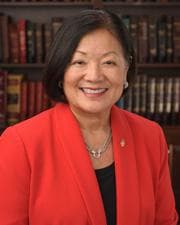
Mazie K. Hirono
Democratic Senator
Hawaii
Cosponsors (29)
Jeanne Shaheen (Democratic)Tammy Duckworth (Democratic)Dianne Feinstein (Democratic)Catherine Cortez Masto (Democratic)Patrick J. Leahy (Democratic)Richard J. Durbin (Democratic)Edward J. Markey (Democratic)Charles E. Schumer (Democratic)Jack Reed (Democratic)Kirsten E. Gillibrand (Democratic)Elizabeth Warren (Democratic)Christopher A. Coons (Democratic)Thomas R. Carper (Democratic)Amy Klobuchar (Democratic)Tim Kaine (Democratic)Chris Van Hollen (Democratic)Christopher Murphy (Democratic)Patty Murray (Democratic)Sherrod Brown (Democratic)Bernard Sanders (Independent)Brian Schatz (Democratic)Al Franken (Democratic)Maria Cantwell (Democratic)Tammy Baldwin (Democratic)Cory A. Booker (Democratic)Robert Menendez (Democratic)Jeff Merkley (Democratic)Ron Wyden (Democratic)Richard Blumenthal (Democratic)
Judiciary Committee
- Introduced
- In Committee
- On Floor
- Passed Chamber
- Enacted
Recognizes the historical significance of: (1) February 19, 1942, as the date on which President Franklin Delano Roosevelt signed Executive Order 9066, which restricted the freedom of Japanese Americans; and (2) February 19, 1976, as the date on which President Gerald Ford issued Presidential Proclamation 4417, which formally terminated such executive order. Expresses support for the goals of the Japanese American community in recognizing a National Day of Remembrance to increase public awareness about the unjust measures taken to restrict the freedom of Japanese Americans during World War II. Expresses the sense that: (1) such Day is an opportunity to reflect on the importance of upholding justice and civil liberties for all people of the United States and to oppose hate, xenophobia, and bigotry; and (2) policies that discriminate against any individual based on the actual or perceived race, ethnicity, national origin, or religion of that individual would be a repetition of the mistakes of Executive Order 9066 and contrary to U.S. values. Recognizes the positive contributions that people of every race, ethnicity, religion, and national origin have made to the United States. Confirms the dedication of the Senate to the rights and dignity of all people of the United States.
View Full TextSuggested Questions
Get AI-generated questions to help you understand this bill better
Timeline
Introduced in Senate
Referred to the Committee on the Judiciary. (text of measure as introduced: CR S1453)
Civil Rights and Liberties, Minority Issues
AsiaCommemorative events and holidaysConflicts and warsDetention of personsJapanPresidents and presidential powers, Vice PresidentsRacial and ethnic relationsU.S. history
A resolution recognizing the 75th anniversary of Executive Order 9066 and expressing the sense of the Senate that policies that discriminate against any individual based on the actual or perceived race, ethnicity, national origin, or religion of that individual would be a repetition of the mistakes of Executive Order 9066 and contrary to the values of the United States.
USA115th CongressSRES-70| Senate
| Updated: 2/27/2017
Recognizes the historical significance of: (1) February 19, 1942, as the date on which President Franklin Delano Roosevelt signed Executive Order 9066, which restricted the freedom of Japanese Americans; and (2) February 19, 1976, as the date on which President Gerald Ford issued Presidential Proclamation 4417, which formally terminated such executive order. Expresses support for the goals of the Japanese American community in recognizing a National Day of Remembrance to increase public awareness about the unjust measures taken to restrict the freedom of Japanese Americans during World War II. Expresses the sense that: (1) such Day is an opportunity to reflect on the importance of upholding justice and civil liberties for all people of the United States and to oppose hate, xenophobia, and bigotry; and (2) policies that discriminate against any individual based on the actual or perceived race, ethnicity, national origin, or religion of that individual would be a repetition of the mistakes of Executive Order 9066 and contrary to U.S. values. Recognizes the positive contributions that people of every race, ethnicity, religion, and national origin have made to the United States. Confirms the dedication of the Senate to the rights and dignity of all people of the United States.
View Full TextSuggested Questions
Get AI-generated questions to help you understand this bill better
Timeline
Introduced in Senate
Referred to the Committee on the Judiciary. (text of measure as introduced: CR S1453)
Mazie K. Hirono
Democratic Senator
Hawaii
Cosponsors (29)
Jeanne Shaheen (Democratic)Tammy Duckworth (Democratic)Dianne Feinstein (Democratic)Catherine Cortez Masto (Democratic)Patrick J. Leahy (Democratic)Richard J. Durbin (Democratic)Edward J. Markey (Democratic)Charles E. Schumer (Democratic)Jack Reed (Democratic)Kirsten E. Gillibrand (Democratic)Elizabeth Warren (Democratic)Christopher A. Coons (Democratic)Thomas R. Carper (Democratic)Amy Klobuchar (Democratic)Tim Kaine (Democratic)Chris Van Hollen (Democratic)Christopher Murphy (Democratic)Patty Murray (Democratic)Sherrod Brown (Democratic)Bernard Sanders (Independent)Brian Schatz (Democratic)Al Franken (Democratic)Maria Cantwell (Democratic)Tammy Baldwin (Democratic)Cory A. Booker (Democratic)Robert Menendez (Democratic)Jeff Merkley (Democratic)Ron Wyden (Democratic)Richard Blumenthal (Democratic)
Judiciary Committee
Civil Rights and Liberties, Minority Issues
- Introduced
- In Committee
- On Floor
- Passed Chamber
- Enacted
AsiaCommemorative events and holidaysConflicts and warsDetention of personsJapanPresidents and presidential powers, Vice PresidentsRacial and ethnic relationsU.S. history