PAWS Act of 2019
USA116th CongressS-2949| Senate
| Updated: 11/21/2019
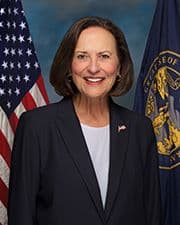
Deb Fischer
Republican Senator
Nebraska
Cosponsors (14)
Rick Scott (Republican)Dianne Feinstein (Democratic)Catherine Cortez Masto (Democratic)Thomas Tillis (Republican)Elizabeth Warren (Democratic)Christopher A. Coons (Democratic)Martha McSally (Republican)Jacky Rosen (Democratic)John Kennedy (Republican)Sherrod Brown (Democratic)John Cornyn (Republican)Cory A. Booker (Democratic)Robert Menendez (Democratic)Marco Rubio (Republican)
Veterans' Affairs Committee
- Introduced
- In Committee
- On Floor
- Passed Chamber
- Enacted
Puppies Assisting Wounded Servicemembers Act of 2019 or the PAWS Act of 2019 This bill requires the Department of Veterans Affairs (VA) to implement a grant program for the purpose of pairing service dogs with eligible veterans. Organizations that receive grants shall provide veterinary health insurance coverage, hardware, and travel expenses for each service dog and veteran participating in the program. Eligible veterans are those who (1) are enrolled in the VA health care system, (2) have been evaluated and treated for post-traumatic stress disorder (PTSD) but remain diagnosed with PTSD, (3) may benefit from a service dog, and (4) agree to successfully complete training provided by an eligible organization. Veterans are required to see a VA health care provider at least once every 180 days to determine whether the veteran continues to benefit from a service dog. Eligible organizations are nonprofit organizations that provide service dogs to veterans with PTSD, meet publicly available standards set forth by the Association of Service Dog Providers for Military Veterans, have expertise in the needs of veterans with PTSD, agree to cover all costs in excess of the grant amount to guarantee the benefits of the program, agree to reaccept or replace a service dog provided to a veteran, and submit an application to the VA. Any improvement in PTSD symptoms as a result of the provision of a service dog shall not affect the veteran's eligibility for any other VA benefits. The Government Accountability Office must report on the grant program.
View Full TextSuggested Questions
Get AI-generated questions to help you understand this bill better
Timeline
Introduced in Senate
Read twice and referred to the Committee on Veterans' Affairs.
Armed Forces and National Security
Animal protection and human-animal relationshipsCongressional oversightGovernment studies and investigationsMammalsMental healthNeurological disordersService animalsSocial work, volunteer service, charitable organizationsVeterans' education, employment, rehabilitationVeterans' medical care
PAWS Act of 2019
USA116th CongressS-2949| Senate
| Updated: 11/21/2019
Puppies Assisting Wounded Servicemembers Act of 2019 or the PAWS Act of 2019 This bill requires the Department of Veterans Affairs (VA) to implement a grant program for the purpose of pairing service dogs with eligible veterans. Organizations that receive grants shall provide veterinary health insurance coverage, hardware, and travel expenses for each service dog and veteran participating in the program. Eligible veterans are those who (1) are enrolled in the VA health care system, (2) have been evaluated and treated for post-traumatic stress disorder (PTSD) but remain diagnosed with PTSD, (3) may benefit from a service dog, and (4) agree to successfully complete training provided by an eligible organization. Veterans are required to see a VA health care provider at least once every 180 days to determine whether the veteran continues to benefit from a service dog. Eligible organizations are nonprofit organizations that provide service dogs to veterans with PTSD, meet publicly available standards set forth by the Association of Service Dog Providers for Military Veterans, have expertise in the needs of veterans with PTSD, agree to cover all costs in excess of the grant amount to guarantee the benefits of the program, agree to reaccept or replace a service dog provided to a veteran, and submit an application to the VA. Any improvement in PTSD symptoms as a result of the provision of a service dog shall not affect the veteran's eligibility for any other VA benefits. The Government Accountability Office must report on the grant program.
View Full TextSuggested Questions
Get AI-generated questions to help you understand this bill better
Timeline
Introduced in Senate
Read twice and referred to the Committee on Veterans' Affairs.
Deb Fischer
Republican Senator
Nebraska
Cosponsors (14)
Rick Scott (Republican)Dianne Feinstein (Democratic)Catherine Cortez Masto (Democratic)Thomas Tillis (Republican)Elizabeth Warren (Democratic)Christopher A. Coons (Democratic)Martha McSally (Republican)Jacky Rosen (Democratic)John Kennedy (Republican)Sherrod Brown (Democratic)John Cornyn (Republican)Cory A. Booker (Democratic)Robert Menendez (Democratic)Marco Rubio (Republican)
Veterans' Affairs Committee
Armed Forces and National Security
Related Bills
- Introduced
- In Committee
- On Floor
- Passed Chamber
- Enacted
Animal protection and human-animal relationshipsCongressional oversightGovernment studies and investigationsMammalsMental healthNeurological disordersService animalsSocial work, volunteer service, charitable organizationsVeterans' education, employment, rehabilitationVeterans' medical care