Maximum Pressure Act
USA117th CongressHR-2718| House
| Updated: 10/19/2021
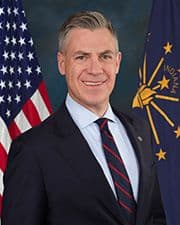
Jim Banks
Republican Representative
Indiana
Cosponsors (137)
Dusty Johnson (Republican)Doug LaMalfa (Republican)Diana Harshbarger (Republican)Chris Stewart (Republican)Bob Good (Republican)Paul A. Gosar (Republican)Michael C. Burgess (Republican)Chip Roy (Republican)Steve Chabot (Republican)Bob Gibbs (Republican)Mo Brooks (Republican)Clay Higgins (Republican)Yvette Herrell (Republican)Elise M. Stefanik (Republican)Markwayne Mullin (Republican)Trent Kelly (Republican)John R. Carter (Republican)Marjorie Taylor Greene (Republican)Jake LaTurner (Republican)Steven M. Palazzo (Republican)Mike Johnson (Republican)Guy Reschenthaler (Republican)Jim Hagedorn (Republican)Alexander X. Mooney (Republican)Brett Guthrie (Republican)Mike Garcia (Republican)Gregory F. Murphy (Republican)Jefferson Van Drew (Republican)Scott Franklin (Republican)Rick W. Allen (Republican)Neal P. Dunn (Republican)Carlos A. Gimenez (Republican)Victoria Spartz (Republican)Thomas P. Tiffany (Republican)Robert J. Wittman (Republican)Darin LaHood (Republican)Lance Gooden (Republican)Kevin Brady (Republican)Claudia Tenney (Republican)Brad R. Wenstrup (Republican)Mariannette Miller-Meeks (Republican)Jackie Walorski (Republican)Ken Buck (Republican)William R. Timmons (Republican)Tom McClintock (Republican)David Rouzer (Republican)Jeff Duncan (Republican)Jerry L. Carl (Republican)Tim Walberg (Republican)Earl L. "Buddy" Carter (Republican)Michael Waltz (Republican)J. French Hill (Republican)David B. McKinley (Republican)Maria Elvira Salazar (Republican)Lloyd Smucker (Republican)Barry Loudermilk (Republican)Gus M. Bilirakis (Republican)Steve Scalise (Republican)A. Drew Ferguson (Republican)Ronny Jackson (Republican)Daniel Meuser (Republican)Don Bacon (Republican)Andy Barr (Republican)James R. Baird (Republican)Darrell Issa (Republican)Carol D. Miller (Republican)Jodey C. Arrington (Republican)Joe Wilson (Republican)Doug Lamborn (Republican)Pat Fallon (Republican)Liz Cheney (Republican)Jake Ellzey (Republican)Ann Wagner (Republican)Rodney Davis (Republican)Mike Kelly (Republican)Tom Rice (Republican)Mike D. Rogers (Republican)Richard Hudson (Republican)Roger Williams (Republican)Kat Cammack (Republican)John Joyce (Republican)Kelly Armstrong (Republican)Cliff Bentz (Republican)Glenn Grothman (Republican)Brian J. Mast (Republican)Ron Estes (Republican)W. Gregory Steube (Republican)Blake D. Moore (Republican)John R. Moolenaar (Republican)John H. Rutherford (Republican)Dan Bishop (Republican)Austin Scott (Republican)Scott Fitzgerald (Republican)Mark E. Green (Republican)August Pfluger (Republican)Mike Gallagher (Republican)Byron Donalds (Republican)Madison Cawthorn (Republican)Gary J. Palmer (Republican)Julia Letlow (Republican)Chris Jacobs (Republican)Mary E. Miller (Republican)Lisa C. McClain (Republican)Tony Gonzales (Republican)Mike Bost (Republican)Scott DesJarlais (Republican)Pete Stauber (Republican)Michael R. Turner (Republican)Debbie Lesko (Republican)John W. Rose (Republican)Vicky Hartzler (Republican)Tom Emmer (Republican)Bill Huizenga (Republican)Jay Obernolte (Republican)Randy Feenstra (Republican)Robert E. Latta (Republican)Kevin Hern (Republican)Burgess Owens (Republican)Randy K. Sr. Weber (Republican)Ben Cline (Republican)Russ Fulcher (Republican)Greg Pence (Republican)Virginia Foxx (Republican)Ralph Norman (Republican)Jack Bergman (Republican)Tracey Mann (Republican)Ted Budd (Republican)Bill Johnson (Republican)Michelle Fischbach (Republican)Robert B. Aderholt (Republican)Brian Babin (Republican)Patrick T. McHenry (Republican)Bryan Steil (Republican)Fred Keller (Republican)Michael Guest (Republican)Nicole Malliotakis (Republican)Vern Buchanan (Republican)
Committees (8)
• Ways and Means Committee• Foreign Affairs Committee• Rules Committee• Trade Subcommittee• Financial Services Committee• Judiciary Committee• Oversight and Government Reform Committee• Immigration Integrity, Security, and Enforcement Subcommittee
- Introduced
- In Committee
- On Floor
- Passed Chamber
- Enacted
Maximum Pressure Act This bill expands sanctions and economic penalties on Iran. It also restricts the President from unilaterally lifting or waiving the sanctions or penalties and increases congressional oversight of them. Specifically, the bill requires the President to impose visa- and asset-blocking sanctions. Additionally, it modifies existing sanctions, including by (1) providing statutory authority for executive orders imposing sanctions; (2) applying sanctions to additional sectors of Iran's economy; and (3) broadening sanctionable conduct to cover, for example, assisting Iran with the acquisition of ballistic missiles and the complicity of Iranian officials in human rights violations in specified countries. The bill also requires reporting on licenses that authorize activities subject to sanctions. The bill prohibits U.S. representatives at the International Monetary Fund from voting to allow Iran's access to special drawing rights (a currency support tool) and places restrictions on financial transactions with Iran. The restrictions include requiring domestic financial institutions to implement special measures with respect to foreign financial institutions that conduct significant transactions connected to the Instrument in Support of Trade Exchanges (a European mechanism that bypasses U.S. sanctions when carrying out trade with Iran). The Department of State must maintain the Islamic Revolutionary Guard Corps' designation as a terrorist organization and must designate Ansharallah (or Houthis), which operates in Syria, as a foreign terrorist organization. The bill also requires reports on U.S. sanctions concerning Iran, the status of Iran's nuclear weapons program, and other matters.
View Full TextSuggested Questions
Get AI-generated questions to help you understand this bill better
Timeline
Introduced in House
Referred to the Committee on Foreign Affairs, and in addition to the Committees on Financial Services, the Judiciary, Oversight and Reform, Ways and Means, and Rules, for a period to be subsequently determined by the Speaker, in each case for consideration of such provisions as fall within the jurisdiction of the committee concerned.
Referred to the Subcommittee on Trade.
Referred to the Subcommittee on Immigration and Citizenship.
International Affairs
Administrative law and regulatory proceduresAfghanistanArms control and nonproliferationAsiaBank accounts, deposits, capitalBusiness ethicsComputer security and identity theftCongressional oversightCorporate finance and managementDetention of personsDiplomacy, foreign officials, Americans abroadFinancial services and investmentsForeign and international bankingForeign and international corporationsForeign propertyFraud offenses and financial crimesGovernment ethics and transparency, public corruptionGovernment information and archivesGovernment studies and investigationsHuman rightsInternational law and treatiesInternational monetary system and foreign exchangeInternational organizations and cooperationIranIraqIsraelLatin AmericaLebanonLegislative rules and procedureLicensing and registrationsMarine and inland water transportationMiddle EastMilitary assistance, sales, and agreementsMilitias and paramilitary groupsNavigation, waterways, harborsNuclear weaponsPalestiniansPresidents and presidential powers, Vice PresidentsProtest and dissentSanctionsSaudi ArabiaSecuritiesSovereignty, recognition, national governance and statusSyriaTechnology transfer and commercializationTerrorismTrade restrictionsUnited Arab EmiratesU.S. and foreign investmentsVenezuelaVisas and passportsWar and emergency powersYemen
Maximum Pressure Act
USA117th CongressHR-2718| House
| Updated: 10/19/2021
Maximum Pressure Act This bill expands sanctions and economic penalties on Iran. It also restricts the President from unilaterally lifting or waiving the sanctions or penalties and increases congressional oversight of them. Specifically, the bill requires the President to impose visa- and asset-blocking sanctions. Additionally, it modifies existing sanctions, including by (1) providing statutory authority for executive orders imposing sanctions; (2) applying sanctions to additional sectors of Iran's economy; and (3) broadening sanctionable conduct to cover, for example, assisting Iran with the acquisition of ballistic missiles and the complicity of Iranian officials in human rights violations in specified countries. The bill also requires reporting on licenses that authorize activities subject to sanctions. The bill prohibits U.S. representatives at the International Monetary Fund from voting to allow Iran's access to special drawing rights (a currency support tool) and places restrictions on financial transactions with Iran. The restrictions include requiring domestic financial institutions to implement special measures with respect to foreign financial institutions that conduct significant transactions connected to the Instrument in Support of Trade Exchanges (a European mechanism that bypasses U.S. sanctions when carrying out trade with Iran). The Department of State must maintain the Islamic Revolutionary Guard Corps' designation as a terrorist organization and must designate Ansharallah (or Houthis), which operates in Syria, as a foreign terrorist organization. The bill also requires reports on U.S. sanctions concerning Iran, the status of Iran's nuclear weapons program, and other matters.
View Full TextSuggested Questions
Get AI-generated questions to help you understand this bill better
Timeline
Introduced in House
Referred to the Committee on Foreign Affairs, and in addition to the Committees on Financial Services, the Judiciary, Oversight and Reform, Ways and Means, and Rules, for a period to be subsequently determined by the Speaker, in each case for consideration of such provisions as fall within the jurisdiction of the committee concerned.
Referred to the Subcommittee on Trade.
Referred to the Subcommittee on Immigration and Citizenship.
Jim Banks
Republican Representative
Indiana
Cosponsors (137)
Dusty Johnson (Republican)Doug LaMalfa (Republican)Diana Harshbarger (Republican)Chris Stewart (Republican)Bob Good (Republican)Paul A. Gosar (Republican)Michael C. Burgess (Republican)Chip Roy (Republican)Steve Chabot (Republican)Bob Gibbs (Republican)Mo Brooks (Republican)Clay Higgins (Republican)Yvette Herrell (Republican)Elise M. Stefanik (Republican)Markwayne Mullin (Republican)Trent Kelly (Republican)John R. Carter (Republican)Marjorie Taylor Greene (Republican)Jake LaTurner (Republican)Steven M. Palazzo (Republican)Mike Johnson (Republican)Guy Reschenthaler (Republican)Jim Hagedorn (Republican)Alexander X. Mooney (Republican)Brett Guthrie (Republican)Mike Garcia (Republican)Gregory F. Murphy (Republican)Jefferson Van Drew (Republican)Scott Franklin (Republican)Rick W. Allen (Republican)Neal P. Dunn (Republican)Carlos A. Gimenez (Republican)Victoria Spartz (Republican)Thomas P. Tiffany (Republican)Robert J. Wittman (Republican)Darin LaHood (Republican)Lance Gooden (Republican)Kevin Brady (Republican)Claudia Tenney (Republican)Brad R. Wenstrup (Republican)Mariannette Miller-Meeks (Republican)Jackie Walorski (Republican)Ken Buck (Republican)William R. Timmons (Republican)Tom McClintock (Republican)David Rouzer (Republican)Jeff Duncan (Republican)Jerry L. Carl (Republican)Tim Walberg (Republican)Earl L. "Buddy" Carter (Republican)Michael Waltz (Republican)J. French Hill (Republican)David B. McKinley (Republican)Maria Elvira Salazar (Republican)Lloyd Smucker (Republican)Barry Loudermilk (Republican)Gus M. Bilirakis (Republican)Steve Scalise (Republican)A. Drew Ferguson (Republican)Ronny Jackson (Republican)Daniel Meuser (Republican)Don Bacon (Republican)Andy Barr (Republican)James R. Baird (Republican)Darrell Issa (Republican)Carol D. Miller (Republican)Jodey C. Arrington (Republican)Joe Wilson (Republican)Doug Lamborn (Republican)Pat Fallon (Republican)Liz Cheney (Republican)Jake Ellzey (Republican)Ann Wagner (Republican)Rodney Davis (Republican)Mike Kelly (Republican)Tom Rice (Republican)Mike D. Rogers (Republican)Richard Hudson (Republican)Roger Williams (Republican)Kat Cammack (Republican)John Joyce (Republican)Kelly Armstrong (Republican)Cliff Bentz (Republican)Glenn Grothman (Republican)Brian J. Mast (Republican)Ron Estes (Republican)W. Gregory Steube (Republican)Blake D. Moore (Republican)John R. Moolenaar (Republican)John H. Rutherford (Republican)Dan Bishop (Republican)Austin Scott (Republican)Scott Fitzgerald (Republican)Mark E. Green (Republican)August Pfluger (Republican)Mike Gallagher (Republican)Byron Donalds (Republican)Madison Cawthorn (Republican)Gary J. Palmer (Republican)Julia Letlow (Republican)Chris Jacobs (Republican)Mary E. Miller (Republican)Lisa C. McClain (Republican)Tony Gonzales (Republican)Mike Bost (Republican)Scott DesJarlais (Republican)Pete Stauber (Republican)Michael R. Turner (Republican)Debbie Lesko (Republican)John W. Rose (Republican)Vicky Hartzler (Republican)Tom Emmer (Republican)Bill Huizenga (Republican)Jay Obernolte (Republican)Randy Feenstra (Republican)Robert E. Latta (Republican)Kevin Hern (Republican)Burgess Owens (Republican)Randy K. Sr. Weber (Republican)Ben Cline (Republican)Russ Fulcher (Republican)Greg Pence (Republican)Virginia Foxx (Republican)Ralph Norman (Republican)Jack Bergman (Republican)Tracey Mann (Republican)Ted Budd (Republican)Bill Johnson (Republican)Michelle Fischbach (Republican)Robert B. Aderholt (Republican)Brian Babin (Republican)Patrick T. McHenry (Republican)Bryan Steil (Republican)Fred Keller (Republican)Michael Guest (Republican)Nicole Malliotakis (Republican)Vern Buchanan (Republican)
Committees (8)
• Ways and Means Committee• Foreign Affairs Committee• Rules Committee• Trade Subcommittee• Financial Services Committee• Judiciary Committee• Oversight and Government Reform Committee• Immigration Integrity, Security, and Enforcement Subcommittee
International Affairs
Related Bills
- Introduced
- In Committee
- On Floor
- Passed Chamber
- Enacted
Administrative law and regulatory proceduresAfghanistanArms control and nonproliferationAsiaBank accounts, deposits, capitalBusiness ethicsComputer security and identity theftCongressional oversightCorporate finance and managementDetention of personsDiplomacy, foreign officials, Americans abroadFinancial services and investmentsForeign and international bankingForeign and international corporationsForeign propertyFraud offenses and financial crimesGovernment ethics and transparency, public corruptionGovernment information and archivesGovernment studies and investigationsHuman rightsInternational law and treatiesInternational monetary system and foreign exchangeInternational organizations and cooperationIranIraqIsraelLatin AmericaLebanonLegislative rules and procedureLicensing and registrationsMarine and inland water transportationMiddle EastMilitary assistance, sales, and agreementsMilitias and paramilitary groupsNavigation, waterways, harborsNuclear weaponsPalestiniansPresidents and presidential powers, Vice PresidentsProtest and dissentSanctionsSaudi ArabiaSecuritiesSovereignty, recognition, national governance and statusSyriaTechnology transfer and commercializationTerrorismTrade restrictionsUnited Arab EmiratesU.S. and foreign investmentsVenezuelaVisas and passportsWar and emergency powersYemen