Safe Landings Act
USA117th CongressHR-6976| House
| Updated: 3/9/2022
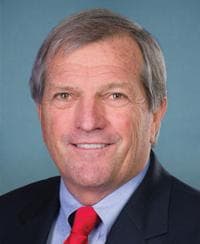
Mark DeSaulnier
Democratic Representative
California
Transportation and Infrastructure Committee, Science, Space, and Technology Committee, Aviation Subcommittee
- Introduced
- In Committee
- On Floor
- Passed Chamber
- Enacted
Safe Landings Act This bill addresses technology needs and safety risks in the aviation industry. Among other things, the bill requires the Federal Aviation Administration (FAA) to develop technology for a cockpit system that provides an alert to pilots when an airplane is not aligned to land on an intended runway surface, creates an FAA Task Force on Human Factors in Aviation Safety to review and provide recommendations related to aviation safety, directs the Department of Transportation to establish a program to investigate and develop new approaches to data analysis for understanding the factors in aviation safety incidents and identifying emerging risks of future safety incidents, requires the FAA to gather data and report on the use of instrument approach procedures as backup for visual approaches and issue guidance on the most effective techniques to use for such procedures, and directs the FAA to reform and update the notices to airmen (NOTAM) system.
View Full TextSuggested Questions
Get AI-generated questions to help you understand this bill better
Timeline
Introduced in House
Referred to the Committee on Transportation and Infrastructure, and in addition to the Committee on Science, Space, and Technology, for a period to be subsequently determined by the Speaker, in each case for consideration of such provisions as fall within the jurisdiction of the committee concerned.
Referred to the Subcommittee on Aviation.
Transportation and Public Works
Safe Landings Act
USA117th CongressHR-6976| House
| Updated: 3/9/2022
Safe Landings Act This bill addresses technology needs and safety risks in the aviation industry. Among other things, the bill requires the Federal Aviation Administration (FAA) to develop technology for a cockpit system that provides an alert to pilots when an airplane is not aligned to land on an intended runway surface, creates an FAA Task Force on Human Factors in Aviation Safety to review and provide recommendations related to aviation safety, directs the Department of Transportation to establish a program to investigate and develop new approaches to data analysis for understanding the factors in aviation safety incidents and identifying emerging risks of future safety incidents, requires the FAA to gather data and report on the use of instrument approach procedures as backup for visual approaches and issue guidance on the most effective techniques to use for such procedures, and directs the FAA to reform and update the notices to airmen (NOTAM) system.
View Full TextSuggested Questions
Get AI-generated questions to help you understand this bill better
Timeline
Introduced in House
Referred to the Committee on Transportation and Infrastructure, and in addition to the Committee on Science, Space, and Technology, for a period to be subsequently determined by the Speaker, in each case for consideration of such provisions as fall within the jurisdiction of the committee concerned.
Referred to the Subcommittee on Aviation.
Mark DeSaulnier
Democratic Representative
California
Transportation and Infrastructure Committee, Science, Space, and Technology Committee, Aviation Subcommittee
Transportation and Public Works
- Introduced
- In Committee
- On Floor
- Passed Chamber
- Enacted