Eliminating Executive Branch Insider Trading Act
USA118th CongressS-693| Senate
| Updated: 3/7/2023
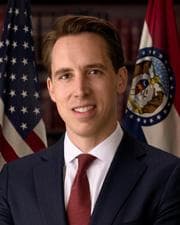
Josh Hawley
Republican Senator
Missouri
Homeland Security and Governmental Affairs Committee
- Introduced
- In Committee
- On Floor
- Passed Chamber
- Enacted
Eliminating Executive Branch Insider Trading Act This bill prohibits specified executive branch officials and others from holding or trading certain investments (e.g., individual stocks and related financial instruments other than diversified investment funds or U.S. Treasury securities). Covered individuals include the President, the Vice President, each executive branch officer or employee at or above a specified pay grade, each member of a uniformed service at or above a specified pay grade, each officer or employee in any other position determined by the Office of Government Ethics to be of equal classification to such positions, and the spouse of any such individual. The prohibition does not apply to assets held in a qualified blind trust. Any profit made in violation of the prohibition must be disgorged to the Treasury and may subject the individual to a civil fine. The Department of Justice may bring a civil action in U.S. district court against any covered individual who violates this bill's prohibition. The Government Accountability Office, at specified intervals, must (1) audit compliance by a representative sample of covered individuals with this bill's requirements, and (2) report the results to the supervising ethics committees.
View Full TextSuggested Questions
Get AI-generated questions to help you understand this bill better
Timeline
Introduced in Senate
Read twice and referred to the Committee on Homeland Security and Governmental Affairs.
Government Operations and Politics
Eliminating Executive Branch Insider Trading Act
USA118th CongressS-693| Senate
| Updated: 3/7/2023
Eliminating Executive Branch Insider Trading Act This bill prohibits specified executive branch officials and others from holding or trading certain investments (e.g., individual stocks and related financial instruments other than diversified investment funds or U.S. Treasury securities). Covered individuals include the President, the Vice President, each executive branch officer or employee at or above a specified pay grade, each member of a uniformed service at or above a specified pay grade, each officer or employee in any other position determined by the Office of Government Ethics to be of equal classification to such positions, and the spouse of any such individual. The prohibition does not apply to assets held in a qualified blind trust. Any profit made in violation of the prohibition must be disgorged to the Treasury and may subject the individual to a civil fine. The Department of Justice may bring a civil action in U.S. district court against any covered individual who violates this bill's prohibition. The Government Accountability Office, at specified intervals, must (1) audit compliance by a representative sample of covered individuals with this bill's requirements, and (2) report the results to the supervising ethics committees.
View Full TextSuggested Questions
Get AI-generated questions to help you understand this bill better
Timeline
Introduced in Senate
Read twice and referred to the Committee on Homeland Security and Governmental Affairs.
Josh Hawley
Republican Senator
Missouri
Homeland Security and Governmental Affairs Committee
Government Operations and Politics
- Introduced
- In Committee
- On Floor
- Passed Chamber
- Enacted