Words Matter for the District of Columbia Courts Act
USA119th CongressHR-1022| House
| Updated: 2/5/2025
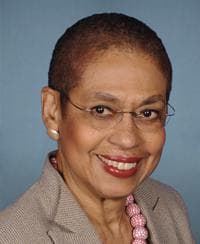
Eleanor Holmes Norton
Democratic Representative
District of Columbia
Oversight and Government Reform Committee
- Introduced
- In Committee
- On Floor
- Passed Chamber
- Enacted
This legislative proposal, known as the "Words Matter for the District of Columbia Courts Act," seeks to modernize the language used within the District of Columbia Official Code. Its primary objective is to revise references to individuals with intellectual disabilities, ensuring that the terminology aligns with contemporary and respectful standards. Specifically, the bill mandates the replacement of the phrase " substantially retarded persons " with " persons with moderate intellectual disabilities " in sections 11-501(2)(D) and 11-921(a)(4)(D), which pertain to the jurisdiction of the United States District Court and the Superior Court, respectively. Additionally, section 11-1101(a)(15), concerning the jurisdiction of the Family Court, will see the phrase " the at least moderately mentally retarded " similarly updated to " persons with moderate intellectual disabilities ." These amendments aim to promote more inclusive and appropriate language within the District's legal framework.
View Full TextSuggested Questions
Get AI-generated questions to help you understand this bill better
Timeline
Introduced in House
Referred to the House Committee on Oversight and Government Reform.
Sponsor introductory remarks on measure. (CR E99)
Law
Disability and health-based discriminationDistrict of ColumbiaFederal district courtsSpecialized courts
Words Matter for the District of Columbia Courts Act
USA119th CongressHR-1022| House
| Updated: 2/5/2025
This legislative proposal, known as the "Words Matter for the District of Columbia Courts Act," seeks to modernize the language used within the District of Columbia Official Code. Its primary objective is to revise references to individuals with intellectual disabilities, ensuring that the terminology aligns with contemporary and respectful standards. Specifically, the bill mandates the replacement of the phrase " substantially retarded persons " with " persons with moderate intellectual disabilities " in sections 11-501(2)(D) and 11-921(a)(4)(D), which pertain to the jurisdiction of the United States District Court and the Superior Court, respectively. Additionally, section 11-1101(a)(15), concerning the jurisdiction of the Family Court, will see the phrase " the at least moderately mentally retarded " similarly updated to " persons with moderate intellectual disabilities ." These amendments aim to promote more inclusive and appropriate language within the District's legal framework.
View Full TextSuggested Questions
Get AI-generated questions to help you understand this bill better
Timeline
Introduced in House
Referred to the House Committee on Oversight and Government Reform.
Sponsor introductory remarks on measure. (CR E99)
Eleanor Holmes Norton
Democratic Representative
District of Columbia
Oversight and Government Reform Committee
Law
- Introduced
- In Committee
- On Floor
- Passed Chamber
- Enacted
Disability and health-based discriminationDistrict of ColumbiaFederal district courtsSpecialized courts