Strengthening Communities through Summer Employment Act
USA119th CongressHR-1434| House
| Updated: 2/18/2025
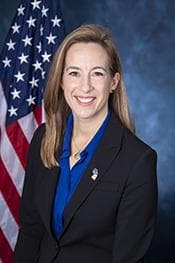
Mikie Sherrill
Democratic Representative
New Jersey
Education and Workforce Committee
- Introduced
- In Committee
- On Floor
- Passed Chamber
- Enacted
The "Strengthening Communities through Summer Employment Act" authorizes the appropriation of funds to the Secretary of Labor to enhance summer youth employment programs. Over five fiscal years, from 2026 to 2030, the bill allocates a total of $1.1 billion, starting with $200 million in 2026 and increasing to $240 million by 2030. These funds are distributed, with 45 percent dedicated to expanding programs, 45 percent for implementing innovative activities, 5 percent for evaluation, and 5 percent for an Advisory Board. A significant portion of the funding is allocated for competitive grants to eligible entities to develop new or expand existing summer youth employment programs. The primary goal is to improve youth outcomes, specifically targeting increased high school graduation rates , higher enrollment in postsecondary education , better employment and wage rates , and reduced arrest, conviction, and incarceration rates . Grant prioritization focuses on areas with high youth unemployment and violent crime, programs demonstrating quality and impact, and those serving historically underserved youth, including those in rural and suburban areas. Programs receiving these expansion grants must include several core elements to ensure effectiveness. These requirements include providing youth participants under 25 with at least four weeks of subsidized employment paid at or above the applicable minimum wage, and implementing robust community engagement for equitable access. Additionally, programs must offer job matching, coaching and mentoring services, assistance with post-program educational and employment opportunities, and training for participating employers. Comprehensive program supports, such as digital and financial literacy training, work-readiness opportunities, and career counseling, are also mandated. Another substantial portion of the funding supports grants for eligible entities to integrate innovative approaches into their summer youth employment programs, provided they already meet the core requirements. These innovations can include individualized mentoring and coaching , high-quality job training, social-emotional learning, and wrap-around financial assistance for food, shelter, and transportation. Other innovative elements encompass mental health and substance abuse supports, continuation of services beyond the summer, virtual program elements, "Learn and Earn" opportunities, expansion of private sector jobs in in-demand occupations, and the development of skill-based digital badges. The bill also mandates comprehensive evaluation activities, requiring grantees to conduct performance measurement assessments and the Secretary of Labor to contract for independent impact evaluations. These evaluations will assess long-term outcomes over one, three, and five years using administrative data, and short-term impacts on soft skills and job readiness using survey data, ideally employing randomized experimental designs. An Advisory Board, composed of experts in youth employment and program evaluation, will be established within the Department of Labor to assist the Secretary with application review, provide technical assistance, identify new innovative program elements, and publish a database of evaluation findings.
View Full TextSuggested Questions
Get AI-generated questions to help you understand this bill better
Timeline
Introduced in House
Referred to the House Committee on Education and Workforce.
Labor and Employment
Advisory bodiesEducational guidanceEducation of the disadvantagedEmployment and training programsPerformance measurementTemporary and part-time employmentYouth employment and child labor
Strengthening Communities through Summer Employment Act
USA119th CongressHR-1434| House
| Updated: 2/18/2025
The "Strengthening Communities through Summer Employment Act" authorizes the appropriation of funds to the Secretary of Labor to enhance summer youth employment programs. Over five fiscal years, from 2026 to 2030, the bill allocates a total of $1.1 billion, starting with $200 million in 2026 and increasing to $240 million by 2030. These funds are distributed, with 45 percent dedicated to expanding programs, 45 percent for implementing innovative activities, 5 percent for evaluation, and 5 percent for an Advisory Board. A significant portion of the funding is allocated for competitive grants to eligible entities to develop new or expand existing summer youth employment programs. The primary goal is to improve youth outcomes, specifically targeting increased high school graduation rates , higher enrollment in postsecondary education , better employment and wage rates , and reduced arrest, conviction, and incarceration rates . Grant prioritization focuses on areas with high youth unemployment and violent crime, programs demonstrating quality and impact, and those serving historically underserved youth, including those in rural and suburban areas. Programs receiving these expansion grants must include several core elements to ensure effectiveness. These requirements include providing youth participants under 25 with at least four weeks of subsidized employment paid at or above the applicable minimum wage, and implementing robust community engagement for equitable access. Additionally, programs must offer job matching, coaching and mentoring services, assistance with post-program educational and employment opportunities, and training for participating employers. Comprehensive program supports, such as digital and financial literacy training, work-readiness opportunities, and career counseling, are also mandated. Another substantial portion of the funding supports grants for eligible entities to integrate innovative approaches into their summer youth employment programs, provided they already meet the core requirements. These innovations can include individualized mentoring and coaching , high-quality job training, social-emotional learning, and wrap-around financial assistance for food, shelter, and transportation. Other innovative elements encompass mental health and substance abuse supports, continuation of services beyond the summer, virtual program elements, "Learn and Earn" opportunities, expansion of private sector jobs in in-demand occupations, and the development of skill-based digital badges. The bill also mandates comprehensive evaluation activities, requiring grantees to conduct performance measurement assessments and the Secretary of Labor to contract for independent impact evaluations. These evaluations will assess long-term outcomes over one, three, and five years using administrative data, and short-term impacts on soft skills and job readiness using survey data, ideally employing randomized experimental designs. An Advisory Board, composed of experts in youth employment and program evaluation, will be established within the Department of Labor to assist the Secretary with application review, provide technical assistance, identify new innovative program elements, and publish a database of evaluation findings.
View Full TextSuggested Questions
Get AI-generated questions to help you understand this bill better
Timeline
Introduced in House
Referred to the House Committee on Education and Workforce.
Mikie Sherrill
Democratic Representative
New Jersey
Education and Workforce Committee
Labor and Employment
- Introduced
- In Committee
- On Floor
- Passed Chamber
- Enacted
Advisory bodiesEducational guidanceEducation of the disadvantagedEmployment and training programsPerformance measurementTemporary and part-time employmentYouth employment and child labor