Law Enforcement Protection and Privacy Act of 2025
USA119th CongressHR-1698| House
| Updated: 2/27/2025
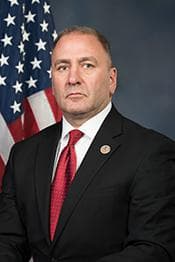
Clay Higgins
Republican Representative
Louisiana
Cosponsors (24)
Diana Harshbarger (Republican)Barry Moore (Republican)Andy Harris (Republican)Lance Gooden (Republican)Mike Collins (Republican)Claudia Tenney (Republican)Derek Schmidt (Republican)Pete Sessions (Republican)Brandon Gill (Republican)Brian Jack (Republican)Rudy Yakym (Republican)Ronny Jackson (Republican)Mike D. Rogers (Republican)Glenn Grothman (Republican)Nicholas A. Langworthy (Republican)Troy E. Nehls (Republican)John H. Rutherford (Republican)Mark B. Messmer (Republican)Charles J. "Chuck" Fleischmann (Republican)Scott DesJarlais (Republican)Dan Crenshaw (Republican)Max L. Miller (Republican)Randy K. Sr. Weber (Republican)Brian Babin (Republican)
Judiciary Committee, Oversight and Government Reform Committee
- Introduced
- In Committee
- On Floor
- Passed Chamber
- Enacted
This bill, known as the "Law Enforcement Protection and Privacy Act of 2025," aims to prevent the unauthorized disclosure of sensitive firearm-related data. It specifically designates contents of the Firearms Trace System database and information required from federal firearm licensees as "protected information," explicitly exempting it from public disclosure under the Freedom of Information Act (FOIA). The legislation establishes accountability for unlawful disclosures by non-federal entities, including state, local, tribal, or foreign governments. Such entities face fines of $10,000 for a first violation and $25,000 for subsequent offenses, with the Attorney General also empowered to suspend their access to protected information for a year after multiple violations. Additionally, the bill creates a robust private right of action , allowing federal firearm licensees to sue any federal agency or other entity responsible for unauthorized disclosures. Successful plaintiffs can recover significant remedies, including triple actual damages or a minimum of $25,000 per individual disclosure, punitive damages, and attorney's fees, with sovereign immunity waived for these actions.
View Full TextSuggested Questions
Get AI-generated questions to help you understand this bill better
Timeline
Introduced in House
Referred to the Committee on the Judiciary, and in addition to the Committee on Oversight and Government Reform, for a period to be subsequently determined by the Speaker, in each case for consideration of such provisions as fall within the jurisdiction of the committee concerned.
Crime and Law Enforcement
Civil actions and liabilityCriminal justice information and recordsFirearms and explosivesFreedom of informationRight of privacy
Law Enforcement Protection and Privacy Act of 2025
USA119th CongressHR-1698| House
| Updated: 2/27/2025
This bill, known as the "Law Enforcement Protection and Privacy Act of 2025," aims to prevent the unauthorized disclosure of sensitive firearm-related data. It specifically designates contents of the Firearms Trace System database and information required from federal firearm licensees as "protected information," explicitly exempting it from public disclosure under the Freedom of Information Act (FOIA). The legislation establishes accountability for unlawful disclosures by non-federal entities, including state, local, tribal, or foreign governments. Such entities face fines of $10,000 for a first violation and $25,000 for subsequent offenses, with the Attorney General also empowered to suspend their access to protected information for a year after multiple violations. Additionally, the bill creates a robust private right of action , allowing federal firearm licensees to sue any federal agency or other entity responsible for unauthorized disclosures. Successful plaintiffs can recover significant remedies, including triple actual damages or a minimum of $25,000 per individual disclosure, punitive damages, and attorney's fees, with sovereign immunity waived for these actions.
View Full TextSuggested Questions
Get AI-generated questions to help you understand this bill better
Timeline
Introduced in House
Referred to the Committee on the Judiciary, and in addition to the Committee on Oversight and Government Reform, for a period to be subsequently determined by the Speaker, in each case for consideration of such provisions as fall within the jurisdiction of the committee concerned.
Clay Higgins
Republican Representative
Louisiana
Cosponsors (24)
Diana Harshbarger (Republican)Barry Moore (Republican)Andy Harris (Republican)Lance Gooden (Republican)Mike Collins (Republican)Claudia Tenney (Republican)Derek Schmidt (Republican)Pete Sessions (Republican)Brandon Gill (Republican)Brian Jack (Republican)Rudy Yakym (Republican)Ronny Jackson (Republican)Mike D. Rogers (Republican)Glenn Grothman (Republican)Nicholas A. Langworthy (Republican)Troy E. Nehls (Republican)John H. Rutherford (Republican)Mark B. Messmer (Republican)Charles J. "Chuck" Fleischmann (Republican)Scott DesJarlais (Republican)Dan Crenshaw (Republican)Max L. Miller (Republican)Randy K. Sr. Weber (Republican)Brian Babin (Republican)
Judiciary Committee, Oversight and Government Reform Committee
Crime and Law Enforcement
- Introduced
- In Committee
- On Floor
- Passed Chamber
- Enacted
Civil actions and liabilityCriminal justice information and recordsFirearms and explosivesFreedom of informationRight of privacy