Salary History Question Prohibition Act
USA119th CongressHR-2219| House
| Updated: 3/18/2025
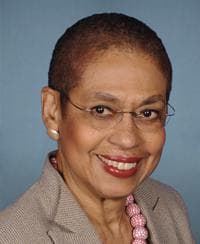
Eleanor Holmes Norton
Democratic Representative
District of Columbia
Cosponsors (1)
Education and Workforce Committee
- Introduced
- In Committee
- On Floor
- Passed Chamber
- Enacted
This bill, titled the "Salary History Question Prohibition Act," amends the Fair Labor Standards Act of 1938 to restrict employers' use of a prospective employee's wage history. It makes it an unlawful practice for employers to rely on or seek wage history when considering a candidate for employment or determining their wages. Specifically, employers cannot require prior wages to meet certain criteria for consideration or use past salary to set new compensation. However, an employer may consider wage history if it is voluntarily provided by the prospective employee after a job offer with compensation has been made, and only to support a higher wage than initially offered. The bill also prohibits employers from retaliating against any employee or prospective employee who opposes these unlawful practices. Violations of these provisions carry significant penalties, including a civil penalty of $5,000 for a first offense , increasing by $1,000 for subsequent offenses up to a maximum of $10,000. Additionally, employers will be liable to the affected individual for special damages not exceeding $10,000, plus attorneys' fees, and may face injunctive relief.
View Full TextSuggested Questions
Get AI-generated questions to help you understand this bill better
Timeline
Introduced in House
Referred to the House Committee on Education and Workforce.
Sponsor introductory remarks on measure. (CR E225)
Labor and Employment
Salary History Question Prohibition Act
USA119th CongressHR-2219| House
| Updated: 3/18/2025
This bill, titled the "Salary History Question Prohibition Act," amends the Fair Labor Standards Act of 1938 to restrict employers' use of a prospective employee's wage history. It makes it an unlawful practice for employers to rely on or seek wage history when considering a candidate for employment or determining their wages. Specifically, employers cannot require prior wages to meet certain criteria for consideration or use past salary to set new compensation. However, an employer may consider wage history if it is voluntarily provided by the prospective employee after a job offer with compensation has been made, and only to support a higher wage than initially offered. The bill also prohibits employers from retaliating against any employee or prospective employee who opposes these unlawful practices. Violations of these provisions carry significant penalties, including a civil penalty of $5,000 for a first offense , increasing by $1,000 for subsequent offenses up to a maximum of $10,000. Additionally, employers will be liable to the affected individual for special damages not exceeding $10,000, plus attorneys' fees, and may face injunctive relief.
View Full TextSuggested Questions
Get AI-generated questions to help you understand this bill better
Timeline
Introduced in House
Referred to the House Committee on Education and Workforce.
Sponsor introductory remarks on measure. (CR E225)
Eleanor Holmes Norton
Democratic Representative
District of Columbia
Cosponsors (1)
Education and Workforce Committee
Labor and Employment
- Introduced
- In Committee
- On Floor
- Passed Chamber
- Enacted