ESG Act of 2025
USA119th CongressHR-2358| House
| Updated: 3/26/2025
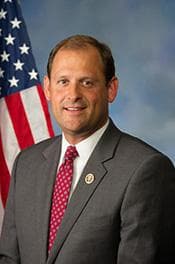
Andy Barr
Republican Representative
Kentucky
Cosponsors (1)
Financial Services Committee
- Introduced
- In Committee
- On Floor
- Passed Chamber
- Enacted
The bill amends the Investment Advisers Act of 1940 to establish that an investment adviser's "best interest" determination for a customer must primarily rely on pecuniary factors , which are those expected to materially affect an investment's risk or return. Non-pecuniary factors may only be considered if the customer provides informed, written consent, in which case the adviser must disclose the expected pecuniary effects over a customer-selected period and later the actual pecuniary effects compared to a benchmark. Additionally, the legislation mandates the Securities and Exchange Commission (SEC) to conduct a study on climate change and other environmental disclosures made by municipal securities issuers. This study will analyze the frequency and alignment of such disclosures, the standards observed, and the degree to which investors consider them in their investment decisions. The SEC must then report its findings to Congress, including an analysis of financial risks and recommended regulatory or legislative actions. A second study is required from the SEC concerning the solicitation of municipal securities business . This study will assess the effectiveness of "covered rules," such as MSRB Rule G-38 and SEC Rule 206(4)-5, in preventing pay-to-play schemes involving elected officials. It will also examine enforcement actions, compliance policies, and the impact on small, minority, and women-owned businesses, culminating in a report to Congress with findings and potential recommendations.
Suggested Questions
Get AI-generated questions to help you understand this bill better
Timeline
Introduced in House
Referred to the House Committee on Financial Services.
Finance and Financial Sector
ESG Act of 2025
USA119th CongressHR-2358| House
| Updated: 3/26/2025
The bill amends the Investment Advisers Act of 1940 to establish that an investment adviser's "best interest" determination for a customer must primarily rely on pecuniary factors , which are those expected to materially affect an investment's risk or return. Non-pecuniary factors may only be considered if the customer provides informed, written consent, in which case the adviser must disclose the expected pecuniary effects over a customer-selected period and later the actual pecuniary effects compared to a benchmark. Additionally, the legislation mandates the Securities and Exchange Commission (SEC) to conduct a study on climate change and other environmental disclosures made by municipal securities issuers. This study will analyze the frequency and alignment of such disclosures, the standards observed, and the degree to which investors consider them in their investment decisions. The SEC must then report its findings to Congress, including an analysis of financial risks and recommended regulatory or legislative actions. A second study is required from the SEC concerning the solicitation of municipal securities business . This study will assess the effectiveness of "covered rules," such as MSRB Rule G-38 and SEC Rule 206(4)-5, in preventing pay-to-play schemes involving elected officials. It will also examine enforcement actions, compliance policies, and the impact on small, minority, and women-owned businesses, culminating in a report to Congress with findings and potential recommendations.
Suggested Questions
Get AI-generated questions to help you understand this bill better
Timeline
Introduced in House
Referred to the House Committee on Financial Services.
Andy Barr
Republican Representative
Kentucky
Cosponsors (1)
Financial Services Committee
Finance and Financial Sector
- Introduced
- In Committee
- On Floor
- Passed Chamber
- Enacted