American Ownership and Resilience Act
USA119th CongressHR-3248| House
| Updated: 5/7/2025
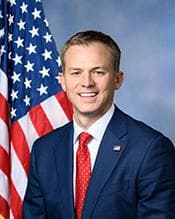
Blake D. Moore
Republican Representative
Utah
Cosponsors (8)
Ways and Means Committee, Financial Services Committee
- Introduced
- In Committee
- On Floor
- Passed Chamber
- Enacted
The "American Ownership and Resilience Act" establishes a domestic ownership succession investment facility within the Department of Commerce. This facility is designed to provide federal leverage, up to $5 billion annually, to licensed ownership investment companies (OICs) to encourage covered investments in businesses transitioning to employee ownership. These covered investments primarily involve financing the sale of a majority ownership interest to an employee stock ownership plan (ESOP) or an eligible worker-owned cooperative , or providing capital to existing employee-owned businesses. To ensure fairness and protect employee interests, the bill mandates stringent transaction requirements for ESOP sales. An independent trustee must be appointed to evaluate the proposed transaction, and they are required to obtain a fairness opinion from an independent financial advisor regarding the price, terms, and financing costs. The bill also prohibits OICs from exercising control over the covered business concerns they invest in and restricts employees from providing personal financing for these transactions, with limited exceptions. The Act outlines specific requirements for the structure and operation of OICs, which must be incorporated bodies, limited liability companies, or limited partnerships solely dedicated to the Act's purposes. Applicants for an OIC license must demonstrate qualified management and an investment track record, or, for Protege OICs , retain an experienced advisory firm. A minimum of $10 million in private capital is required for each licensee, and the Secretary of Commerce must ensure this capital is adequate for sound and profitable operations. OICs are authorized to borrow money and issue obligations, with the Department of Commerce guaranteeing debentures (leverage) to facilitate investments. These guarantees are backed by the full faith and credit of the United States. Leverage limits are set, with non-Protege OICs capped at the lesser of 100% of private capital or $500 million, and Protege OICs at $100 million, with potential exclusions for investments in critical industries. The bill also includes detailed provisions for oversight and enforcement. OICs are subject to regular examinations and must submit annual reports detailing their investments, the characteristics of the employee-owned businesses, and demographic information of participants. The Secretary has authority to revoke or suspend licenses, issue cease and desist orders, and remove management officials for violations, with clear procedural safeguards and judicial review mechanisms.
View Full TextSuggested Questions
Get AI-generated questions to help you understand this bill better
Timeline
Introduced in House
Referred to the Committee on Financial Services, and in addition to the Committee on Ways and Means, for a period to be subsequently determined by the Speaker, in each case for consideration of such provisions as fall within the jurisdiction of the committee concerned.
Finance and Financial Sector
American Ownership and Resilience Act
USA119th CongressHR-3248| House
| Updated: 5/7/2025
The "American Ownership and Resilience Act" establishes a domestic ownership succession investment facility within the Department of Commerce. This facility is designed to provide federal leverage, up to $5 billion annually, to licensed ownership investment companies (OICs) to encourage covered investments in businesses transitioning to employee ownership. These covered investments primarily involve financing the sale of a majority ownership interest to an employee stock ownership plan (ESOP) or an eligible worker-owned cooperative , or providing capital to existing employee-owned businesses. To ensure fairness and protect employee interests, the bill mandates stringent transaction requirements for ESOP sales. An independent trustee must be appointed to evaluate the proposed transaction, and they are required to obtain a fairness opinion from an independent financial advisor regarding the price, terms, and financing costs. The bill also prohibits OICs from exercising control over the covered business concerns they invest in and restricts employees from providing personal financing for these transactions, with limited exceptions. The Act outlines specific requirements for the structure and operation of OICs, which must be incorporated bodies, limited liability companies, or limited partnerships solely dedicated to the Act's purposes. Applicants for an OIC license must demonstrate qualified management and an investment track record, or, for Protege OICs , retain an experienced advisory firm. A minimum of $10 million in private capital is required for each licensee, and the Secretary of Commerce must ensure this capital is adequate for sound and profitable operations. OICs are authorized to borrow money and issue obligations, with the Department of Commerce guaranteeing debentures (leverage) to facilitate investments. These guarantees are backed by the full faith and credit of the United States. Leverage limits are set, with non-Protege OICs capped at the lesser of 100% of private capital or $500 million, and Protege OICs at $100 million, with potential exclusions for investments in critical industries. The bill also includes detailed provisions for oversight and enforcement. OICs are subject to regular examinations and must submit annual reports detailing their investments, the characteristics of the employee-owned businesses, and demographic information of participants. The Secretary has authority to revoke or suspend licenses, issue cease and desist orders, and remove management officials for violations, with clear procedural safeguards and judicial review mechanisms.
View Full TextSuggested Questions
Get AI-generated questions to help you understand this bill better
Timeline
Introduced in House
Referred to the Committee on Financial Services, and in addition to the Committee on Ways and Means, for a period to be subsequently determined by the Speaker, in each case for consideration of such provisions as fall within the jurisdiction of the committee concerned.
Blake D. Moore
Republican Representative
Utah
Cosponsors (8)
Ways and Means Committee, Financial Services Committee
Finance and Financial Sector
Related Bills
- Introduced
- In Committee
- On Floor
- Passed Chamber
- Enacted