Honoring Civil Servants Killed in the Line of Duty Act
USA119th CongressHR-3317| House
| Updated: 5/9/2025
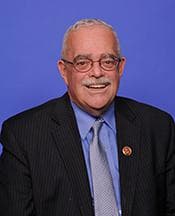
Gerald E. Connolly
Democratic Representative
Virginia
Cosponsors (1)
Committees (7)
• Homeland Security Committee• Transportation and Infrastructure Committee• Ways and Means Committee• Foreign Affairs Committee• Veterans' Affairs Committee• Armed Services Committee• Oversight and Government Reform Committee
- Introduced
- In Committee
- On Floor
- Passed Chamber
- Enacted
This legislation, titled the "Honoring Civil Servants Killed in the Line of Duty Act," significantly enhances and expands death gratuities for federal employees. It establishes a new, permanent death gratuity of $100,000 , adjusted annually for inflation, for federal employees whose deaths result from injuries incurred in connection with their employment, criminal acts, terrorism, or natural disasters. This gratuity is paid by the employing agency, provided the death was not due to willful misconduct, intent to self-harm, or intoxication. The bill clarifies the definition of an eligible employee and establishes a clear order of precedence for beneficiaries, starting with a designated individual, then the surviving spouse, children, parents, and finally the estate. Importantly, all payments made under this new gratuity are explicitly deemed not includible in the recipient's gross income for tax purposes. The provisions extend this new gratuity to employees of the Federal Aviation Administration (FAA), certain Transportation Security Administration (TSA) personnel, and Veterans Health Administration (VHA) employees. Beyond the new gratuity, the bill substantially increases the maximum federal contribution for funeral expenses from $800 to $8,800 , also subject to annual inflation adjustments, and makes these payments tax-exempt. It further amends existing law to ensure that death gratuities for federal employees killed in connection with military service and for Foreign Service personnel who die abroad are also indexed for inflation and are not subject to federal income tax. These existing gratuities are also subject to offsets if other federal benefits are received. Finally, the legislation includes a mechanism for emergency supplemental appropriations, authorizing additional funds for agencies if a natural disaster, act of terrorism, or other incident leads to costs for these gratuities that exceed available agency budgets. All amendments and new provisions in this Act apply to any death occurring on or after the date of its enactment, ensuring immediate impact for affected families.
View Full TextSuggested Questions
Get AI-generated questions to help you understand this bill better
Timeline
Introduced in House
Referred to the Committee on Oversight and Government Reform, and in addition to the Committees on Foreign Affairs, Armed Services, Veterans' Affairs, Transportation and Infrastructure, Homeland Security, and Ways and Means, for a period to be subsequently determined by the Speaker, in each case for consideration of such provisions as fall within the jurisdiction of the committee concerned.
Honoring Civil Servants Killed in the Line of Duty Act
USA119th CongressHR-3317| House
| Updated: 5/9/2025
This legislation, titled the "Honoring Civil Servants Killed in the Line of Duty Act," significantly enhances and expands death gratuities for federal employees. It establishes a new, permanent death gratuity of $100,000 , adjusted annually for inflation, for federal employees whose deaths result from injuries incurred in connection with their employment, criminal acts, terrorism, or natural disasters. This gratuity is paid by the employing agency, provided the death was not due to willful misconduct, intent to self-harm, or intoxication. The bill clarifies the definition of an eligible employee and establishes a clear order of precedence for beneficiaries, starting with a designated individual, then the surviving spouse, children, parents, and finally the estate. Importantly, all payments made under this new gratuity are explicitly deemed not includible in the recipient's gross income for tax purposes. The provisions extend this new gratuity to employees of the Federal Aviation Administration (FAA), certain Transportation Security Administration (TSA) personnel, and Veterans Health Administration (VHA) employees. Beyond the new gratuity, the bill substantially increases the maximum federal contribution for funeral expenses from $800 to $8,800 , also subject to annual inflation adjustments, and makes these payments tax-exempt. It further amends existing law to ensure that death gratuities for federal employees killed in connection with military service and for Foreign Service personnel who die abroad are also indexed for inflation and are not subject to federal income tax. These existing gratuities are also subject to offsets if other federal benefits are received. Finally, the legislation includes a mechanism for emergency supplemental appropriations, authorizing additional funds for agencies if a natural disaster, act of terrorism, or other incident leads to costs for these gratuities that exceed available agency budgets. All amendments and new provisions in this Act apply to any death occurring on or after the date of its enactment, ensuring immediate impact for affected families.
View Full TextSuggested Questions
Get AI-generated questions to help you understand this bill better
Timeline
Introduced in House
Referred to the Committee on Oversight and Government Reform, and in addition to the Committees on Foreign Affairs, Armed Services, Veterans' Affairs, Transportation and Infrastructure, Homeland Security, and Ways and Means, for a period to be subsequently determined by the Speaker, in each case for consideration of such provisions as fall within the jurisdiction of the committee concerned.
Gerald E. Connolly
Democratic Representative
Virginia
Cosponsors (1)
Committees (7)
• Homeland Security Committee• Transportation and Infrastructure Committee• Ways and Means Committee• Foreign Affairs Committee• Veterans' Affairs Committee• Armed Services Committee• Oversight and Government Reform Committee
- Introduced
- In Committee
- On Floor
- Passed Chamber
- Enacted