Anti-Rigging Act of 2025
USA119th CongressHR-4358| House
| Updated: 7/10/2025
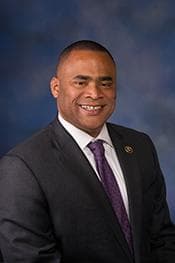
Marc A. Veasey
Democratic Representative
Texas
Cosponsors (9)
Judiciary Committee
- Introduced
- In Committee
- On Floor
- Passed Chamber
- Enacted
This bill aims to restrict states from carrying out multiple congressional redistricting processes following a decennial census and the subsequent apportionment of Representatives. It amends existing law to establish that once a state has been redistricted, it cannot be redistricted again until the next apportionment. A crucial exception allows for subsequent redistricting only if a court requires it to ensure compliance with the Constitution or to enforce the Voting Rights Act of 1965 . The legislation explicitly clarifies that its provisions do not impact how states conduct elections or establish districts for state or local offices. Congress asserts its authority for this measure under Article I, Section 4 of the Constitution, pertaining to federal elections, and Section 5 of the Fourteenth Amendment. The act and its amendments are set to apply to any congressional redistricting that has taken place after the regular decennial census conducted in 2020.
View Full TextSuggested Questions
Get AI-generated questions to help you understand this bill better
Timeline
Introduced in House
Referred to the House Committee on the Judiciary.
Government Operations and Politics
Anti-Rigging Act of 2025
USA119th CongressHR-4358| House
| Updated: 7/10/2025
This bill aims to restrict states from carrying out multiple congressional redistricting processes following a decennial census and the subsequent apportionment of Representatives. It amends existing law to establish that once a state has been redistricted, it cannot be redistricted again until the next apportionment. A crucial exception allows for subsequent redistricting only if a court requires it to ensure compliance with the Constitution or to enforce the Voting Rights Act of 1965 . The legislation explicitly clarifies that its provisions do not impact how states conduct elections or establish districts for state or local offices. Congress asserts its authority for this measure under Article I, Section 4 of the Constitution, pertaining to federal elections, and Section 5 of the Fourteenth Amendment. The act and its amendments are set to apply to any congressional redistricting that has taken place after the regular decennial census conducted in 2020.
View Full TextSuggested Questions
Get AI-generated questions to help you understand this bill better
Timeline
Introduced in House
Referred to the House Committee on the Judiciary.
Marc A. Veasey
Democratic Representative
Texas