Fix Our Forests Act
USA119th CongressHR-471| House
| Updated: 3/6/2025
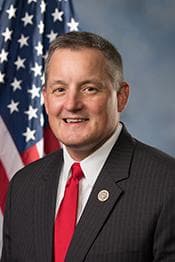
Bruce Westerman
Republican Representative
Arkansas
Cosponsors (56)
Dusty Johnson (Republican)Doug LaMalfa (Republican)Paul A. Gosar (Republican)Ryan K. Zinke (Republican)John Garamendi (Democratic)Jared F. Golden (Democratic)Celeste Maloy (Republican)Steny H. Hoyer (Democratic)Jeff Crank (Republican)Gabe Vasquez (Democratic)Thomas P. Tiffany (Republican)Robert J. Wittman (Republican)Mike Collins (Republican)Vince Fong (Republican)Mike Ezell (Republican)Young Kim (Republican)Jimmy Panetta (Democratic)J. Luis Correa (Democratic)Tom McClintock (Republican)Pete Sessions (Republican)Scott H. Peters (Democratic)Tim Walberg (Republican)Thomas R. Suozzi (Democratic)Earl L. "Buddy" Carter (Republican)Jeff Hurd (Republican)Ken Calvert (Republican)J. French Hill (Republican)Dan Newhouse (Republican)Andy Barr (Republican)Darrell Issa (Republican)Mike Kennedy (Republican)John Joyce (Republican)Cliff Bentz (Republican)Brittany Pettersen (Democratic)Tony Wied (Republican)Ami Bera (Democratic)Josh Harder (Democratic)Mark B. Messmer (Republican)Harriet M. Hageman (Republican)Lauren Boebert (Republican)Nicholas J. Begich (Republican)Jim Costa (Democratic)Mark E. Amodei (Republican)Russell Fry (Republican)Pete Stauber (Republican)David G. Valadao (Republican)Addison P. McDowell (Republican)Wesley Hunt (Republican)Adam Gray (Democratic)Jay Obernolte (Republican)Kevin Kiley (Republican)Mike Thompson (Democratic)Kevin Mullin (Democratic)George Whitesides (Democratic)Susie Lee (Democratic)Jennifer A. Kiggans (Republican)
Agriculture Committee, Agriculture, Nutrition, and Forestry Committee, Conservation, Climate, Forestry, and Natural Resources Subcommittee, Science, Space, and Technology Committee, Natural Resources Committee
- Introduced
- In Committee
- On Floor
- Passed Chamber
- Enacted
This legislation, known as the "Fix Our Forests Act," seeks to accelerate and improve forest management activities on National Forest System lands, public lands, and Tribal lands to enhance resilience against wildfires. It establishes a comprehensive framework for identifying and addressing high-priority firesheds, creating a new interagency Fireshed Center to provide data-driven predictive services and coordinate wildfire and smoke management across jurisdictions. A publicly accessible Fireshed Registry will track wildfire exposure, hazardous fuels management activities, and the status of related environmental reviews. The bill mandates shared stewardship agreements with states and Indian Tribes for joint fireshed assessments, which will identify wildfire risks, at-risk communities, and prioritize management projects. It significantly streamlines environmental review processes for designated fireshed management areas and projects by exempting designations from NEPA and expanding the use of categorical exclusions, increasing acreage limits for certain projects from 3,000 to 10,000 acres. This aims to expedite hazardous fuels reduction, creation of fuel breaks, and removal of hazard trees. To enhance collaborative efforts, the bill modifies Good Neighbor Agreements to include special districts and allow revenue retention for road construction or decommissioning, extending their duration. It also reforms stewardship contracting by allowing longer contract terms and providing cancellation costs for long-term agreements. Intra-agency strike teams are authorized to accelerate environmental reviews and project implementation, while the Joint Chiefs Landscape Restoration Partnership and Collaborative Forest Landscape Restoration programs are expanded and extended. The legislation introduces a strategy to increase the use of livestock grazing for wildfire risk reduction and establishes a Water Source Protection Program to safeguard municipal and agricultural water supplies. It also includes significant litigation reforms, limiting judicial review of covered agency actions by requiring plaintiffs to demonstrate likely success on the merits and balancing the short- and long-term ecological effects of proposed actions. Furthermore, it restricts the reinitiation of Endangered Species Act consultations for approved forest plans under specific circumstances. For community protection, the bill creates a Community Wildfire Risk Reduction Program to coordinate interagency efforts in the wildland-urban interface, supporting fire-resistant building methods and hazardous fuels management. It also establishes a Community Wildfire Defense Research Program to advance innovative designs for wildfire-resistant structures and communities, including a prize for groundbreaking solutions. Provisions are made to streamline vegetation management for electric utility rights-of-way and establish a categorical exclusion for these activities. Transparency and technology are addressed through initiatives like the "Seeds of Success" strategy to boost the domestic seed supply chain for native and fire-resistant plants. A program is established to support priority reforestation and restoration projects on Department of the Interior lands. The bill also mandates accurate hazardous fuels reduction reports, requiring standardized data collection and annual reporting to Congress on acres treated, costs, and effectiveness. A public-private pilot program is created to deploy and demonstrate new wildfire prevention, detection, and mitigation technologies. The bill promotes biochar innovation through demonstration projects and research grants, focusing on its development and commercialization for forest health, carbon sequestration, and agricultural uses. It also includes a comprehensive White Oak Resilience subtitle, establishing a White Oak Restoration Initiative Coalition, pilot programs for restoration on federal lands, and a grant program for white oak regeneration. Finally, the bill mandates the development of a Wildland Fire Management Casualty Assistance Program to provide support and resources to the next-of-kin of firefighters and wildland fire support personnel injured or killed in the line of duty.
Suggested Questions
Get AI-generated questions to help you understand this bill better
Timeline
Introduced in House
Referred to the Committee on Natural Resources, and in addition to the Committees on Agriculture, and Science, Space, and Technology, for a period to be subsequently determined by the Speaker, in each case for consideration of such provisions as fall within the jurisdiction of the committee concerned.
Rules Committee Resolution H. Res. 53 Reported to House. Rule provides for consideration of H.R. 471 and S. 5. The resolution provides for consideration of H.R. 471 under a structured rule with one hour of general debate and one motion to recommit. Also, the resolution provides for consideration of S. 5 under a closed rule with one hour of general debate and one motion to commit.
Considered under the provisions of rule H. Res. 53. (consideration: CR H312-335)
Rule provides for consideration of H.R. 471 and S. 5. The resolution provides for consideration of H.R. 471 under a structured rule with one hour of general debate and one motion to recommit. Also, the resolution provides for consideration of S. 5 under a closed rule with one hour of general debate and one motion to commit.
House resolved itself into the Committee of the Whole House on the state of the Union pursuant to H. Res. 53 and Rule XVIII.
The Speaker designated the Honorable Dale W. Strong to act as Chairman of the Committee.
GENERAL DEBATE - The Committee of the Whole proceeded with one hour of general debate on H.R. 471.
DEBATE - Pursuant to the provisions of H.Res. 53, the Committee of the Whole proceeded with 10 minutes of debate on the Perry amendment No. 1.
DEBATE - Pursuant to the provisions of H.Res. 53, the Committee of the Whole proceeded with 10 minutes of debate on the Carbajal amendment No. 2.
The House rose from the Committee of the Whole House on the state of the Union to report H.R. 471.
The previous question was ordered pursuant to the rule.
The House adopted the amendments en gros as agreed to by the Committee of the Whole House on the state of the Union.
POSTPONED PROCEEDINGS - At the conclusion of debate on H.R. 471, the Chair put the question on passage of the bill and by voice vote, announced that the ayes had prevailed. Mr. Peters demanded the yeas and nays and the Chair postponed further proceedings until a time to be announced.
Considered as unfinished business. (consideration: CR H346-347)
On passage Passed by the Yeas and Nays: 279 - 141 (Roll no. 25). (text: CR H321-333)
View VoteMotion to reconsider laid on the table Agreed to without objection.
Received in the Senate.
Committee on Agriculture, Nutrition, and Forestry Subcommittee on Conservation, Forestry, Natural Resources, and Biotechnology. Hearings held.
Committee on Agriculture, Nutrition, and Forestry Subcommittee on Conservation, Forestry, Natural Resources, and Biotechnology. Hearings held. With printed Hearing: S.Hrg. 119-27.
Latest Companion Bill Action
S 119-1462Committee on Agriculture, Nutrition, and Forestry. Reported by Senator Boozman with an amendment in the nature of a substitute. Without written report.
Public Lands and Natural Resources
Administrative law and regulatory proceduresAgricultural practices and innovationsAlternative and renewable resourcesBuilding constructionCaliforniaClimate change and greenhouse gasesCommunity life and organizationComputers and information technologyCongressional oversightDepartment of AgricultureDepartment of the InteriorEcologyEmergency planning and evacuationEnvironmental assessment, monitoring, researchExecutive agency funding and structureFederal officialsFiresFirst responders and emergency personnelForests, forestry, treesGeography and mappingGovernment information and archivesGovernment studies and investigationsHazardous wastes and toxic substancesHorticulture and plantsIndian lands and resources rightsIntergovernmental relationsInternet, web applications, social mediaJudicial procedure and administrationJudicial review and appealsLand use and conservationLicensing and registrationsMotor fuelsNevadaPublic contracts and procurementPublic participation and lobbyingPublic-private cooperationResearch and developmentRoads and highwaysRural conditions and developmentSoil pollutionState and local financeState and local government operationsTechnology transfer and commercializationWatershedsWater use and supplyWilderness and natural areas, wildlife refuges, wild rivers, habitatsWildlife conservation and habitat protection
Fix Our Forests Act
USA119th CongressHR-471| House
| Updated: 3/6/2025
This legislation, known as the "Fix Our Forests Act," seeks to accelerate and improve forest management activities on National Forest System lands, public lands, and Tribal lands to enhance resilience against wildfires. It establishes a comprehensive framework for identifying and addressing high-priority firesheds, creating a new interagency Fireshed Center to provide data-driven predictive services and coordinate wildfire and smoke management across jurisdictions. A publicly accessible Fireshed Registry will track wildfire exposure, hazardous fuels management activities, and the status of related environmental reviews. The bill mandates shared stewardship agreements with states and Indian Tribes for joint fireshed assessments, which will identify wildfire risks, at-risk communities, and prioritize management projects. It significantly streamlines environmental review processes for designated fireshed management areas and projects by exempting designations from NEPA and expanding the use of categorical exclusions, increasing acreage limits for certain projects from 3,000 to 10,000 acres. This aims to expedite hazardous fuels reduction, creation of fuel breaks, and removal of hazard trees. To enhance collaborative efforts, the bill modifies Good Neighbor Agreements to include special districts and allow revenue retention for road construction or decommissioning, extending their duration. It also reforms stewardship contracting by allowing longer contract terms and providing cancellation costs for long-term agreements. Intra-agency strike teams are authorized to accelerate environmental reviews and project implementation, while the Joint Chiefs Landscape Restoration Partnership and Collaborative Forest Landscape Restoration programs are expanded and extended. The legislation introduces a strategy to increase the use of livestock grazing for wildfire risk reduction and establishes a Water Source Protection Program to safeguard municipal and agricultural water supplies. It also includes significant litigation reforms, limiting judicial review of covered agency actions by requiring plaintiffs to demonstrate likely success on the merits and balancing the short- and long-term ecological effects of proposed actions. Furthermore, it restricts the reinitiation of Endangered Species Act consultations for approved forest plans under specific circumstances. For community protection, the bill creates a Community Wildfire Risk Reduction Program to coordinate interagency efforts in the wildland-urban interface, supporting fire-resistant building methods and hazardous fuels management. It also establishes a Community Wildfire Defense Research Program to advance innovative designs for wildfire-resistant structures and communities, including a prize for groundbreaking solutions. Provisions are made to streamline vegetation management for electric utility rights-of-way and establish a categorical exclusion for these activities. Transparency and technology are addressed through initiatives like the "Seeds of Success" strategy to boost the domestic seed supply chain for native and fire-resistant plants. A program is established to support priority reforestation and restoration projects on Department of the Interior lands. The bill also mandates accurate hazardous fuels reduction reports, requiring standardized data collection and annual reporting to Congress on acres treated, costs, and effectiveness. A public-private pilot program is created to deploy and demonstrate new wildfire prevention, detection, and mitigation technologies. The bill promotes biochar innovation through demonstration projects and research grants, focusing on its development and commercialization for forest health, carbon sequestration, and agricultural uses. It also includes a comprehensive White Oak Resilience subtitle, establishing a White Oak Restoration Initiative Coalition, pilot programs for restoration on federal lands, and a grant program for white oak regeneration. Finally, the bill mandates the development of a Wildland Fire Management Casualty Assistance Program to provide support and resources to the next-of-kin of firefighters and wildland fire support personnel injured or killed in the line of duty.
Suggested Questions
Get AI-generated questions to help you understand this bill better
Timeline
Introduced in House
Referred to the Committee on Natural Resources, and in addition to the Committees on Agriculture, and Science, Space, and Technology, for a period to be subsequently determined by the Speaker, in each case for consideration of such provisions as fall within the jurisdiction of the committee concerned.
Rules Committee Resolution H. Res. 53 Reported to House. Rule provides for consideration of H.R. 471 and S. 5. The resolution provides for consideration of H.R. 471 under a structured rule with one hour of general debate and one motion to recommit. Also, the resolution provides for consideration of S. 5 under a closed rule with one hour of general debate and one motion to commit.
Considered under the provisions of rule H. Res. 53. (consideration: CR H312-335)
Rule provides for consideration of H.R. 471 and S. 5. The resolution provides for consideration of H.R. 471 under a structured rule with one hour of general debate and one motion to recommit. Also, the resolution provides for consideration of S. 5 under a closed rule with one hour of general debate and one motion to commit.
House resolved itself into the Committee of the Whole House on the state of the Union pursuant to H. Res. 53 and Rule XVIII.
The Speaker designated the Honorable Dale W. Strong to act as Chairman of the Committee.
GENERAL DEBATE - The Committee of the Whole proceeded with one hour of general debate on H.R. 471.
DEBATE - Pursuant to the provisions of H.Res. 53, the Committee of the Whole proceeded with 10 minutes of debate on the Perry amendment No. 1.
DEBATE - Pursuant to the provisions of H.Res. 53, the Committee of the Whole proceeded with 10 minutes of debate on the Carbajal amendment No. 2.
The House rose from the Committee of the Whole House on the state of the Union to report H.R. 471.
The previous question was ordered pursuant to the rule.
The House adopted the amendments en gros as agreed to by the Committee of the Whole House on the state of the Union.
POSTPONED PROCEEDINGS - At the conclusion of debate on H.R. 471, the Chair put the question on passage of the bill and by voice vote, announced that the ayes had prevailed. Mr. Peters demanded the yeas and nays and the Chair postponed further proceedings until a time to be announced.
Considered as unfinished business. (consideration: CR H346-347)
On passage Passed by the Yeas and Nays: 279 - 141 (Roll no. 25). (text: CR H321-333)
View VoteMotion to reconsider laid on the table Agreed to without objection.
Received in the Senate.
Committee on Agriculture, Nutrition, and Forestry Subcommittee on Conservation, Forestry, Natural Resources, and Biotechnology. Hearings held.
Committee on Agriculture, Nutrition, and Forestry Subcommittee on Conservation, Forestry, Natural Resources, and Biotechnology. Hearings held. With printed Hearing: S.Hrg. 119-27.
Latest Companion Bill Action
S 119-1462Committee on Agriculture, Nutrition, and Forestry. Reported by Senator Boozman with an amendment in the nature of a substitute. Without written report.
Bruce Westerman
Republican Representative
Arkansas
Cosponsors (56)
Dusty Johnson (Republican)Doug LaMalfa (Republican)Paul A. Gosar (Republican)Ryan K. Zinke (Republican)John Garamendi (Democratic)Jared F. Golden (Democratic)Celeste Maloy (Republican)Steny H. Hoyer (Democratic)Jeff Crank (Republican)Gabe Vasquez (Democratic)Thomas P. Tiffany (Republican)Robert J. Wittman (Republican)Mike Collins (Republican)Vince Fong (Republican)Mike Ezell (Republican)Young Kim (Republican)Jimmy Panetta (Democratic)J. Luis Correa (Democratic)Tom McClintock (Republican)Pete Sessions (Republican)Scott H. Peters (Democratic)Tim Walberg (Republican)Thomas R. Suozzi (Democratic)Earl L. "Buddy" Carter (Republican)Jeff Hurd (Republican)Ken Calvert (Republican)J. French Hill (Republican)Dan Newhouse (Republican)Andy Barr (Republican)Darrell Issa (Republican)Mike Kennedy (Republican)John Joyce (Republican)Cliff Bentz (Republican)Brittany Pettersen (Democratic)Tony Wied (Republican)Ami Bera (Democratic)Josh Harder (Democratic)Mark B. Messmer (Republican)Harriet M. Hageman (Republican)Lauren Boebert (Republican)Nicholas J. Begich (Republican)Jim Costa (Democratic)Mark E. Amodei (Republican)Russell Fry (Republican)Pete Stauber (Republican)David G. Valadao (Republican)Addison P. McDowell (Republican)Wesley Hunt (Republican)Adam Gray (Democratic)Jay Obernolte (Republican)Kevin Kiley (Republican)Mike Thompson (Democratic)Kevin Mullin (Democratic)George Whitesides (Democratic)Susie Lee (Democratic)Jennifer A. Kiggans (Republican)
Agriculture Committee, Agriculture, Nutrition, and Forestry Committee, Conservation, Climate, Forestry, and Natural Resources Subcommittee, Science, Space, and Technology Committee, Natural Resources Committee
Public Lands and Natural Resources
Related Bills
- HR 119-598: FIR Act
- HR 119-2405: The White Oak Resilience Act
- HRES 119-53: Providing for consideration of the bill (H.R. 471) to expedite under the National Environmental Policy Act of 1969 and improve forest management activities on National Forest System lands, on public lands under the jurisdiction of the Bureau of Land Management, and on Tribal lands to return resilience to overgrown, fire-prone forested lands, and for other purposes, and providing for consideration of the bill (S. 5) to require the Secretary of Homeland Security to take into custody aliens who have been charged in the United States with theft, and for other purposes.
- HR 119-4671: Ensuring Casualty Assistance for our Firefighters Act
- Introduced
- In Committee
- On Floor
- Passed Chamber
- Enacted
Administrative law and regulatory proceduresAgricultural practices and innovationsAlternative and renewable resourcesBuilding constructionCaliforniaClimate change and greenhouse gasesCommunity life and organizationComputers and information technologyCongressional oversightDepartment of AgricultureDepartment of the InteriorEcologyEmergency planning and evacuationEnvironmental assessment, monitoring, researchExecutive agency funding and structureFederal officialsFiresFirst responders and emergency personnelForests, forestry, treesGeography and mappingGovernment information and archivesGovernment studies and investigationsHazardous wastes and toxic substancesHorticulture and plantsIndian lands and resources rightsIntergovernmental relationsInternet, web applications, social mediaJudicial procedure and administrationJudicial review and appealsLand use and conservationLicensing and registrationsMotor fuelsNevadaPublic contracts and procurementPublic participation and lobbyingPublic-private cooperationResearch and developmentRoads and highwaysRural conditions and developmentSoil pollutionState and local financeState and local government operationsTechnology transfer and commercializationWatershedsWater use and supplyWilderness and natural areas, wildlife refuges, wild rivers, habitatsWildlife conservation and habitat protection