To ensure the alignment of economic and foreign policies, to position the Department of State to reflect that economic security is national security, and for other purposes.
USA119th CongressHR-5248| House
| Updated: 9/19/2025
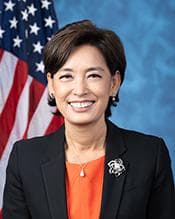
Young Kim
Republican Representative
California
Foreign Affairs Committee
- Introduced
- In Committee
- On Floor
- Passed Chamber
- Enacted
This bill seeks to fundamentally realign the Department of State's structure to ensure that economic and foreign policies are integrated, reflecting the principle that economic security is national security. It establishes an Under Secretary for Economic Affairs within the Department, responsible for a wide array of issues including economic growth, commercial expansion, energy, technology policy, critical minerals, and environmental protection. This new Under Secretary will coordinate all economic and business affairs in foreign policy, developing strategic plans, promoting U.S. private sector opportunities, and safeguarding the preeminence of the U.S. dollar. To bolster this new structure, the bill authorizes a Chief Economist and an Office of the Chief Economist to provide expert research and analysis on geoeconomic trends, supply chain resilience, and strategies to counter malign foreign actors. It also creates an Assistant Secretary for Commercial Diplomacy and a corresponding Bureau, tasked with leading trade and investment promotion, international finance, and development. This Assistant Secretary will oversee a new Office of Subnational Diplomacy , designed to help U.S. state and local governments attract foreign investment, counter foreign influence, and contribute to national foreign policy goals. Further specialization is introduced through the establishment of an Assistant Secretary for Water, Environment, and Space Affairs and a dedicated Bureau, focusing on oceans, natural resources, environmental security, and civil and commercial space policy. An Assistant Secretary for Energy Security and Diplomacy and a Bureau are also created to formulate and implement international energy, energy technology, and critical minerals policies, ensuring U.S. energy security interests are advanced globally. Lastly, an Assistant Secretary for Sanctions Policy and a Bureau will be responsible for developing and coordinating sanctions strategies, ensuring their effectiveness and alignment with U.S. foreign policy objectives. The bill authorizes appropriations for these new positions and bureaus for fiscal years 2026 and 2027, with funds allocated under the Under Secretary for Economic Affairs. It also specifies that existing officials in related roles will transition to these new positions upon enactment, with subsequent appointments requiring Senate confirmation. Additionally, the legislation amends the CHIPS Act of 2022 to place the International Technology Security and Innovation Fund under the direct oversight and administration of the new Under Secretary for Economic Affairs.
View Full TextSuggested Questions
Get AI-generated questions to help you understand this bill better
Timeline
Introduced in House
Referred to the House Committee on Foreign Affairs.
Committee Consideration and Mark-up Session Held
Committee Consideration and Mark-up Session Held
Ordered to be Reported (Amended) by the Yeas and Nays: 28 - 22.
Ordered to be Reported (Amended).
International Affairs
Advanced technology and technological innovationsCompetitiveness, trade promotion, trade deficitsCongressional oversightDepartment of StateDiplomacy, foreign officials, Americans abroadEconomic developmentEnergy efficiency and conservationEnergy researchExecutive agency funding and structureFederal officialsSanctionsSpace flight and exploration
To ensure the alignment of economic and foreign policies, to position the Department of State to reflect that economic security is national security, and for other purposes.
USA119th CongressHR-5248| House
| Updated: 9/19/2025
This bill seeks to fundamentally realign the Department of State's structure to ensure that economic and foreign policies are integrated, reflecting the principle that economic security is national security. It establishes an Under Secretary for Economic Affairs within the Department, responsible for a wide array of issues including economic growth, commercial expansion, energy, technology policy, critical minerals, and environmental protection. This new Under Secretary will coordinate all economic and business affairs in foreign policy, developing strategic plans, promoting U.S. private sector opportunities, and safeguarding the preeminence of the U.S. dollar. To bolster this new structure, the bill authorizes a Chief Economist and an Office of the Chief Economist to provide expert research and analysis on geoeconomic trends, supply chain resilience, and strategies to counter malign foreign actors. It also creates an Assistant Secretary for Commercial Diplomacy and a corresponding Bureau, tasked with leading trade and investment promotion, international finance, and development. This Assistant Secretary will oversee a new Office of Subnational Diplomacy , designed to help U.S. state and local governments attract foreign investment, counter foreign influence, and contribute to national foreign policy goals. Further specialization is introduced through the establishment of an Assistant Secretary for Water, Environment, and Space Affairs and a dedicated Bureau, focusing on oceans, natural resources, environmental security, and civil and commercial space policy. An Assistant Secretary for Energy Security and Diplomacy and a Bureau are also created to formulate and implement international energy, energy technology, and critical minerals policies, ensuring U.S. energy security interests are advanced globally. Lastly, an Assistant Secretary for Sanctions Policy and a Bureau will be responsible for developing and coordinating sanctions strategies, ensuring their effectiveness and alignment with U.S. foreign policy objectives. The bill authorizes appropriations for these new positions and bureaus for fiscal years 2026 and 2027, with funds allocated under the Under Secretary for Economic Affairs. It also specifies that existing officials in related roles will transition to these new positions upon enactment, with subsequent appointments requiring Senate confirmation. Additionally, the legislation amends the CHIPS Act of 2022 to place the International Technology Security and Innovation Fund under the direct oversight and administration of the new Under Secretary for Economic Affairs.
View Full TextSuggested Questions
Get AI-generated questions to help you understand this bill better
Timeline
Introduced in House
Referred to the House Committee on Foreign Affairs.
Committee Consideration and Mark-up Session Held
Committee Consideration and Mark-up Session Held
Ordered to be Reported (Amended) by the Yeas and Nays: 28 - 22.
Ordered to be Reported (Amended).
Young Kim
Republican Representative
California
Foreign Affairs Committee
International Affairs
- Introduced
- In Committee
- On Floor
- Passed Chamber
- Enacted
Advanced technology and technological innovationsCompetitiveness, trade promotion, trade deficitsCongressional oversightDepartment of StateDiplomacy, foreign officials, Americans abroadEconomic developmentEnergy efficiency and conservationEnergy researchExecutive agency funding and structureFederal officialsSanctionsSpace flight and exploration