FREEDOM for Gao Zhisheng and All Political Prisoners Act
USA119th CongressHR-5303| House
| Updated: 9/11/2025
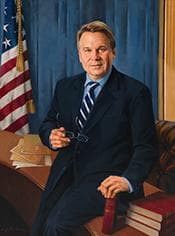
Christopher H. Smith
Republican Representative
New Jersey
Ways and Means Committee, Foreign Affairs Committee, Financial Services Committee, Judiciary Committee
- Introduced
- In Committee
- On Floor
- Passed Chamber
- Enacted
This legislation, known as the "FREEDOM for Gao Zhisheng and All Political Prisoners Act," seeks to significantly enhance the Department of State's diplomatic advocacy for political prisoners worldwide, with a particular emphasis on those held in the People's Republic of China, including Hong Kong. It establishes a clear U.S. policy to utilize all available diplomatic tools to press for the release of these individuals, recognizing that consistent engagement can lead to improved conditions or release. The bill highlights numerous cases of concern, such as human rights lawyer Gao Zhisheng, Jimmy Lai, and various religious and ethnic minorities, underscoring the widespread nature of arbitrary detentions. The Act outlines specific policy statements, including the commitment to seek the release of unjustly detained Americans in China and to end the use of "exit bans" that violate international norms. It also directs the United States to leverage its influence at the United Nations and other multilateral organizations to highlight human rights violations, document cases, and support investigations into the treatment of political prisoners and their families. Furthermore, the bill mandates holding officials accountable for gross human rights violations, such as arbitrary detention or torture, through the application of various U.S. sanctions authorities. A core provision of the bill is the active championing for the release of Gao Zhisheng , committing the U.S. government to vigorous advocacy at the highest levels and through sustained efforts in bilateral and multilateral forums. This includes seeking proof of life, access to legal counsel, and communication with family, while also employing diplomatic, legal, and sanctions tools against complicit Chinese officials. The Secretary of State is required to brief Congress on a comprehensive strategy to embed political prisoner advocacy across all relevant U.S. government agencies and diplomatic posts. This strategy must detail bilateral and multilateral efforts, support for human rights defenders, and the use of accountability tools like the Global Magnitsky Human Rights Accountability Act . Crucially, the bill amends existing law to transform the "Prisoner Information Registry for the People's Republic of China" into a broader "Global Political Prisoner Registry," expanding its scope to include individuals detained by foreign governments worldwide for exercising internationally recognized human rights. The Congressional-Executive Commission on China will also prepare issue briefs to aid Members of Congress in discussing these cases with foreign officials.
View Full TextSuggested Questions
Get AI-generated questions to help you understand this bill better
Timeline
Introduced in House
Referred to the Committee on Foreign Affairs, and in addition to the Committees on the Judiciary, Financial Services, and Ways and Means, for a period to be subsequently determined by the Speaker, in each case for consideration of such provisions as fall within the jurisdiction of the committee concerned.
International Affairs
FREEDOM for Gao Zhisheng and All Political Prisoners Act
USA119th CongressHR-5303| House
| Updated: 9/11/2025
This legislation, known as the "FREEDOM for Gao Zhisheng and All Political Prisoners Act," seeks to significantly enhance the Department of State's diplomatic advocacy for political prisoners worldwide, with a particular emphasis on those held in the People's Republic of China, including Hong Kong. It establishes a clear U.S. policy to utilize all available diplomatic tools to press for the release of these individuals, recognizing that consistent engagement can lead to improved conditions or release. The bill highlights numerous cases of concern, such as human rights lawyer Gao Zhisheng, Jimmy Lai, and various religious and ethnic minorities, underscoring the widespread nature of arbitrary detentions. The Act outlines specific policy statements, including the commitment to seek the release of unjustly detained Americans in China and to end the use of "exit bans" that violate international norms. It also directs the United States to leverage its influence at the United Nations and other multilateral organizations to highlight human rights violations, document cases, and support investigations into the treatment of political prisoners and their families. Furthermore, the bill mandates holding officials accountable for gross human rights violations, such as arbitrary detention or torture, through the application of various U.S. sanctions authorities. A core provision of the bill is the active championing for the release of Gao Zhisheng , committing the U.S. government to vigorous advocacy at the highest levels and through sustained efforts in bilateral and multilateral forums. This includes seeking proof of life, access to legal counsel, and communication with family, while also employing diplomatic, legal, and sanctions tools against complicit Chinese officials. The Secretary of State is required to brief Congress on a comprehensive strategy to embed political prisoner advocacy across all relevant U.S. government agencies and diplomatic posts. This strategy must detail bilateral and multilateral efforts, support for human rights defenders, and the use of accountability tools like the Global Magnitsky Human Rights Accountability Act . Crucially, the bill amends existing law to transform the "Prisoner Information Registry for the People's Republic of China" into a broader "Global Political Prisoner Registry," expanding its scope to include individuals detained by foreign governments worldwide for exercising internationally recognized human rights. The Congressional-Executive Commission on China will also prepare issue briefs to aid Members of Congress in discussing these cases with foreign officials.
View Full TextSuggested Questions
Get AI-generated questions to help you understand this bill better
Timeline
Introduced in House
Referred to the Committee on Foreign Affairs, and in addition to the Committees on the Judiciary, Financial Services, and Ways and Means, for a period to be subsequently determined by the Speaker, in each case for consideration of such provisions as fall within the jurisdiction of the committee concerned.
Christopher H. Smith
Republican Representative
New Jersey
Ways and Means Committee, Foreign Affairs Committee, Financial Services Committee, Judiciary Committee
International Affairs
- Introduced
- In Committee
- On Floor
- Passed Chamber
- Enacted