INCREASE Housing Affordability Act
USA119th CongressHR-537| House
| Updated: 3/5/2026
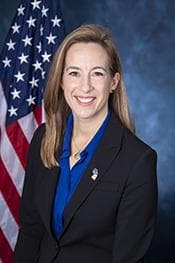
Mikie Sherrill
Democratic Representative
New Jersey
Cosponsors (2)
Ways and Means Committee, Financial Services Committee
- Introduced
- In Committee
- On Floor
- Passed Chamber
- Enacted
The "INCREASE Housing Affordability Act" aims to stimulate the conversion of underutilized commercial buildings into residential housing units. It proposes a new federal tax credit for qualified conversion expenditures and establishes a federal advisory board to support state and local efforts. This initiative seeks to address housing shortages by repurposing existing commercial infrastructure. The bill introduces a commercial-to-residential credit equal to 15 percent of qualified conversion expenditures. This credit is capped at $200,000 per new residential unit and $10,000,000 per converted building. Additional bonus credits are available for projects that meet specific criteria, including up to 20 percent for affordable housing units and an extra 15 percent for paying prevailing wages to construction workers. A qualified converted building must have been nonresidential office property, substantially converted to residential or mixed-use, and initially placed in service at least 15 years prior. Qualified conversion expenditures are capital account amounts related to the conversion, excluding acquisition costs, enlargements, or certain tax-exempt uses. The bill also allows for progress expenditures for conversions expected to take two years or more, and prevents double-dipping with other housing tax credits. To further assist these efforts, the bill mandates the establishment of a Commercial to Residential Conversion Advisory Board within the Department of Housing and Urban Development. This board will provide crucial logistical support, technical assistance, and training to state and local housing agencies. Its duties include: Identifying feasible conversion candidates Conducting floor plan and feasibility analyses Expediting regulatory and permitting processes Reforming local zoning barriers Identifying federal and state funding sources An appropriation of $5,000,000 is authorized for each fiscal year from 2025 through 2029 to support the board's operations.
View Full TextSuggested Questions
Get AI-generated questions to help you understand this bill better
Timeline
Introduced in House
Referred to the Committee on Ways and Means, and in addition to the Committee on Financial Services, for a period to be subsequently determined by the Speaker, in each case for consideration of such provisions as fall within the jurisdiction of the committee concerned.
ASSUMING FIRST SPONSORHSIP - Mr. Magaziner asked unanimous consent that he may be hereafter be considered as the first sponsor of H.R. 537, a bill originally introduced by Representative Sherrill, for the purpose of adding cosponsors and requesting reprintings pursuant to clause 7 of rule XII. Agreed to without objection.
Taxation
Building constructionHousing supply and affordabilityIncome tax creditsUrban and suburban affairs and development
INCREASE Housing Affordability Act
USA119th CongressHR-537| House
| Updated: 3/5/2026
The "INCREASE Housing Affordability Act" aims to stimulate the conversion of underutilized commercial buildings into residential housing units. It proposes a new federal tax credit for qualified conversion expenditures and establishes a federal advisory board to support state and local efforts. This initiative seeks to address housing shortages by repurposing existing commercial infrastructure. The bill introduces a commercial-to-residential credit equal to 15 percent of qualified conversion expenditures. This credit is capped at $200,000 per new residential unit and $10,000,000 per converted building. Additional bonus credits are available for projects that meet specific criteria, including up to 20 percent for affordable housing units and an extra 15 percent for paying prevailing wages to construction workers. A qualified converted building must have been nonresidential office property, substantially converted to residential or mixed-use, and initially placed in service at least 15 years prior. Qualified conversion expenditures are capital account amounts related to the conversion, excluding acquisition costs, enlargements, or certain tax-exempt uses. The bill also allows for progress expenditures for conversions expected to take two years or more, and prevents double-dipping with other housing tax credits. To further assist these efforts, the bill mandates the establishment of a Commercial to Residential Conversion Advisory Board within the Department of Housing and Urban Development. This board will provide crucial logistical support, technical assistance, and training to state and local housing agencies. Its duties include: Identifying feasible conversion candidates Conducting floor plan and feasibility analyses Expediting regulatory and permitting processes Reforming local zoning barriers Identifying federal and state funding sources An appropriation of $5,000,000 is authorized for each fiscal year from 2025 through 2029 to support the board's operations.
View Full TextSuggested Questions
Get AI-generated questions to help you understand this bill better
Timeline
Introduced in House
Referred to the Committee on Ways and Means, and in addition to the Committee on Financial Services, for a period to be subsequently determined by the Speaker, in each case for consideration of such provisions as fall within the jurisdiction of the committee concerned.
ASSUMING FIRST SPONSORHSIP - Mr. Magaziner asked unanimous consent that he may be hereafter be considered as the first sponsor of H.R. 537, a bill originally introduced by Representative Sherrill, for the purpose of adding cosponsors and requesting reprintings pursuant to clause 7 of rule XII. Agreed to without objection.