Medical Student Education Authorization Act of 2025
USA119th CongressHR-5428| House
| Updated: 9/17/2025
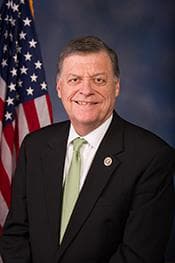
Tom Cole
Republican Representative
Oklahoma
Cosponsors (18)
Andy Harris (Republican)Emanuel Cleaver (Democratic)Darren Soto (Democratic)Stephanie I. Bice (Republican)Eugene Simon Vindman (Democratic)Dina Titus (Democratic)Rudy Yakym (Republican)John H. Rutherford (Republican)Pramila Jayapal (Democratic)Sharice Davids (Democratic)Mike Haridopolos (Republican)Nellie Pou (Democratic)Randy Fine (Republican)Juan Ciscomani (Republican)Josh Gottheimer (Democratic)Herbert C. Conaway (Democratic)Robert B. Aderholt (Republican)Michael Guest (Republican)
Energy and Commerce Committee
- Introduced
- In Committee
- On Floor
- Passed Chamber
- Enacted
This bill, titled the Medical Student Education Authorization Act of 2025, amends the Public Health Service Act to establish a new grant program. Administered by the Secretary through the Health Resources and Services Administration, this program will award grants to accredited public institutions of higher education . The primary goal is to support medical student education and prepare these students to become primary care physicians serving Tribal, rural, or medically underserved communities after their residency training. To be eligible, institutions must be located in states experiencing a top-quartile projected shortage of primary care physicians. Priority will be given to institutions in states with multiple Indian Tribes or Tribal organizations, and those demonstrating strategic partnerships with entities like Federally Qualified Health Centers or Tribal health facilities. Grant funds can be used for activities such as community-based training, developing primary care programs, increasing faculty capacity, forming strategic partnerships, and providing scholarships to medical students . Grants will be awarded for up to five years, with a minimum annual amount of $1,000,000, and may include a non-Federal matching requirement of up to 10 percent. The bill authorizes an appropriation of $75,000,000 for each of fiscal years 2026 through 2028 to carry out this program.
View Full TextSuggested Questions
Get AI-generated questions to help you understand this bill better
Timeline
Introduced in House
Referred to the House Committee on Energy and Commerce.
Health
Medical Student Education Authorization Act of 2025
USA119th CongressHR-5428| House
| Updated: 9/17/2025
This bill, titled the Medical Student Education Authorization Act of 2025, amends the Public Health Service Act to establish a new grant program. Administered by the Secretary through the Health Resources and Services Administration, this program will award grants to accredited public institutions of higher education . The primary goal is to support medical student education and prepare these students to become primary care physicians serving Tribal, rural, or medically underserved communities after their residency training. To be eligible, institutions must be located in states experiencing a top-quartile projected shortage of primary care physicians. Priority will be given to institutions in states with multiple Indian Tribes or Tribal organizations, and those demonstrating strategic partnerships with entities like Federally Qualified Health Centers or Tribal health facilities. Grant funds can be used for activities such as community-based training, developing primary care programs, increasing faculty capacity, forming strategic partnerships, and providing scholarships to medical students . Grants will be awarded for up to five years, with a minimum annual amount of $1,000,000, and may include a non-Federal matching requirement of up to 10 percent. The bill authorizes an appropriation of $75,000,000 for each of fiscal years 2026 through 2028 to carry out this program.
View Full TextSuggested Questions
Get AI-generated questions to help you understand this bill better
Timeline
Introduced in House
Referred to the House Committee on Energy and Commerce.
Tom Cole
Republican Representative
Oklahoma
Cosponsors (18)
Andy Harris (Republican)Emanuel Cleaver (Democratic)Darren Soto (Democratic)Stephanie I. Bice (Republican)Eugene Simon Vindman (Democratic)Dina Titus (Democratic)Rudy Yakym (Republican)John H. Rutherford (Republican)Pramila Jayapal (Democratic)Sharice Davids (Democratic)Mike Haridopolos (Republican)Nellie Pou (Democratic)Randy Fine (Republican)Juan Ciscomani (Republican)Josh Gottheimer (Democratic)Herbert C. Conaway (Democratic)Robert B. Aderholt (Republican)Michael Guest (Republican)
Energy and Commerce Committee
Health
- Introduced
- In Committee
- On Floor
- Passed Chamber
- Enacted