Fraud Accountability and Recovery Act
USA119th CongressHR-5548| House
| Updated: 9/23/2025
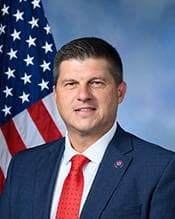
Brad Finstad
Republican Representative
Minnesota
Cosponsors (9)
Foreign Affairs Committee
- Introduced
- In Committee
- On Floor
- Passed Chamber
- Enacted
This bill amends the Foreign Assistance Act of 1961 to prohibit the President from providing assistance to countries that fail to extradite individuals convicted of fraud against the United States or benefitting from such fraud. The prohibition also applies if a country fails to take appropriate legal, administrative, or enforcement measures to assist in the recoupment of federal funds fraudulently stolen from the U.S. These measures include identifying, freezing, seizing, and repatriating the fraudulently obtained funds. Congress finds that the Federal Government loses hundreds of billions annually to fraud, with some proceeds transferred overseas, underscoring the need for stronger tools to recover stolen taxpayer money and prevent fraudsters from finding safe harbor abroad. The President may waive this prohibition if certifying to Congress that it is contrary to U.S. national security, requiring prior notification and justification. Additionally, the Secretary of State must annually report on non-compliant countries, detailing the unrecovered fraudulently obtained funds attributable to their lack of cooperation.
View Full TextSuggested Questions
Get AI-generated questions to help you understand this bill better
Timeline
Introduced in House
Referred to the House Committee on Foreign Affairs.
International Affairs
Fraud Accountability and Recovery Act
USA119th CongressHR-5548| House
| Updated: 9/23/2025
This bill amends the Foreign Assistance Act of 1961 to prohibit the President from providing assistance to countries that fail to extradite individuals convicted of fraud against the United States or benefitting from such fraud. The prohibition also applies if a country fails to take appropriate legal, administrative, or enforcement measures to assist in the recoupment of federal funds fraudulently stolen from the U.S. These measures include identifying, freezing, seizing, and repatriating the fraudulently obtained funds. Congress finds that the Federal Government loses hundreds of billions annually to fraud, with some proceeds transferred overseas, underscoring the need for stronger tools to recover stolen taxpayer money and prevent fraudsters from finding safe harbor abroad. The President may waive this prohibition if certifying to Congress that it is contrary to U.S. national security, requiring prior notification and justification. Additionally, the Secretary of State must annually report on non-compliant countries, detailing the unrecovered fraudulently obtained funds attributable to their lack of cooperation.
View Full TextSuggested Questions
Get AI-generated questions to help you understand this bill better
Timeline
Introduced in House
Referred to the House Committee on Foreign Affairs.
Brad Finstad
Republican Representative
Minnesota
Cosponsors (9)
Foreign Affairs Committee
International Affairs
- Introduced
- In Committee
- On Floor
- Passed Chamber
- Enacted