Ending Crime and Disorder on America’s Streets Act
USA119th CongressHR-6174| House
| Updated: 11/20/2025
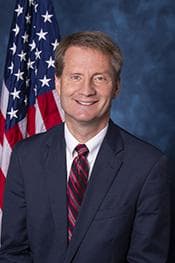
Tim Burchett
Republican Representative
Tennessee
Financial Services Committee, Judiciary Committee, Energy and Commerce Committee
- Introduced
- In Committee
- On Floor
- Passed Chamber
- Enacted
This bill aims to protect public safety by restoring civil commitment procedures and addressing vagrancy and homelessness through institutional treatment. It directs the Attorney General to seek the reversal of judicial precedents that impede civil commitment and to assist state and local governments in implementing flexible commitment and treatment standards for unhoused individuals . Federal agencies, including the Departments of Justice, Health and Human Services, Housing and Urban Development, and Transportation, would prioritize discretionary grants for states and municipalities that actively enforce prohibitions on public illicit drug use, urban camping , loitering, and urban squatting . These grants would also favor jurisdictions that address unhoused individuals through assisted outpatient treatment or by moving them into treatment facilities via civil commitment, and that comply with sex offender registration requirements for those without fixed addresses. The legislation redirects federal resources by requiring the Secretary of Health and Human Services to ensure grants fund evidence-based programs, explicitly excluding "harm reduction" or "safe consumption" efforts. It also mandates coordination to support the transfer of eligible persons to mental hospitals or asylums and ensures federal funds for health centers reduce homelessness by supporting comprehensive services for individuals with serious mental illness and substance use disorder. Finally, the bill increases accountability in homelessness programs by ending support for "housing first" policies , which it states deprioritize accountability and fail to promote treatment and self-sufficiency. It requires the Department of Housing and Urban Development to mandate substance abuse or mental health treatment as a condition for program participation and allows for review and action against recipients operating drug injection sites or permitting illicit drug use. The bill also seeks to ensure federally funded programs can exclusively house women and children and prevent sex offenders from being housed with unrelated children, while allowing for the collection and sharing of health-related information with law enforcement.
View Full TextSuggested Questions
Get AI-generated questions to help you understand this bill better
Timeline
Introduced in House
Referred to the Committee on the Judiciary, and in addition to the Committees on Energy and Commerce, and Financial Services, for a period to be subsequently determined by the Speaker, in each case for consideration of such provisions as fall within the jurisdiction of the committee concerned.
Health
Ending Crime and Disorder on America’s Streets Act
USA119th CongressHR-6174| House
| Updated: 11/20/2025
This bill aims to protect public safety by restoring civil commitment procedures and addressing vagrancy and homelessness through institutional treatment. It directs the Attorney General to seek the reversal of judicial precedents that impede civil commitment and to assist state and local governments in implementing flexible commitment and treatment standards for unhoused individuals . Federal agencies, including the Departments of Justice, Health and Human Services, Housing and Urban Development, and Transportation, would prioritize discretionary grants for states and municipalities that actively enforce prohibitions on public illicit drug use, urban camping , loitering, and urban squatting . These grants would also favor jurisdictions that address unhoused individuals through assisted outpatient treatment or by moving them into treatment facilities via civil commitment, and that comply with sex offender registration requirements for those without fixed addresses. The legislation redirects federal resources by requiring the Secretary of Health and Human Services to ensure grants fund evidence-based programs, explicitly excluding "harm reduction" or "safe consumption" efforts. It also mandates coordination to support the transfer of eligible persons to mental hospitals or asylums and ensures federal funds for health centers reduce homelessness by supporting comprehensive services for individuals with serious mental illness and substance use disorder. Finally, the bill increases accountability in homelessness programs by ending support for "housing first" policies , which it states deprioritize accountability and fail to promote treatment and self-sufficiency. It requires the Department of Housing and Urban Development to mandate substance abuse or mental health treatment as a condition for program participation and allows for review and action against recipients operating drug injection sites or permitting illicit drug use. The bill also seeks to ensure federally funded programs can exclusively house women and children and prevent sex offenders from being housed with unrelated children, while allowing for the collection and sharing of health-related information with law enforcement.
View Full TextSuggested Questions
Get AI-generated questions to help you understand this bill better
Timeline
Introduced in House
Referred to the Committee on the Judiciary, and in addition to the Committees on Energy and Commerce, and Financial Services, for a period to be subsequently determined by the Speaker, in each case for consideration of such provisions as fall within the jurisdiction of the committee concerned.
Tim Burchett
Republican Representative
Tennessee
Financial Services Committee, Judiciary Committee, Energy and Commerce Committee
Health
- Introduced
- In Committee
- On Floor
- Passed Chamber
- Enacted