Clean Water Standards for PFAS Act of 2025
USA119th CongressHR-6668| House
| Updated: 2/2/2026
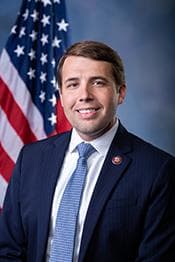
Chris Pappas
Democratic Representative
New Hampshire
Cosponsors (1)
Transportation and Infrastructure Committee, Water Resources and Environment Subcommittee
- Introduced
- In Committee
- On Floor
- Passed Chamber
- Enacted
This legislation, titled the Clean Water Standards for PFAS Act of 2025, aims to significantly enhance the regulation of perfluoroalkyl and polyfluoroalkyl substances (PFAS) under the Federal Water Pollution Control Act. It mandates the Environmental Protection Agency (EPA) to publish human health water quality criteria for all measurable PFAS within three years of the bill's enactment. This action is crucial for establishing clear benchmarks for safe levels of these persistent chemicals in water. The bill establishes specific deadlines for the EPA to finalize effluent limitations guidelines and standards for PFAS discharges from several key industrial categories. These include organic chemicals, plastics, and synthetic fibers electroplating metal finishing textile mills landfills leather tanning and finishing paint formulating plastics molding and forming , with deadlines ranging from September 2026 to September 2028. Furthermore, the legislation requires immediate monitoring of PFAS discharges from these and additional categories, such as pulp and paper mills, airports, and electrical and electronic components, starting from the date of enactment. To support these regulatory efforts, the EPA is directed to promulgate a standardized analytical method for PFAS, specifically Method 1633A or an equivalent, by January 2026. The bill also authorizes substantial appropriations, including $200,000,000 annually for fiscal years 2026 through 2030, for grants to publicly owned treatment works. These grants are intended to fund pretreatment program activities, monitoring, and analysis of local PFAS sources, thereby enhancing their capacity to manage and reduce PFAS contamination.
View Full TextSuggested Questions
Get AI-generated questions to help you understand this bill better
Timeline
Introduced in House
Referred to the House Committee on Transportation and Infrastructure.
Referred to the Subcommittee on Water Resources and Environment.
Environmental Protection
Clean Water Standards for PFAS Act of 2025
USA119th CongressHR-6668| House
| Updated: 2/2/2026
This legislation, titled the Clean Water Standards for PFAS Act of 2025, aims to significantly enhance the regulation of perfluoroalkyl and polyfluoroalkyl substances (PFAS) under the Federal Water Pollution Control Act. It mandates the Environmental Protection Agency (EPA) to publish human health water quality criteria for all measurable PFAS within three years of the bill's enactment. This action is crucial for establishing clear benchmarks for safe levels of these persistent chemicals in water. The bill establishes specific deadlines for the EPA to finalize effluent limitations guidelines and standards for PFAS discharges from several key industrial categories. These include organic chemicals, plastics, and synthetic fibers electroplating metal finishing textile mills landfills leather tanning and finishing paint formulating plastics molding and forming , with deadlines ranging from September 2026 to September 2028. Furthermore, the legislation requires immediate monitoring of PFAS discharges from these and additional categories, such as pulp and paper mills, airports, and electrical and electronic components, starting from the date of enactment. To support these regulatory efforts, the EPA is directed to promulgate a standardized analytical method for PFAS, specifically Method 1633A or an equivalent, by January 2026. The bill also authorizes substantial appropriations, including $200,000,000 annually for fiscal years 2026 through 2030, for grants to publicly owned treatment works. These grants are intended to fund pretreatment program activities, monitoring, and analysis of local PFAS sources, thereby enhancing their capacity to manage and reduce PFAS contamination.
View Full TextSuggested Questions
Get AI-generated questions to help you understand this bill better
Timeline
Introduced in House
Referred to the House Committee on Transportation and Infrastructure.
Referred to the Subcommittee on Water Resources and Environment.
Chris Pappas
Democratic Representative
New Hampshire
Cosponsors (1)
Transportation and Infrastructure Committee, Water Resources and Environment Subcommittee
Environmental Protection
- Introduced
- In Committee
- On Floor
- Passed Chamber
- Enacted