Financial Services and General Government and National Security, Department of State, and Related Programs Appropriations Act, 2026
USA119th CongressHR-7006| House
| Updated: 1/15/2026
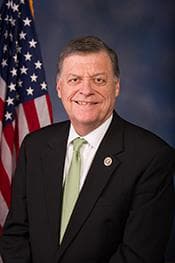
Tom Cole
Republican Representative
Oklahoma
Appropriations Committee, Budget Committee
- Introduced
- In Committee
- On Floor
- Passed Chamber
- Enacted
This bill, designated as the "Financial Services and General Government and National Security, Department of State, and Related Programs Appropriations Act, 2026," outlines consolidated appropriations for the fiscal year ending September 30, 2026. It is divided into three main sections: Financial Services and General Government, National Security/Department of State/Related Programs, and Other Matters. Division A, the Financial Services and General Government Appropriations Act, 2026, allocates funds to various domestic federal entities. Key allocations include significant funding for the Department of the Treasury , supporting Departmental Offices, the Committee on Foreign Investment in the United States (CFIUS), the Office of Terrorism and Financial Intelligence, and the Internal Revenue Service (IRS) for taxpayer services, enforcement, and technology. It also provides substantial funding for the Community Development Financial Institutions Fund to support financial and technical assistance, particularly in high-poverty areas and for Native American communities. The bill further funds the Executive Office of the President , covering the White House, Office of Management and Budget (OMB), National Cyber Director, and the Office of National Drug Control Policy (ONDCP), including the High Intensity Drug Trafficking Areas (HIDTA) program. The Judiciary receives appropriations for the Supreme Court, federal courts, defender services, and court security. For the District of Columbia , federal payments are provided for resident tuition support, emergency planning, courts, public defender services, and school improvement, alongside provisions for local funds and specific policy limitations. Independent agencies such as the Commodity Futures Trading Commission (CFTC), Consumer Product Safety Commission (CPSC), Election Assistance Commission (EAC), Federal Communications Commission (FCC), Federal Trade Commission (FTC), General Services Administration (GSA), Office of Personnel Management (OPM), Securities and Exchange Commission (SEC), and Small Business Administration (SBA) also receive appropriations. Notable provisions include election security grants for states, GSA funding for federal building construction and repairs, and SBA programs for entrepreneurial development and business loans. Division B, the National Security, Department of State, and Related Programs Appropriations Act, 2026, focuses on foreign affairs and international assistance. The Department of State receives funding for diplomatic programs, consular and border security, embassy construction and maintenance, and educational and cultural exchange programs. It also provides contributions to international organizations , including the United Nations and various international commissions. Significant allocations are made for bilateral economic assistance , encompassing Global Health Programs (including HIV/AIDS and family planning), International Humanitarian Assistance, and National Security Investment Programs. Independent agencies like the Peace Corps and Millennium Challenge Corporation are also funded. The bill provides for international security assistance through programs such as International Narcotics Control and Law Enforcement, Nonproliferation, Anti-terrorism, Demining and Related Programs, and Foreign Military Financing (FMF). Multilateral assistance includes contributions to international financial institutions like the World Bank and African Development Bank. Export and investment assistance is provided through the Export-Import Bank, the U.S. International Development Finance Corporation (DFC), and the Trade and Development Agency. General provisions in this division address transfer authorities, notification requirements, prohibitions on assistance to certain countries (e.g., Cuba, North Korea, Iran), and specific country-related directives for regions like the Middle East, Africa, East Asia and the Pacific, and Latin America. Division C addresses Other Matters , specifically imposing a funding limitation on contributions, grants, or other payments to the United Nations Relief and Works Agency (UNRWA) for both prior fiscal years and fiscal year 2026, and extending into fiscal year 2027. The bill also includes several rescissions of unobligated balances from prior appropriations acts across various accounts, such as Consular and Border Security Programs, Educational and Cultural Exchange Programs, and the Millennium Challenge Corporation.
Suggested Questions
Get AI-generated questions to help you understand this bill better
Timeline
Introduced in House
Referred to the Committee on Appropriations, and in addition to the Committee on the Budget, for a period to be subsequently determined by the Speaker, in each case for consideration of such provisions as fall within the jurisdiction of the committee concerned.
Rules Committee Resolution H. Res. 992 Reported to House. Rule provides for consideration of H.R. 7006 with 1 hour of general debate. Motion to recommit allowed. Specified amendments are in order.
Rule H. Res. 992 passed House.
Considered under the provisions of rule H. Res. 992. (consideration: CR H734-798)
Considered under the provisions of rule H. Res. 992.
Rule provides for consideration of H.R. 7006 with 1 hour of general debate. Motion to recommit allowed. Specified amendments are in order.
House resolved itself into the Committee of the Whole House on the state of the Union pursuant to H. Res. 992 and Rule XVIII.
The Speaker designated the Honorable Mike Bost to act as Chairman of the Committee.
GENERAL DEBATE - The Committee of the Whole proceeded with one hour of general debate on H.R. 7006.
DEBATE - Pursuant to the provisions of H. Res. 992, the Committee of the Whole proceeded with 10 minutes of debate on the Roy amendment No. 1.
POSTPONED PROCEEDINGS - At the conclusion of debate on the Roy amendment No. 1, the Chair put the question on agreeing to the amendment and by voice vote, announced the ayes had prevailed. Mr. Hoyer demanded a recorded vote and the Chair postponed further proceedings until a time to be announced.
DEBATE - Pursuant to the provisions of H. Res. 992, the Committee of the Whole proceeded with 10 minutes of debate on the Crane amendment No. 2.
POSTPONED PROCEEDINGS - At the conclusion of debate on the Crane amendment No. 2, the Chair put the question on agreeing to the amendment and by voice vote, announced the ayes had prevailed. Ms. Lois Frankel (FL) demanded a recorded vote and the Chair postponed further proceedings until a time to be announced.
Mr. Cole moved that the committee rise.
On motion that the committee rise Agreed to by voice vote.
Committee of the Whole House on the state of the Union rises leaving H.R. 7006 as unfinished business.
Considered as unfinished business.
Considered as unfinished business. (consideration: CR H798-801)
The House resolved into Committee of the Whole House on the state of the Union for further consideration.
On Agreeing to the Amendment: Failed
View VoteOn Agreeing to the Amendment: Failed
View VoteThe House rose from the Committee of the Whole House on the state of the Union to report H.R. 7006.
The previous question was ordered pursuant to the rule.
On passage Passed by the Yeas and Nays: 341 - 79 (Roll no. 28). (text: CR H741-795)
View VoteMotion to reconsider laid on the table Agreed to without objection.
Received in the Senate.
Economics and Public Finance
Accounting and auditingAdministrative Conference of the U.S.Administrative remediesAdvisory bodiesAfghanistanAfricaAfrican Development FoundationAgricultural tradeAlaska Natives and HawaiiansAlliancesAppropriationsArab-Israeli relationsArms control and nonproliferationAsiaAustraliaAviation and airportsBanking and financial institutions regulationBorder security and unlawful immigrationBroadcasting, cable, digital technologiesBudget deficits and national debtBuilding constructionBurmaCanadaCaribbean areaCentral African RepublicChinaCivil actions and liabilityCoast guardCollective securityColombiaCommodities marketsCommodity Futures Trading CommissionCommunity Development Financial Institutions FundCompetitiveness, trade promotion, trade deficitsComputers and information technologyComputer security and identity theftConflicts and warsCongressional-executive branch relationsCongressional oversightConsumer affairsConsumer Product Safety CommissionCorrectional facilities and imprisonmentCrimes against childrenCrime victimsCriminal investigation, prosecution, interrogationCriminal procedure and sentencingCubaCultural exchanges and relationsCurrencyDebt collectionDemocratic Republic of the CongoDepartment of StateDepartment of the TreasuryDetention of personsDiplomacy, foreign officials, Americans abroadDisability assistanceDisaster relief and insuranceDistrict of ColumbiaDrug, alcohol, tobacco useDrug trafficking and controlled substancesEconomic developmentEducation programs fundingEgyptElection Assistance CommissionElections, voting, political campaign regulationElectric power generation and transmissionElementary and secondary educationEmergency planning and evacuationEmployment and training programsEmployment discrimination and employee rightsEthiopiaEuropeExecutive agency funding and structureExecutive Office of the PresidentExport-Import Bank of the United StatesFamily planning and birth controlFamily relationshipsFederal appellate courtsFederal Communications Commission (FCC)Federal Deposit Insurance Corporation (FDIC)Federal district courtsFederal Election Commission (FEC)Federal Labor Relations AuthorityFederal Trade Commission (FTC)Financial literacyFirst Amendment rightsFood assistance and reliefFood supply, safety, and labelingForeign aid and international reliefForeign and international bankingForeign loans and debtFraud offenses and financial crimesGaza StripGeneral Services AdministrationGovernment buildings, facilities, and propertyGovernment employee pay, benefits, personnel managementGovernment ethics and transparency, public corruptionGovernment information and archivesGovernment lending and loan guaranteesGovernment studies and investigationsGovernment trust fundsHaitiHealth personnelHealth programs administration and fundingHealth promotion and preventive careHigher educationHistorical and cultural resourcesHistoric sites and heritage areasHIV/AIDSHomeland securityHong KongHuman rightsHuman traffickingImmunology and vaccinationIndian social and development programsIndonesiaInfectious and parasitic diseasesInfrastructure developmentIntelligence activities, surveillance, classified informationIntergovernmental relationsInternal Revenue Service (IRS)International exchange and broadcastingInternational monetary system and foreign exchangeInternational organizations and cooperationInternet, web applications, social mediaIranIsraelJudgesKosovoLabor-management relationsLaosLatin AmericaLaw enforcement administration and fundingLawyers and legal servicesLease and rental servicesLebanonLegal fees and court costsLibraries and archivesMarine and coastal resources, fisheriesMarylandMedical tests and diagnostic methodsMembers of CongressMerit Systems Protection BoardMexicoMiddle EastMilitary assistance, sales, and agreementsMilitary education and trainingMinority and disadvantaged businessesMonuments and memorialsMotor vehiclesMultilateral development programsNational and community serviceNational Archives and Records AdministrationNational Credit Union AdministrationNational Guard and reservesNational symbolsNepalNews media and reportingNicaraguaNigeriaNorth AmericaNorth KoreaNuclear powerOffice of Government EthicsOffice of Management and Budget (OMB)Office of Personnel Management (OPM)Office of Special CounselOrganization of American StatesPakistanPalestiniansPeace CorpsPhilippinesPostal servicePresidents and presidential powers, Vice PresidentsPrivacy and Civil Liberties Oversight BoardProduct safety and qualityProtection of officialsPublic contracts and procurementPublic-private cooperationPuerto RicoRadio spectrum allocationReconstruction and stabilizationRefugees, asylum, displaced personsReligionResidential rehabilitation and home repairRussiaRwandaSales and excise taxesSecuritiesSecurities and Exchange Commission (SEC)Selective Service SystemSex and reproductive healthSex, gender, sexual orientation discriminationSex offensesSmall businessSmall Business AdministrationSmuggling and traffickingSouth SudanSpecialized courtsState and local courtsState and local government operationsStrategic materials and reservesStudent aid and college costsSudanSupreme CourtSyriaTaiwanTax administration and collection, taxpayersTennesseeTerrorismTibetTunisiaTurkeyUkraineUnited KingdomUnited NationsU.S. Agency for Global MediaU.S. and foreign investmentsU.S. Commission on International Religious FreedomUser charges and feesU.S. Institute of PeaceU.S. International Development Finance CorporationU.S. Postal ServiceU.S. Sentencing CommissionVenezuelaVietnamVirginiaVisas and passportsWar crimes, genocide, crimes against humanityWashington StateWater resources fundingWater storageWater use and supplyWest BankWomen's rightsWorld healthZimbabwe
Financial Services and General Government and National Security, Department of State, and Related Programs Appropriations Act, 2026
USA119th CongressHR-7006| House
| Updated: 1/15/2026
This bill, designated as the "Financial Services and General Government and National Security, Department of State, and Related Programs Appropriations Act, 2026," outlines consolidated appropriations for the fiscal year ending September 30, 2026. It is divided into three main sections: Financial Services and General Government, National Security/Department of State/Related Programs, and Other Matters. Division A, the Financial Services and General Government Appropriations Act, 2026, allocates funds to various domestic federal entities. Key allocations include significant funding for the Department of the Treasury , supporting Departmental Offices, the Committee on Foreign Investment in the United States (CFIUS), the Office of Terrorism and Financial Intelligence, and the Internal Revenue Service (IRS) for taxpayer services, enforcement, and technology. It also provides substantial funding for the Community Development Financial Institutions Fund to support financial and technical assistance, particularly in high-poverty areas and for Native American communities. The bill further funds the Executive Office of the President , covering the White House, Office of Management and Budget (OMB), National Cyber Director, and the Office of National Drug Control Policy (ONDCP), including the High Intensity Drug Trafficking Areas (HIDTA) program. The Judiciary receives appropriations for the Supreme Court, federal courts, defender services, and court security. For the District of Columbia , federal payments are provided for resident tuition support, emergency planning, courts, public defender services, and school improvement, alongside provisions for local funds and specific policy limitations. Independent agencies such as the Commodity Futures Trading Commission (CFTC), Consumer Product Safety Commission (CPSC), Election Assistance Commission (EAC), Federal Communications Commission (FCC), Federal Trade Commission (FTC), General Services Administration (GSA), Office of Personnel Management (OPM), Securities and Exchange Commission (SEC), and Small Business Administration (SBA) also receive appropriations. Notable provisions include election security grants for states, GSA funding for federal building construction and repairs, and SBA programs for entrepreneurial development and business loans. Division B, the National Security, Department of State, and Related Programs Appropriations Act, 2026, focuses on foreign affairs and international assistance. The Department of State receives funding for diplomatic programs, consular and border security, embassy construction and maintenance, and educational and cultural exchange programs. It also provides contributions to international organizations , including the United Nations and various international commissions. Significant allocations are made for bilateral economic assistance , encompassing Global Health Programs (including HIV/AIDS and family planning), International Humanitarian Assistance, and National Security Investment Programs. Independent agencies like the Peace Corps and Millennium Challenge Corporation are also funded. The bill provides for international security assistance through programs such as International Narcotics Control and Law Enforcement, Nonproliferation, Anti-terrorism, Demining and Related Programs, and Foreign Military Financing (FMF). Multilateral assistance includes contributions to international financial institutions like the World Bank and African Development Bank. Export and investment assistance is provided through the Export-Import Bank, the U.S. International Development Finance Corporation (DFC), and the Trade and Development Agency. General provisions in this division address transfer authorities, notification requirements, prohibitions on assistance to certain countries (e.g., Cuba, North Korea, Iran), and specific country-related directives for regions like the Middle East, Africa, East Asia and the Pacific, and Latin America. Division C addresses Other Matters , specifically imposing a funding limitation on contributions, grants, or other payments to the United Nations Relief and Works Agency (UNRWA) for both prior fiscal years and fiscal year 2026, and extending into fiscal year 2027. The bill also includes several rescissions of unobligated balances from prior appropriations acts across various accounts, such as Consular and Border Security Programs, Educational and Cultural Exchange Programs, and the Millennium Challenge Corporation.
Suggested Questions
Get AI-generated questions to help you understand this bill better
Timeline
Introduced in House
Referred to the Committee on Appropriations, and in addition to the Committee on the Budget, for a period to be subsequently determined by the Speaker, in each case for consideration of such provisions as fall within the jurisdiction of the committee concerned.
Rules Committee Resolution H. Res. 992 Reported to House. Rule provides for consideration of H.R. 7006 with 1 hour of general debate. Motion to recommit allowed. Specified amendments are in order.
Rule H. Res. 992 passed House.
Considered under the provisions of rule H. Res. 992. (consideration: CR H734-798)
Considered under the provisions of rule H. Res. 992.
Rule provides for consideration of H.R. 7006 with 1 hour of general debate. Motion to recommit allowed. Specified amendments are in order.
House resolved itself into the Committee of the Whole House on the state of the Union pursuant to H. Res. 992 and Rule XVIII.
The Speaker designated the Honorable Mike Bost to act as Chairman of the Committee.
GENERAL DEBATE - The Committee of the Whole proceeded with one hour of general debate on H.R. 7006.
DEBATE - Pursuant to the provisions of H. Res. 992, the Committee of the Whole proceeded with 10 minutes of debate on the Roy amendment No. 1.
POSTPONED PROCEEDINGS - At the conclusion of debate on the Roy amendment No. 1, the Chair put the question on agreeing to the amendment and by voice vote, announced the ayes had prevailed. Mr. Hoyer demanded a recorded vote and the Chair postponed further proceedings until a time to be announced.
DEBATE - Pursuant to the provisions of H. Res. 992, the Committee of the Whole proceeded with 10 minutes of debate on the Crane amendment No. 2.
POSTPONED PROCEEDINGS - At the conclusion of debate on the Crane amendment No. 2, the Chair put the question on agreeing to the amendment and by voice vote, announced the ayes had prevailed. Ms. Lois Frankel (FL) demanded a recorded vote and the Chair postponed further proceedings until a time to be announced.
Mr. Cole moved that the committee rise.
On motion that the committee rise Agreed to by voice vote.
Committee of the Whole House on the state of the Union rises leaving H.R. 7006 as unfinished business.
Considered as unfinished business.
Considered as unfinished business. (consideration: CR H798-801)
The House resolved into Committee of the Whole House on the state of the Union for further consideration.
On Agreeing to the Amendment: Failed
View VoteOn Agreeing to the Amendment: Failed
View VoteThe House rose from the Committee of the Whole House on the state of the Union to report H.R. 7006.
The previous question was ordered pursuant to the rule.
On passage Passed by the Yeas and Nays: 341 - 79 (Roll no. 28). (text: CR H741-795)
View VoteMotion to reconsider laid on the table Agreed to without objection.
Received in the Senate.
Tom Cole
Republican Representative
Oklahoma
Appropriations Committee, Budget Committee
Economics and Public Finance
Related Bills
- S 119-3290: Financial Services and General Government Appropriations Act, 2026
- HR 119-7148: Consolidated Appropriations Act, 2026
- HRES 119-992: Providing for consideration of the bill (H.R. 7006) making further consolidated appropriations for the fiscal year ending September 30, 2026, and for other purposes.
- HR 119-4779: National Security, Department of State, and Related Programs Appropriations Act, 2026
- HR 119-5166: Financial Services and General Government Appropriations Act, 2026
- Introduced
- In Committee
- On Floor
- Passed Chamber
- Enacted
Accounting and auditingAdministrative Conference of the U.S.Administrative remediesAdvisory bodiesAfghanistanAfricaAfrican Development FoundationAgricultural tradeAlaska Natives and HawaiiansAlliancesAppropriationsArab-Israeli relationsArms control and nonproliferationAsiaAustraliaAviation and airportsBanking and financial institutions regulationBorder security and unlawful immigrationBroadcasting, cable, digital technologiesBudget deficits and national debtBuilding constructionBurmaCanadaCaribbean areaCentral African RepublicChinaCivil actions and liabilityCoast guardCollective securityColombiaCommodities marketsCommodity Futures Trading CommissionCommunity Development Financial Institutions FundCompetitiveness, trade promotion, trade deficitsComputers and information technologyComputer security and identity theftConflicts and warsCongressional-executive branch relationsCongressional oversightConsumer affairsConsumer Product Safety CommissionCorrectional facilities and imprisonmentCrimes against childrenCrime victimsCriminal investigation, prosecution, interrogationCriminal procedure and sentencingCubaCultural exchanges and relationsCurrencyDebt collectionDemocratic Republic of the CongoDepartment of StateDepartment of the TreasuryDetention of personsDiplomacy, foreign officials, Americans abroadDisability assistanceDisaster relief and insuranceDistrict of ColumbiaDrug, alcohol, tobacco useDrug trafficking and controlled substancesEconomic developmentEducation programs fundingEgyptElection Assistance CommissionElections, voting, political campaign regulationElectric power generation and transmissionElementary and secondary educationEmergency planning and evacuationEmployment and training programsEmployment discrimination and employee rightsEthiopiaEuropeExecutive agency funding and structureExecutive Office of the PresidentExport-Import Bank of the United StatesFamily planning and birth controlFamily relationshipsFederal appellate courtsFederal Communications Commission (FCC)Federal Deposit Insurance Corporation (FDIC)Federal district courtsFederal Election Commission (FEC)Federal Labor Relations AuthorityFederal Trade Commission (FTC)Financial literacyFirst Amendment rightsFood assistance and reliefFood supply, safety, and labelingForeign aid and international reliefForeign and international bankingForeign loans and debtFraud offenses and financial crimesGaza StripGeneral Services AdministrationGovernment buildings, facilities, and propertyGovernment employee pay, benefits, personnel managementGovernment ethics and transparency, public corruptionGovernment information and archivesGovernment lending and loan guaranteesGovernment studies and investigationsGovernment trust fundsHaitiHealth personnelHealth programs administration and fundingHealth promotion and preventive careHigher educationHistorical and cultural resourcesHistoric sites and heritage areasHIV/AIDSHomeland securityHong KongHuman rightsHuman traffickingImmunology and vaccinationIndian social and development programsIndonesiaInfectious and parasitic diseasesInfrastructure developmentIntelligence activities, surveillance, classified informationIntergovernmental relationsInternal Revenue Service (IRS)International exchange and broadcastingInternational monetary system and foreign exchangeInternational organizations and cooperationInternet, web applications, social mediaIranIsraelJudgesKosovoLabor-management relationsLaosLatin AmericaLaw enforcement administration and fundingLawyers and legal servicesLease and rental servicesLebanonLegal fees and court costsLibraries and archivesMarine and coastal resources, fisheriesMarylandMedical tests and diagnostic methodsMembers of CongressMerit Systems Protection BoardMexicoMiddle EastMilitary assistance, sales, and agreementsMilitary education and trainingMinority and disadvantaged businessesMonuments and memorialsMotor vehiclesMultilateral development programsNational and community serviceNational Archives and Records AdministrationNational Credit Union AdministrationNational Guard and reservesNational symbolsNepalNews media and reportingNicaraguaNigeriaNorth AmericaNorth KoreaNuclear powerOffice of Government EthicsOffice of Management and Budget (OMB)Office of Personnel Management (OPM)Office of Special CounselOrganization of American StatesPakistanPalestiniansPeace CorpsPhilippinesPostal servicePresidents and presidential powers, Vice PresidentsPrivacy and Civil Liberties Oversight BoardProduct safety and qualityProtection of officialsPublic contracts and procurementPublic-private cooperationPuerto RicoRadio spectrum allocationReconstruction and stabilizationRefugees, asylum, displaced personsReligionResidential rehabilitation and home repairRussiaRwandaSales and excise taxesSecuritiesSecurities and Exchange Commission (SEC)Selective Service SystemSex and reproductive healthSex, gender, sexual orientation discriminationSex offensesSmall businessSmall Business AdministrationSmuggling and traffickingSouth SudanSpecialized courtsState and local courtsState and local government operationsStrategic materials and reservesStudent aid and college costsSudanSupreme CourtSyriaTaiwanTax administration and collection, taxpayersTennesseeTerrorismTibetTunisiaTurkeyUkraineUnited KingdomUnited NationsU.S. Agency for Global MediaU.S. and foreign investmentsU.S. Commission on International Religious FreedomUser charges and feesU.S. Institute of PeaceU.S. International Development Finance CorporationU.S. Postal ServiceU.S. Sentencing CommissionVenezuelaVietnamVirginiaVisas and passportsWar crimes, genocide, crimes against humanityWashington StateWater resources fundingWater storageWater use and supplyWest BankWomen's rightsWorld healthZimbabwe