Preventing Research Ownership Transfer to External Competitive Threats (PROTECT) Act of 2026
USA119th CongressHR-7510| House
| Updated: 2/11/2026
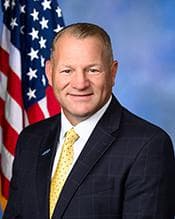
Troy E. Nehls
Republican Representative
Texas
Cosponsors (1)
Education and Workforce Committee
- Introduced
- In Committee
- On Floor
- Passed Chamber
- Enacted
This legislation establishes a prohibition on United States universities, along with their faculty, staff, and students, from transferring intellectual property rights of their research to "covered foreign governments." This restriction applies to any contract, agreement, license, sale, or other transaction entered into on or after the bill's enactment date. "Covered research" encompasses any invention, discovery, or intellectual property developed by these entities, while "intellectual property rights" include patents, copyrights, trademarks, and trade secrets. The bill specifically identifies "prohibited nations" to include the Russian Federation, the People's Republic of China, and the Islamic Republic of Iran, as well as any nation engaged in armed conflict with the U.S., supporting designated foreign terrorist organizations, or designated as a State Sponsor of Terrorism. The Secretary of State can also designate other nations posing a national security threat. Penalties for violations range from civil fines of up to $500,000 for non-national security threats to $5,000,000 for those endangering national security, particularly concerning critical energy or defense issues. Additionally, any funds received from such prohibited transactions are subject to seizure and forfeiture by the U.S. Government, with the Attorney General enforcing these penalties. The Secretary of State makes final determinations regarding prohibited nations and the severity of violations, with limited judicial review.
View Full TextSuggested Questions
Get AI-generated questions to help you understand this bill better
Timeline
Introduced in House
Referred to the House Committee on Education and Workforce.
Education
Preventing Research Ownership Transfer to External Competitive Threats (PROTECT) Act of 2026
USA119th CongressHR-7510| House
| Updated: 2/11/2026
This legislation establishes a prohibition on United States universities, along with their faculty, staff, and students, from transferring intellectual property rights of their research to "covered foreign governments." This restriction applies to any contract, agreement, license, sale, or other transaction entered into on or after the bill's enactment date. "Covered research" encompasses any invention, discovery, or intellectual property developed by these entities, while "intellectual property rights" include patents, copyrights, trademarks, and trade secrets. The bill specifically identifies "prohibited nations" to include the Russian Federation, the People's Republic of China, and the Islamic Republic of Iran, as well as any nation engaged in armed conflict with the U.S., supporting designated foreign terrorist organizations, or designated as a State Sponsor of Terrorism. The Secretary of State can also designate other nations posing a national security threat. Penalties for violations range from civil fines of up to $500,000 for non-national security threats to $5,000,000 for those endangering national security, particularly concerning critical energy or defense issues. Additionally, any funds received from such prohibited transactions are subject to seizure and forfeiture by the U.S. Government, with the Attorney General enforcing these penalties. The Secretary of State makes final determinations regarding prohibited nations and the severity of violations, with limited judicial review.
View Full TextSuggested Questions
Get AI-generated questions to help you understand this bill better
Timeline
Introduced in House
Referred to the House Committee on Education and Workforce.
Troy E. Nehls
Republican Representative
Texas
Cosponsors (1)
Education and Workforce Committee
Education
- Introduced
- In Committee
- On Floor
- Passed Chamber
- Enacted