Adopting the Rules of the House of Representatives for the One Hundred Nineteenth Congress, and for other purposes.
USA119th CongressHRES-5| House
| Updated: 1/3/2025
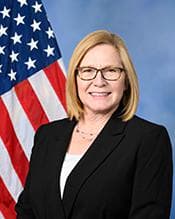
Michelle Fischbach
Republican Representative
Minnesota
- Introduced
- In Committee
- On Floor
- Passed Chamber
- Enacted
This resolution formally adopts the rules of the House of Representatives from the One Hundred Eighteenth Congress for use in the One Hundred Nineteenth Congress, incorporating a series of substantial amendments and new separate orders. A significant change modifies the process for a resolution to declare the Office of Speaker vacant, requiring it to be offered by a member of the majority party and have at least eight cosponsors from that party to be privileged. The resolution also introduces operational changes, such as permitting committees to adopt rules for electronic voting. It renames the Committee on Oversight and Accountability to the Committee on Oversight and Government Reform and the Committee on Education and the Workforce to the Committee on Education and Workforce . Furthermore, it strikes the Office of Diversity and Inclusion, making conforming amendments to reflect its removal. Several long-standing orders are codified, including provisions for the public availability of state memorials related to Article V constitutional conventions and reserving specific bill numbers for the Speaker and Minority Leader. The resolution also defines procedural rules for designated 'district work periods,' affecting how legislative days are counted and how the House may adjourn. Ethics rules are updated to restore more traditional 'family-centric' language when defining relationships. New separate orders are established, including an expanded application of the Holman Rule to allow amendments reducing the number and salary of federal officers or compensation of persons paid from the Treasury. It introduces a mechanism for 'spending reduction amendments' in appropriations bills, requiring a 'spending reduction account' in general appropriation bills. Budgetary reforms include a new point of order against bills that would cause a net increase in direct spending exceeding $2.5 billion over certain long-term periods, and specific scoring rules for federal land conveyances. The resolution mandates that the Congressional Budget Office (CBO) provide estimates of inflationary impacts for certain legislation and detailed analyses for legislation affecting the Federal Hospital Insurance Trust Fund or the Old-Age, Survivors, and Disability Insurance Trust Fund. It also introduces reforms for Congressional Member Organizations (CMOs), allowing Members to transfer representational allowance funds to dedicated CMO accounts for shared employees, subject to strict regulations and eligibility criteria. Additional provisions address the Consensus Calendar, requiring the Majority Leader to report non-compliance with legislative protocols for measures placed on it. It also authorizes funds for the Committee on House Administration to resolve contested elections. A new rule prohibits considering rules that waive all points of order against non-germane amendments, introducing a 'question of consideration' for such rules. The resolution nullifies specific legislative branch accountability regulations from the 117th Congress and permits remote appearance of witnesses in committee proceedings, with certain exceptions. It directs House officers to continue efforts in integrating artificial intelligence into House operations, broadening the availability of machine-readable legislative documents, and improving the electronic document repository for committees. Regarding ethics and conduct, the resolution prohibits registered lobbyists or foreign agents who are former Members from accessing exclusive House exercise facilities. It mandates that non-disclosure agreements in the House must allow employees to communicate with oversight bodies without prior approval. Crucially, it requires Members to reimburse the Treasury for settlements of discrimination or harassment claims personally committed by them if not already legally obligated. Each House employing office must adopt an anti-harassment and anti-discrimination policy, with regulations to be promulgated by the Committee on House Administration. Standing committees are required to hold 'Member Day' hearings for testimony on proposed legislation. The resolution also grants deposition authority to most committee chairs and includes the Chair of the Committee on Oversight and Government Reform in requests to executive agencies. Finally, the resolution continues the Select Committee on the Strategic Competition Between the United States and the Chinese Communist Party, the House Democracy Partnership, and the Tom Lantos Human Rights Commission. It renames the Office of Congressional Ethics to the Office of Congressional Conduct , clarifying its status and modifying operational aspects. The resolution concludes by waiving points of order for the immediate consideration of twelve specific bills covering topics such as Title IX, immigration enforcement, abortion, and sanctions.
Suggested Questions
Get AI-generated questions to help you understand this bill better
Timeline
Bill from Previous Congress
HRES 116-6Adopting the Rules of the House of Representatives for the One Hundred Sixteenth Congress, and for other purposes.
Bill from Previous Congress
HRES 117-8Adopting the Rules of the House of Representatives of the One Hundred Seventeenth Congress, and for other purposes.
Bill from Previous Congress
HRES 118-5Adopting the Rules of the House of Representatives for the One Hundred Eighteenth Congress, and for other purposes.
Submitted in House
Considered as privileged matter. (consideration: CR H8-23)
DEBATE - The House proceeded with one hour of debate on H. Res. 5.
ORDER OF PROCEDURE - Mr. Fishbach asked unanimous consent that the Chair may reduce to 5 minutes the minimum time for electronic voting on any question relating to H. Res. 5 that follows a 15 minute vote. Agreed to without objection.
DEBATE - The House resumed debate on H. Res. 5.
On ordering the previous question Agreed to by the Yeas and Nays: 216 - 210 (Roll no. 3).
View VoteMs. DeLauro moved to commit the resolution to a select committee composed of the Majority Leader and the Minority Leader with instructions to report the same back to the House forthwith with an amendment.
The previous question on the motion to commit was ordered without objection.
On motion to commit the resolution to a select committee with instructions Failed by the Yeas and Nays: 209 - 214 (Roll no. 4).
View VoteOn agreeing to the resolution Agreed to by the Yeas and Nays: 215 - 209 (Roll no. 5). (text: CR H8-14)
View VoteMotion to reconsider laid on the table Agreed to without objection.
Congress
AbortionAdministrative law and regulatory proceduresAdvanced technology and technological innovationsAppropriationsAsiaAssault and harassment offensesBorder security and unlawful immigrationBudget deficits and national debtBudget processChinaComputers and information technologyCongressional Budget Office (CBO)Congressional committeesCongressional leadershipCongressional officers and employeesCongressional operations and organizationCongressional oversightCrimes against propertyDomestic violence and child abuseDrug trafficking and controlled substancesElections, voting, political campaign regulationEmployment discrimination and employee rightsEvidence and witnessesExecutive agency funding and structureFamily relationshipsGovernment buildings, facilities, and propertyGovernment employee pay, benefits, personnel managementGovernment information and archivesGovernment lending and loan guaranteesGovernment trust fundsHigher educationHouse Committee on AgricultureHouse Committee on AppropriationsHouse Committee on Education and WorkforceHouse Committee on EthicsHouse Committee on House AdministrationHouse Committee on Oversight and Government ReformHouse Committee on RulesHouse Committee on the BudgetHouse Committee on the JudiciaryHouse of RepresentativesIncome tax ratesInflation and pricesIntergovernmental relationsInternal Revenue Service (IRS)International law and treatiesInternet, web applications, social mediaLand transfersLaw enforcement officersLegislative rules and procedureMembers of CongressOil and gasSanctionsSex, gender, sexual orientation discriminationSex offensesState and local government operationsStudent aid and college costsTaiwanWar and emergency powers
Adopting the Rules of the House of Representatives for the One Hundred Nineteenth Congress, and for other purposes.
USA119th CongressHRES-5| House
| Updated: 1/3/2025
This resolution formally adopts the rules of the House of Representatives from the One Hundred Eighteenth Congress for use in the One Hundred Nineteenth Congress, incorporating a series of substantial amendments and new separate orders. A significant change modifies the process for a resolution to declare the Office of Speaker vacant, requiring it to be offered by a member of the majority party and have at least eight cosponsors from that party to be privileged. The resolution also introduces operational changes, such as permitting committees to adopt rules for electronic voting. It renames the Committee on Oversight and Accountability to the Committee on Oversight and Government Reform and the Committee on Education and the Workforce to the Committee on Education and Workforce . Furthermore, it strikes the Office of Diversity and Inclusion, making conforming amendments to reflect its removal. Several long-standing orders are codified, including provisions for the public availability of state memorials related to Article V constitutional conventions and reserving specific bill numbers for the Speaker and Minority Leader. The resolution also defines procedural rules for designated 'district work periods,' affecting how legislative days are counted and how the House may adjourn. Ethics rules are updated to restore more traditional 'family-centric' language when defining relationships. New separate orders are established, including an expanded application of the Holman Rule to allow amendments reducing the number and salary of federal officers or compensation of persons paid from the Treasury. It introduces a mechanism for 'spending reduction amendments' in appropriations bills, requiring a 'spending reduction account' in general appropriation bills. Budgetary reforms include a new point of order against bills that would cause a net increase in direct spending exceeding $2.5 billion over certain long-term periods, and specific scoring rules for federal land conveyances. The resolution mandates that the Congressional Budget Office (CBO) provide estimates of inflationary impacts for certain legislation and detailed analyses for legislation affecting the Federal Hospital Insurance Trust Fund or the Old-Age, Survivors, and Disability Insurance Trust Fund. It also introduces reforms for Congressional Member Organizations (CMOs), allowing Members to transfer representational allowance funds to dedicated CMO accounts for shared employees, subject to strict regulations and eligibility criteria. Additional provisions address the Consensus Calendar, requiring the Majority Leader to report non-compliance with legislative protocols for measures placed on it. It also authorizes funds for the Committee on House Administration to resolve contested elections. A new rule prohibits considering rules that waive all points of order against non-germane amendments, introducing a 'question of consideration' for such rules. The resolution nullifies specific legislative branch accountability regulations from the 117th Congress and permits remote appearance of witnesses in committee proceedings, with certain exceptions. It directs House officers to continue efforts in integrating artificial intelligence into House operations, broadening the availability of machine-readable legislative documents, and improving the electronic document repository for committees. Regarding ethics and conduct, the resolution prohibits registered lobbyists or foreign agents who are former Members from accessing exclusive House exercise facilities. It mandates that non-disclosure agreements in the House must allow employees to communicate with oversight bodies without prior approval. Crucially, it requires Members to reimburse the Treasury for settlements of discrimination or harassment claims personally committed by them if not already legally obligated. Each House employing office must adopt an anti-harassment and anti-discrimination policy, with regulations to be promulgated by the Committee on House Administration. Standing committees are required to hold 'Member Day' hearings for testimony on proposed legislation. The resolution also grants deposition authority to most committee chairs and includes the Chair of the Committee on Oversight and Government Reform in requests to executive agencies. Finally, the resolution continues the Select Committee on the Strategic Competition Between the United States and the Chinese Communist Party, the House Democracy Partnership, and the Tom Lantos Human Rights Commission. It renames the Office of Congressional Ethics to the Office of Congressional Conduct , clarifying its status and modifying operational aspects. The resolution concludes by waiving points of order for the immediate consideration of twelve specific bills covering topics such as Title IX, immigration enforcement, abortion, and sanctions.
Suggested Questions
Get AI-generated questions to help you understand this bill better
Timeline
Bill from Previous Congress
HRES 116-6Adopting the Rules of the House of Representatives for the One Hundred Sixteenth Congress, and for other purposes.
Bill from Previous Congress
HRES 117-8Adopting the Rules of the House of Representatives of the One Hundred Seventeenth Congress, and for other purposes.
Bill from Previous Congress
HRES 118-5Adopting the Rules of the House of Representatives for the One Hundred Eighteenth Congress, and for other purposes.
Submitted in House
Considered as privileged matter. (consideration: CR H8-23)
DEBATE - The House proceeded with one hour of debate on H. Res. 5.
ORDER OF PROCEDURE - Mr. Fishbach asked unanimous consent that the Chair may reduce to 5 minutes the minimum time for electronic voting on any question relating to H. Res. 5 that follows a 15 minute vote. Agreed to without objection.
DEBATE - The House resumed debate on H. Res. 5.
On ordering the previous question Agreed to by the Yeas and Nays: 216 - 210 (Roll no. 3).
View VoteMs. DeLauro moved to commit the resolution to a select committee composed of the Majority Leader and the Minority Leader with instructions to report the same back to the House forthwith with an amendment.
The previous question on the motion to commit was ordered without objection.
On motion to commit the resolution to a select committee with instructions Failed by the Yeas and Nays: 209 - 214 (Roll no. 4).
View VoteOn agreeing to the resolution Agreed to by the Yeas and Nays: 215 - 209 (Roll no. 5). (text: CR H8-14)
View VoteMotion to reconsider laid on the table Agreed to without objection.
Michelle Fischbach
Republican Representative
Minnesota
Congress
Related Bills
- HR 119-21: Born-Alive Abortion Survivors Protection Act
- HR 119-26: Protecting American Energy Production Act
- HR 119-29: Laken Riley Act
- HR 119-28: Protection of Women and Girls in Sports Act of 2025
- HR 119-23: Illegitimate Court Counteraction Act
- HR 119-35: Agent Raul Gonzalez Officer Safety Act
- HR 119-33: To amend the Internal Revenue Code of 1986 to provide special rules for the taxation of certain residents of Taiwan with income from sources within the United States.
- HR 119-30: Preventing Violence Against Women by Illegal Aliens Act
- Introduced
- In Committee
- On Floor
- Passed Chamber
- Enacted
AbortionAdministrative law and regulatory proceduresAdvanced technology and technological innovationsAppropriationsAsiaAssault and harassment offensesBorder security and unlawful immigrationBudget deficits and national debtBudget processChinaComputers and information technologyCongressional Budget Office (CBO)Congressional committeesCongressional leadershipCongressional officers and employeesCongressional operations and organizationCongressional oversightCrimes against propertyDomestic violence and child abuseDrug trafficking and controlled substancesElections, voting, political campaign regulationEmployment discrimination and employee rightsEvidence and witnessesExecutive agency funding and structureFamily relationshipsGovernment buildings, facilities, and propertyGovernment employee pay, benefits, personnel managementGovernment information and archivesGovernment lending and loan guaranteesGovernment trust fundsHigher educationHouse Committee on AgricultureHouse Committee on AppropriationsHouse Committee on Education and WorkforceHouse Committee on EthicsHouse Committee on House AdministrationHouse Committee on Oversight and Government ReformHouse Committee on RulesHouse Committee on the BudgetHouse Committee on the JudiciaryHouse of RepresentativesIncome tax ratesInflation and pricesIntergovernmental relationsInternal Revenue Service (IRS)International law and treatiesInternet, web applications, social mediaLand transfersLaw enforcement officersLegislative rules and procedureMembers of CongressOil and gasSanctionsSex, gender, sexual orientation discriminationSex offensesState and local government operationsStudent aid and college costsTaiwanWar and emergency powers