Racehorse Health and Safety Act of 2025
USA119th CongressS-1770| Senate
| Updated: 5/14/2025
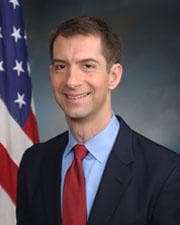
Tom Cotton
Republican Senator
Arkansas
Judiciary Committee
- Introduced
- In Committee
- On Floor
- Passed Chamber
- Enacted
The Racehorse Health and Safety Act of 2025 aims to enhance the health and welfare of racehorses and improve the integrity and safety of horseracing. This bill repeals the Horseracing Integrity and Safety Act of 2020 and authorizes states to form an interstate compact to develop and enforce uniform rules across different equine breeds. Member states will establish the Racehorse Health and Safety Organization (RHSO) , governed by a nine-member Board of Directors. The RHSO's primary duties include adopting scientific medication control rules and racetrack safety rules, ensuring these are based on generally accepted scientific principles, and overseeing the accreditation of testing laboratories. It will also develop and maintain a nationwide database of racehorse safety and health information. Funding for the RHSO will come from initial and annual fees assessed to member states, calculated on a breed-specific basis to prevent commingling of funds between breeds. States can choose to enforce RHSO rules themselves or delegate authority to the RHSO, whose rules will preempt conflicting state laws or regulations within its jurisdiction. The bill mandates breed-specific Scientific Medication Control Committees for Standardbreds, Quarter Horses, and Thoroughbreds. These committees will draft rules to ensure horses are free from performance-enhancing medications and that injured or unsound horses do not race, explicitly prohibiting pain-masking substances. These rules must be uniform within each breed, acknowledging their unique characteristics. A Racetrack Safety Committee will also be established to develop mandatory racetrack safety rules. These rules will cover training and racing safety standards, track surface quality maintenance, injury and fatality analysis, and racetrack accreditation processes, again uniform within each breed. The RHSO Board will define prohibited acts , including the use of nontherapeutic medications, exceeding therapeutic medication limits, and tampering with rules or investigations. A comprehensive results management and disciplinary process will be implemented, outlining investigations, charging, adjudication, and administrative sanctions, with due process protections and a rebuttable presumption of liability for trainers in medication violations. Administrative sanctions can range from monetary fines and purse disgorgement to lifetime bans from horseracing. The Act's provisions, including the establishment of the RHSO, will generally take effect two years after enactment or when two states join the compact, with some sections becoming effective immediately.
View Full TextSuggested Questions
Get AI-generated questions to help you understand this bill better
Timeline
Introduced in Senate
Read twice and referred to the Committee on the Judiciary.
Sports and Recreation
Advisory bodiesAnimal protection and human-animal relationshipsAthletesBusiness ethicsContracts and agencyGamblingMammalsMedical tests and diagnostic methodsProfessional sportsSports and recreation facilitiesState and local financeState and local government operationsVeterinary medicine and animal diseases
Racehorse Health and Safety Act of 2025
USA119th CongressS-1770| Senate
| Updated: 5/14/2025
The Racehorse Health and Safety Act of 2025 aims to enhance the health and welfare of racehorses and improve the integrity and safety of horseracing. This bill repeals the Horseracing Integrity and Safety Act of 2020 and authorizes states to form an interstate compact to develop and enforce uniform rules across different equine breeds. Member states will establish the Racehorse Health and Safety Organization (RHSO) , governed by a nine-member Board of Directors. The RHSO's primary duties include adopting scientific medication control rules and racetrack safety rules, ensuring these are based on generally accepted scientific principles, and overseeing the accreditation of testing laboratories. It will also develop and maintain a nationwide database of racehorse safety and health information. Funding for the RHSO will come from initial and annual fees assessed to member states, calculated on a breed-specific basis to prevent commingling of funds between breeds. States can choose to enforce RHSO rules themselves or delegate authority to the RHSO, whose rules will preempt conflicting state laws or regulations within its jurisdiction. The bill mandates breed-specific Scientific Medication Control Committees for Standardbreds, Quarter Horses, and Thoroughbreds. These committees will draft rules to ensure horses are free from performance-enhancing medications and that injured or unsound horses do not race, explicitly prohibiting pain-masking substances. These rules must be uniform within each breed, acknowledging their unique characteristics. A Racetrack Safety Committee will also be established to develop mandatory racetrack safety rules. These rules will cover training and racing safety standards, track surface quality maintenance, injury and fatality analysis, and racetrack accreditation processes, again uniform within each breed. The RHSO Board will define prohibited acts , including the use of nontherapeutic medications, exceeding therapeutic medication limits, and tampering with rules or investigations. A comprehensive results management and disciplinary process will be implemented, outlining investigations, charging, adjudication, and administrative sanctions, with due process protections and a rebuttable presumption of liability for trainers in medication violations. Administrative sanctions can range from monetary fines and purse disgorgement to lifetime bans from horseracing. The Act's provisions, including the establishment of the RHSO, will generally take effect two years after enactment or when two states join the compact, with some sections becoming effective immediately.
View Full TextSuggested Questions
Get AI-generated questions to help you understand this bill better
Timeline
Introduced in Senate
Read twice and referred to the Committee on the Judiciary.
Tom Cotton
Republican Senator
Arkansas
Judiciary Committee
Sports and Recreation
Related Bills
- Introduced
- In Committee
- On Floor
- Passed Chamber
- Enacted
Advisory bodiesAnimal protection and human-animal relationshipsAthletesBusiness ethicsContracts and agencyGamblingMammalsMedical tests and diagnostic methodsProfessional sportsSports and recreation facilitiesState and local financeState and local government operationsVeterinary medicine and animal diseases