United States Foundation for International Food Security Act of 2025
USA119th CongressS-1888| Senate
| Updated: 5/22/2025
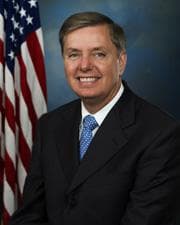
Lindsey Graham
Republican Senator
South Carolina
Cosponsors (3)
Foreign Relations Committee
- Introduced
- In Committee
- On Floor
- Passed Chamber
- Enacted
The United States Foundation for International Food Security Act of 2025 establishes the United States Foundation for International Food Security as a private, nonprofit corporation, distinct from the U.S. Government. Its primary purposes are to accelerate enduring, primarily locally led agricultural investments, foster food security and resilience, and build economically robust food systems. The Foundation aims to achieve these goals by investing in increased crop and animal productivity, infrastructure development, applied agricultural research, and viable technology deployment to reduce global hunger and malnutrition. The Foundation is designed to prevent inefficient vetting processes by seeking out partnerships and contracting with existing government and non-governmental entities that have proven track records. It seeks to deploy and scale technology and innovation to accelerate food security and agricultural-led economic growth. Furthermore, it will coordinate with other international bodies and complement existing U.S. Government food security programs to jointly catalyze private and public sector engagement and strengthen local food and nutrition systems. Governance of the Foundation is vested in a Board of Directors, supported by a nonvoting Board of Advisors with expertise in agriculture, finance, and national security. The Foundation will employ an outcome-based funding strategy , setting targets based on measurable improvements and prioritizing primarily locally based organizations. It mandates rigorous impact evaluations , safeguards, and an independent accountability mechanism to ensure transparency and effectiveness. The Foundation is prohibited from supporting governments that sponsor terrorism or violate human rights, or engaging with sanctioned persons. Funding requirements for ventures include cost-matching from non-U.S. Government sources, independently verified outcomes, and a focus on leveraging existing infrastructure. An annual report detailing goals, lessons learned, and financial performance must be submitted to Congress. Appropriations are authorized on a cost-matching basis from the Department of State, with a prohibition on using grant funds for lobbying activities.
View Full TextSuggested Questions
Get AI-generated questions to help you understand this bill better
Timeline
Introduced in Senate
Read twice and referred to the Committee on Foreign Relations.
Agriculture and Food
United States Foundation for International Food Security Act of 2025
USA119th CongressS-1888| Senate
| Updated: 5/22/2025
The United States Foundation for International Food Security Act of 2025 establishes the United States Foundation for International Food Security as a private, nonprofit corporation, distinct from the U.S. Government. Its primary purposes are to accelerate enduring, primarily locally led agricultural investments, foster food security and resilience, and build economically robust food systems. The Foundation aims to achieve these goals by investing in increased crop and animal productivity, infrastructure development, applied agricultural research, and viable technology deployment to reduce global hunger and malnutrition. The Foundation is designed to prevent inefficient vetting processes by seeking out partnerships and contracting with existing government and non-governmental entities that have proven track records. It seeks to deploy and scale technology and innovation to accelerate food security and agricultural-led economic growth. Furthermore, it will coordinate with other international bodies and complement existing U.S. Government food security programs to jointly catalyze private and public sector engagement and strengthen local food and nutrition systems. Governance of the Foundation is vested in a Board of Directors, supported by a nonvoting Board of Advisors with expertise in agriculture, finance, and national security. The Foundation will employ an outcome-based funding strategy , setting targets based on measurable improvements and prioritizing primarily locally based organizations. It mandates rigorous impact evaluations , safeguards, and an independent accountability mechanism to ensure transparency and effectiveness. The Foundation is prohibited from supporting governments that sponsor terrorism or violate human rights, or engaging with sanctioned persons. Funding requirements for ventures include cost-matching from non-U.S. Government sources, independently verified outcomes, and a focus on leveraging existing infrastructure. An annual report detailing goals, lessons learned, and financial performance must be submitted to Congress. Appropriations are authorized on a cost-matching basis from the Department of State, with a prohibition on using grant funds for lobbying activities.
View Full TextSuggested Questions
Get AI-generated questions to help you understand this bill better
Timeline
Introduced in Senate
Read twice and referred to the Committee on Foreign Relations.
Lindsey Graham
Republican Senator
South Carolina
Cosponsors (3)
Foreign Relations Committee
Agriculture and Food
- Introduced
- In Committee
- On Floor
- Passed Chamber
- Enacted