Border Water Quality Restoration and Protection Act
USA119th CongressS-2260| Senate
| Updated: 7/10/2025
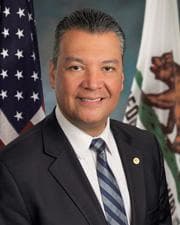
Alex Padilla
Democratic Senator
California
Environment and Public Works Committee
- Introduced
- In Committee
- On Floor
- Passed Chamber
- Enacted
The "Border Water Quality Restoration and Protection Act" addresses severe transboundary water pollution in the Tijuana River and New River watersheds along the United States-Mexico border. This legislation aims to mitigate significant public health and environmental impacts from untreated wastewater, stormwater runoff, and other contaminants flowing into the United States, establishing a comprehensive framework for coordinated action. The bill mandates the Environmental Protection Agency (EPA) Administrator to establish two dedicated programs: the "Tijuana River Public Health and Water Quality Restoration Program" and the "California New River Public Health and Water Quality Restoration Program." Each program will be led by a Program Director responsible for integrating diverse projects and aligning priorities across various agencies and jurisdictions. Their duties include developing comprehensive action plans, carrying out projects focused on pollution prevention, environmental restoration, and climate resilience, and coordinating funding strategies. Central to both river programs is the development of a detailed "Water Quality Action Plan" within one year, to be updated every five years. These plans must build upon existing efforts, incorporate specific projects (like those from the USMCA Mitigation of Contaminated Transboundary Flows Project for the Tijuana River), and include criteria for selecting priority projects. The plans will also identify necessary operations and maintenance funding and potential sources, emphasizing cost-effective, science-based solutions, including water reuse and green infrastructure. To facilitate these efforts, the EPA Administrator is authorized to provide grants and technical assistance to a wide range of entities in both the United States and Mexico, including the International Boundary and Water Commission (IBWC), state and local governments, and non-profit organizations. The bill also creates a broader "United States-Mexico Border Water Infrastructure Program" under the EPA to offer financial and technical assistance for eligible water, wastewater, and stormwater infrastructure projects within 100 kilometers of the border. These projects are prioritized based on their positive environmental and public health impacts, particularly those benefiting the U.S. side of the border. The legislation explicitly defines the role of the IBWC Commissioner , authorizing them to study, design, construct, operate, and maintain projects for wastewater and stormwater management in both river watersheds. The Secretary of State, acting through the Commissioner, may also execute agreements with the Government of Mexico for joint projects, consistent with existing treaties. Projects located wholly or partially within Mexico are eligible for funding if they align with the established action plans and receive Administrator approval, underscoring the bill's commitment to binational cooperation. The bill authorizes significant appropriations, allocating $50,000,000 for each of the Tijuana River and New River programs annually from fiscal years 2026 through 2036 . These funds are available until expended, with a portion set aside for administrative costs. The President is required to submit annual budget plans for these projects, and the Administrator must report to Congress every two years on the implementation status, funding, and effectiveness of all funded projects.
View Full TextSuggested Questions
Get AI-generated questions to help you understand this bill better
Timeline
Introduced in Senate
Read twice and referred to the Committee on Environment and Public Works.
Latest Companion Bill Action
HR 119-4357Referred to the Subcommittee on Water Resources and Environment.
Environmental Protection
Border Water Quality Restoration and Protection Act
USA119th CongressS-2260| Senate
| Updated: 7/10/2025
The "Border Water Quality Restoration and Protection Act" addresses severe transboundary water pollution in the Tijuana River and New River watersheds along the United States-Mexico border. This legislation aims to mitigate significant public health and environmental impacts from untreated wastewater, stormwater runoff, and other contaminants flowing into the United States, establishing a comprehensive framework for coordinated action. The bill mandates the Environmental Protection Agency (EPA) Administrator to establish two dedicated programs: the "Tijuana River Public Health and Water Quality Restoration Program" and the "California New River Public Health and Water Quality Restoration Program." Each program will be led by a Program Director responsible for integrating diverse projects and aligning priorities across various agencies and jurisdictions. Their duties include developing comprehensive action plans, carrying out projects focused on pollution prevention, environmental restoration, and climate resilience, and coordinating funding strategies. Central to both river programs is the development of a detailed "Water Quality Action Plan" within one year, to be updated every five years. These plans must build upon existing efforts, incorporate specific projects (like those from the USMCA Mitigation of Contaminated Transboundary Flows Project for the Tijuana River), and include criteria for selecting priority projects. The plans will also identify necessary operations and maintenance funding and potential sources, emphasizing cost-effective, science-based solutions, including water reuse and green infrastructure. To facilitate these efforts, the EPA Administrator is authorized to provide grants and technical assistance to a wide range of entities in both the United States and Mexico, including the International Boundary and Water Commission (IBWC), state and local governments, and non-profit organizations. The bill also creates a broader "United States-Mexico Border Water Infrastructure Program" under the EPA to offer financial and technical assistance for eligible water, wastewater, and stormwater infrastructure projects within 100 kilometers of the border. These projects are prioritized based on their positive environmental and public health impacts, particularly those benefiting the U.S. side of the border. The legislation explicitly defines the role of the IBWC Commissioner , authorizing them to study, design, construct, operate, and maintain projects for wastewater and stormwater management in both river watersheds. The Secretary of State, acting through the Commissioner, may also execute agreements with the Government of Mexico for joint projects, consistent with existing treaties. Projects located wholly or partially within Mexico are eligible for funding if they align with the established action plans and receive Administrator approval, underscoring the bill's commitment to binational cooperation. The bill authorizes significant appropriations, allocating $50,000,000 for each of the Tijuana River and New River programs annually from fiscal years 2026 through 2036 . These funds are available until expended, with a portion set aside for administrative costs. The President is required to submit annual budget plans for these projects, and the Administrator must report to Congress every two years on the implementation status, funding, and effectiveness of all funded projects.
View Full TextSuggested Questions
Get AI-generated questions to help you understand this bill better
Timeline
Introduced in Senate
Read twice and referred to the Committee on Environment and Public Works.
Latest Companion Bill Action
HR 119-4357Referred to the Subcommittee on Water Resources and Environment.
Alex Padilla
Democratic Senator
California
Environment and Public Works Committee
Environmental Protection
- Introduced
- In Committee
- On Floor
- Passed Chamber
- Enacted