Educational Choice for Children Act of 2025
USA119th CongressS-292| Senate
| Updated: 1/29/2025
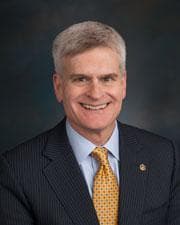
Bill Cassidy
Republican Senator
Louisiana
Cosponsors (33)
Tommy Tuberville (Republican)Roger Marshall (Republican)Katie Boyd Britt (Republican)Thomas Tillis (Republican)Jim Banks (Republican)Cindy Hyde-Smith (Republican)James E. Risch (Republican)Cynthia M. Lummis (Republican)Eric Schmitt (Republican)Marsha Blackburn (Republican)Todd Young (Republican)Ashley Moody (Republican)Tom Cotton (Republican)Lindsey Graham (Republican)Roger F. Wicker (Republican)John Boozman (Republican)Tim Sheehy (Republican)John Thune (Republican)Tim Scott (Republican)Kevin Cramer (Republican)James C. Justice (Republican)John Kennedy (Republican)Bill Hagerty (Republican)John Barrasso (Republican)David McCormick (Republican)Josh Hawley (Republican)John Cornyn (Republican)Jon Husted (Republican)Bernie Moreno (Republican)Pete Ricketts (Republican)Steve Daines (Republican)Ted Budd (Republican)Shelley Moore Capito (Republican)
Finance Committee
- Introduced
- In Committee
- On Floor
- Passed Chamber
- Enacted
The "Educational Choice for Children Act of 2025" introduces new federal tax credits designed to encourage charitable giving towards K-12 education scholarships. It amends the Internal Revenue Code of 1986 to allow both individuals and corporations to claim credits for contributions made to qualified scholarship granting organizations (SGOs). The primary goal is to provide financial assistance for eligible elementary and secondary students to cover a range of educational expenses, thereby expanding educational options. For individuals, the bill creates a new Section 25F credit, allowing a credit equal to the aggregate amount of qualified contributions, capped at the greater of 10 percent of adjusted gross income or $5,000. Corporations can claim a credit under a new Section 45BB, limited to 5 percent of their taxable income. Both credits are subject to a national **volume cap**, initially set at $10 billion annually starting in 2026, which will be allocated on a first-come, first-served basis and can increase in subsequent years if heavily utilized. Any state tax credits received for the same contributions will reduce the federal credit, and unused individual credits can be carried forward for up to five years. A **scholarship granting organization** must be a 501(c)(3) public charity primarily focused on providing scholarships for qualified elementary or secondary education expenses. These organizations must adhere to strict requirements, including providing scholarships to multiple students across different schools, prioritizing returning students and their siblings, verifying household income (up to 300% of area median gross income), and undergoing annual independent audits. **Qualified elementary or secondary education expenses** are broadly defined to include tuition, curricula, books, online materials, tutoring, standardized test fees, dual enrollment, and educational therapies for students with disabilities. Furthermore, the bill ensures that scholarships received by eligible students from SGOs are **exempt from gross income**. It also includes provisions to prevent abuse by requiring SGOs to distribute 100 percent of their receipts within a specified timeframe, allowing for reasonable administrative expenses and limited carryovers. Crucially, the legislation emphasizes **organizational and parental autonomy**, explicitly prohibiting federal, state, or local governmental entities from controlling SGOs or private/religious schools, or from disfavoring the use of these scholarships at such institutions. Parents of eligible students are granted the right to intervene in any legal challenges to the bill's constitutionality.
View Full TextSuggested Questions
Get AI-generated questions to help you understand this bill better
Timeline
Introduced in Senate
Read twice and referred to the Committee on Finance.
Taxation
Educational Choice for Children Act of 2025
USA119th CongressS-292| Senate
| Updated: 1/29/2025
The "Educational Choice for Children Act of 2025" introduces new federal tax credits designed to encourage charitable giving towards K-12 education scholarships. It amends the Internal Revenue Code of 1986 to allow both individuals and corporations to claim credits for contributions made to qualified scholarship granting organizations (SGOs). The primary goal is to provide financial assistance for eligible elementary and secondary students to cover a range of educational expenses, thereby expanding educational options. For individuals, the bill creates a new Section 25F credit, allowing a credit equal to the aggregate amount of qualified contributions, capped at the greater of 10 percent of adjusted gross income or $5,000. Corporations can claim a credit under a new Section 45BB, limited to 5 percent of their taxable income. Both credits are subject to a national **volume cap**, initially set at $10 billion annually starting in 2026, which will be allocated on a first-come, first-served basis and can increase in subsequent years if heavily utilized. Any state tax credits received for the same contributions will reduce the federal credit, and unused individual credits can be carried forward for up to five years. A **scholarship granting organization** must be a 501(c)(3) public charity primarily focused on providing scholarships for qualified elementary or secondary education expenses. These organizations must adhere to strict requirements, including providing scholarships to multiple students across different schools, prioritizing returning students and their siblings, verifying household income (up to 300% of area median gross income), and undergoing annual independent audits. **Qualified elementary or secondary education expenses** are broadly defined to include tuition, curricula, books, online materials, tutoring, standardized test fees, dual enrollment, and educational therapies for students with disabilities. Furthermore, the bill ensures that scholarships received by eligible students from SGOs are **exempt from gross income**. It also includes provisions to prevent abuse by requiring SGOs to distribute 100 percent of their receipts within a specified timeframe, allowing for reasonable administrative expenses and limited carryovers. Crucially, the legislation emphasizes **organizational and parental autonomy**, explicitly prohibiting federal, state, or local governmental entities from controlling SGOs or private/religious schools, or from disfavoring the use of these scholarships at such institutions. Parents of eligible students are granted the right to intervene in any legal challenges to the bill's constitutionality.
View Full TextSuggested Questions
Get AI-generated questions to help you understand this bill better
Timeline
Introduced in Senate
Read twice and referred to the Committee on Finance.
Bill Cassidy
Republican Senator
Louisiana
Cosponsors (33)
Tommy Tuberville (Republican)Roger Marshall (Republican)Katie Boyd Britt (Republican)Thomas Tillis (Republican)Jim Banks (Republican)Cindy Hyde-Smith (Republican)James E. Risch (Republican)Cynthia M. Lummis (Republican)Eric Schmitt (Republican)Marsha Blackburn (Republican)Todd Young (Republican)Ashley Moody (Republican)Tom Cotton (Republican)Lindsey Graham (Republican)Roger F. Wicker (Republican)John Boozman (Republican)Tim Sheehy (Republican)John Thune (Republican)Tim Scott (Republican)Kevin Cramer (Republican)James C. Justice (Republican)John Kennedy (Republican)Bill Hagerty (Republican)John Barrasso (Republican)David McCormick (Republican)Josh Hawley (Republican)John Cornyn (Republican)Jon Husted (Republican)Bernie Moreno (Republican)Pete Ricketts (Republican)Steve Daines (Republican)Ted Budd (Republican)Shelley Moore Capito (Republican)
Finance Committee
Taxation
Related Bills
- HR 119-833: Educational Choice for Children Act of 2025
- HR 119-817: To amend the Internal Revenue Code of 1986 to allow a credit against tax for charitable donations to nonprofit organizations providing education scholarships to qualified elementary and secondary students.
- HR 119-1: An act to provide for reconciliation pursuant to title II of H. Con. Res. 14.
- Introduced
- In Committee
- On Floor
- Passed Chamber
- Enacted