Trusted Foreign Auditing Act of 2025
USA119th CongressHR-4616| House
| Updated: 7/22/2025
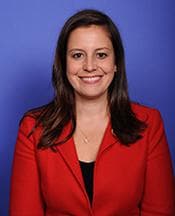
Elise M. Stefanik
Republican Representative
New York
Financial Services Committee
- Introduced
- In Committee
- On Floor
- Passed Chamber
- Enacted
This legislation, known as the Trusted Foreign Auditing Act of 2025, amends the Sarbanes-Oxley Act of 2002 to address risks associated with foreign auditing firms. It introduces new definitions for a "compromised auditor" and a "covered country" to identify auditing firms potentially influenced by foreign governments. A "compromised auditor" is defined as an auditing firm branch or subsidiary subject to the jurisdiction, control, or influence of a "covered country," or one with arrangements that could compromise its independence. A "covered country" includes nations identified as national security threats by the Director of National Intelligence or specific covered nations under other U.S. law. The bill mandates a trading prohibition for any covered issuer headquartered in a country of concern that retains a compromised auditor for its financial reports, preventing their securities from being traded on U.S. exchanges. Furthermore, the bill revises the conditions for public hearings conducted by the Public Company Accounting Oversight Board (PCAOB). While hearings are generally not public, this amendment specifies that they shall be public if a compromised auditor retained by a covered issuer is a party to the hearing, or if the Board orders it for good cause with party consent. This aims to increase transparency when auditors with potential foreign government influence are involved in regulatory proceedings.
View Full TextSuggested Questions
Get AI-generated questions to help you understand this bill better
Timeline
Introduced in House
Referred to the House Committee on Financial Services.
Finance and Financial Sector
Trusted Foreign Auditing Act of 2025
USA119th CongressHR-4616| House
| Updated: 7/22/2025
This legislation, known as the Trusted Foreign Auditing Act of 2025, amends the Sarbanes-Oxley Act of 2002 to address risks associated with foreign auditing firms. It introduces new definitions for a "compromised auditor" and a "covered country" to identify auditing firms potentially influenced by foreign governments. A "compromised auditor" is defined as an auditing firm branch or subsidiary subject to the jurisdiction, control, or influence of a "covered country," or one with arrangements that could compromise its independence. A "covered country" includes nations identified as national security threats by the Director of National Intelligence or specific covered nations under other U.S. law. The bill mandates a trading prohibition for any covered issuer headquartered in a country of concern that retains a compromised auditor for its financial reports, preventing their securities from being traded on U.S. exchanges. Furthermore, the bill revises the conditions for public hearings conducted by the Public Company Accounting Oversight Board (PCAOB). While hearings are generally not public, this amendment specifies that they shall be public if a compromised auditor retained by a covered issuer is a party to the hearing, or if the Board orders it for good cause with party consent. This aims to increase transparency when auditors with potential foreign government influence are involved in regulatory proceedings.
View Full TextSuggested Questions
Get AI-generated questions to help you understand this bill better
Timeline
Introduced in House
Referred to the House Committee on Financial Services.
Elise M. Stefanik
Republican Representative
New York
Financial Services Committee
Finance and Financial Sector
Related Bills
- Introduced
- In Committee
- On Floor
- Passed Chamber
- Enacted