Extending Limits of United States Customs Waters Act of 2025
USA119th CongressS-221| Senate
| Updated: 1/23/2025
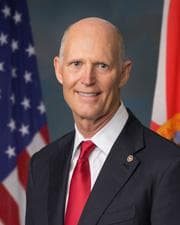
Rick Scott
Republican Senator
Florida
Cosponsors (4)
Finance Committee
- Introduced
- In Committee
- On Floor
- Passed Chamber
- Enacted
This bill proposes to extend the customs waters of the United States from 12 nautical miles to 24 nautical miles from its baselines, aligning this jurisdiction with the existing contiguous zone. It achieves this by amending the definitions of "customs waters" in both the Tariff Act of 1930 and the Anti-Smuggling Act to include the territorial sea and the contiguous zone, consistent with Presidential Proclamations 5928 and 7219, respectively. This expansion is designed to enhance the authority of U.S. Customs and Border Protection to conduct law enforcement activities further offshore. Congress finds that customary international law, as outlined in the United Nations Convention on the Law of the Sea, permits a territorial sea up to 12 nautical miles and a contiguous zone up to 24 nautical miles. Within this contiguous zone, coastal states are authorized to exercise control to prevent infringements of their customs, fiscal, immigration, or sanitary laws. This legal framework also allows for the hot pursuit and boarding of vessels under specific conditions, even outside territorial waters. The legislation emphasizes that extending customs waters is vital because the increasing speed and performance of modern maritime vessels, often used for illegal activities, render the current 12-nautical-mile limit inadequate for effective interdiction. By expanding this limit to 24 nautical miles, the bill aims to provide law enforcement agents with sufficient time and operational space to respond to and prevent such violations. This extension is considered essential for advancing the law enforcement and public health interests of the United States.
View Full TextSuggested Questions
Get AI-generated questions to help you understand this bill better
Timeline
Introduced in Senate
Read twice and referred to the Committee on Finance.
Foreign Trade and International Finance
Extending Limits of United States Customs Waters Act of 2025
USA119th CongressS-221| Senate
| Updated: 1/23/2025
This bill proposes to extend the customs waters of the United States from 12 nautical miles to 24 nautical miles from its baselines, aligning this jurisdiction with the existing contiguous zone. It achieves this by amending the definitions of "customs waters" in both the Tariff Act of 1930 and the Anti-Smuggling Act to include the territorial sea and the contiguous zone, consistent with Presidential Proclamations 5928 and 7219, respectively. This expansion is designed to enhance the authority of U.S. Customs and Border Protection to conduct law enforcement activities further offshore. Congress finds that customary international law, as outlined in the United Nations Convention on the Law of the Sea, permits a territorial sea up to 12 nautical miles and a contiguous zone up to 24 nautical miles. Within this contiguous zone, coastal states are authorized to exercise control to prevent infringements of their customs, fiscal, immigration, or sanitary laws. This legal framework also allows for the hot pursuit and boarding of vessels under specific conditions, even outside territorial waters. The legislation emphasizes that extending customs waters is vital because the increasing speed and performance of modern maritime vessels, often used for illegal activities, render the current 12-nautical-mile limit inadequate for effective interdiction. By expanding this limit to 24 nautical miles, the bill aims to provide law enforcement agents with sufficient time and operational space to respond to and prevent such violations. This extension is considered essential for advancing the law enforcement and public health interests of the United States.
View Full TextSuggested Questions
Get AI-generated questions to help you understand this bill better
Timeline
Introduced in Senate
Read twice and referred to the Committee on Finance.
Rick Scott
Republican Senator
Florida
Cosponsors (4)
Finance Committee
Foreign Trade and International Finance
- Introduced
- In Committee
- On Floor
- Passed Chamber
- Enacted